Real-world efficacy and safety of PD-1 inhibitors in patients living with HIV and cancer: a retrospective cohort study
-
By
-
Xiaola Xue
-
Juyi Wu
-
Zhenpeng Tan
-
Chunyu Tian
-
Qiong Li
-
Shujuan Zhou
-
Yuchao Xia
-
Shaojie Yang
-
Xuan Yang
-
June 24, 2026
-
Clinical Scorecard: Efficacy and Safety of PD-1 Inhibitors in HIV-Positive Cancer Patients: Insights from a Retrospective Cohort Analysis
At a Glance
| Category | Detail |
|---|
| Condition | Cancer in HIV-Positive Patients |
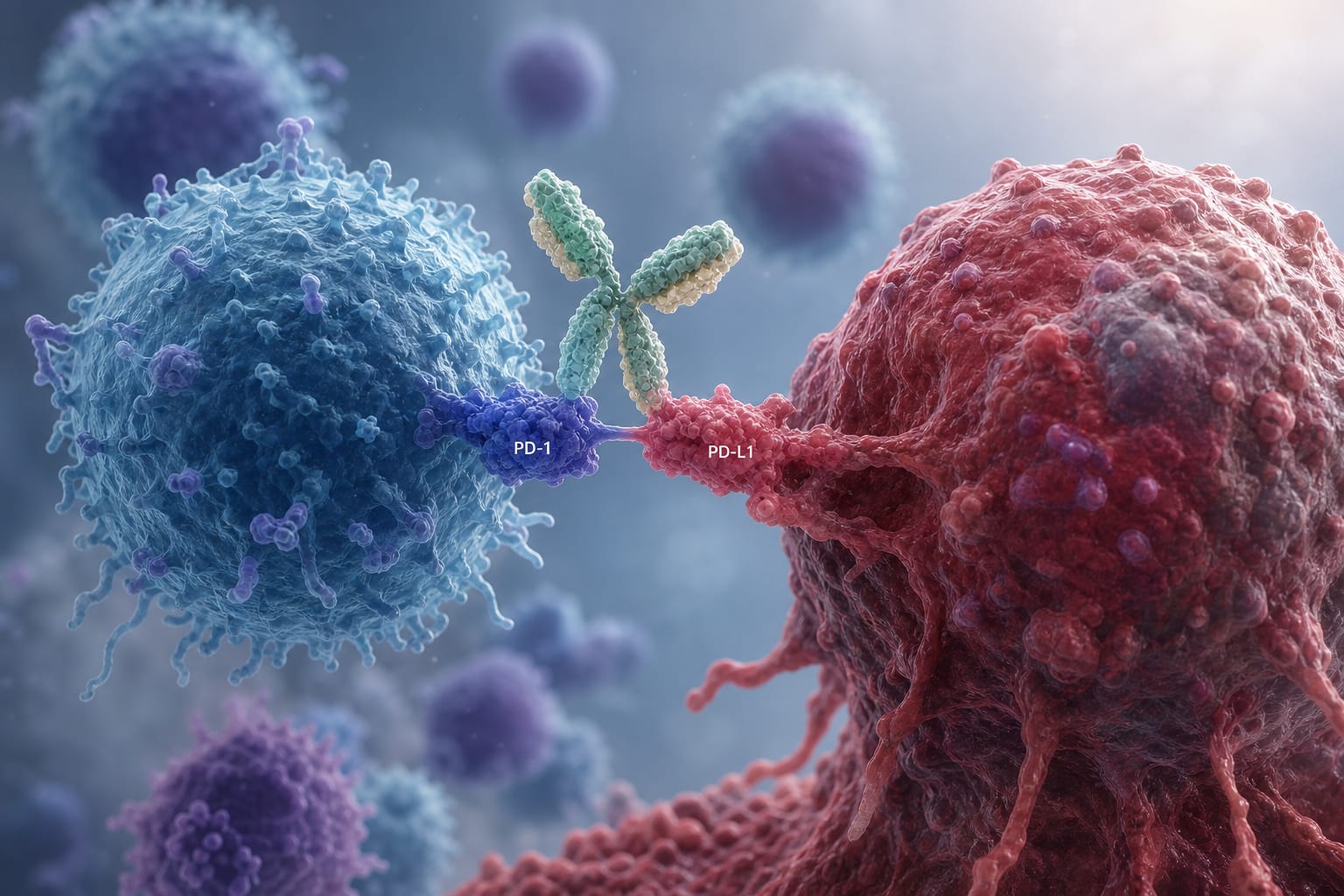
| Key Mechanisms | PD-1 inhibitors restore T-cell function and combat tumor immune evasion. |
| Target Population | People living with HIV (PWH) presenting with concurrent malignancies. |
| Care Setting | Real-world clinical settings evaluating cancer treatment efficacy. |
Key Highlights
- Comparable objective response rates (ORR) and disease control rates (DCR) between HIV-positive and HIV-negative groups.
- Median progression-free survival (PFS) was 11.5 months for HIV-positive patients.
- Severe treatment-related adverse events (TRAEs) occurred exclusively in the HIV-positive cohort.
Guideline-Based Recommendations
Diagnosis
- Assess HIV status in cancer patients before initiating PD-1 inhibitors.
Management
- Consider PD-1 inhibitors for PWH with concurrent malignancies, especially with advanced immunosuppression.
Monitoring & Follow-up
- Monitor CD4+ T-cell counts and HIV RNA levels during treatment.
Risks
- Be aware of potential severe TRAEs in HIV-positive patients.
Patient & Prescribing Data
Patients with HIV and concurrent malignancies, including those with low CD4+ T-cell counts.
PD-1 inhibitors are effective and generally well tolerated, with robust immune restoration observed.
Clinical Best Practices
- Utilize propensity score matching to adjust for baseline imbalances in clinical studies.
- Conduct regular assessments of immune function in PWH undergoing cancer treatment.
Related Resources & Content