Target receptor expression dictates the selective intra-tumoral targeting of CD8+ T cells by eciskafusp alfa in matched PBMCs and TILs from CPI-naïve patients - Scorecard - MDSpire
Advertisement
Target receptor expression dictates the selective intra-tumoral targeting of CD8+ T cells by eciskafusp alfa in matched PBMCs and TILs from CPI-naïve patients
Clinical Scorecard: Receptor Expression Influences the Selective Targeting of CD8+ T Cells by Eciskafusp Alfa in Matched PBMCs and Tumor-Infiltrating Lymphocytes from Treatment-Naïve Patients
At a Glance
Category
Detail
Condition
Key Mechanisms
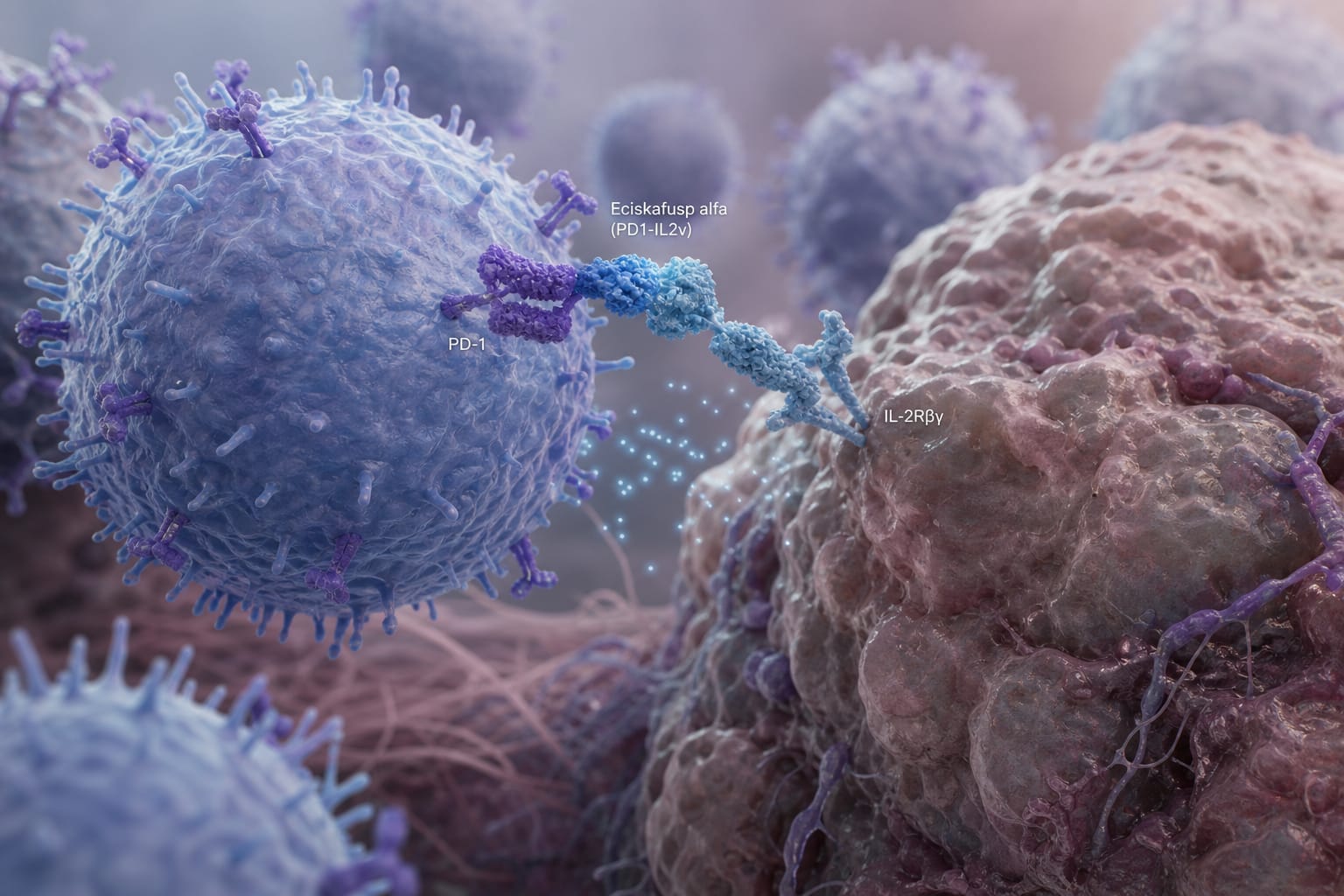
Avidity-driven, cis-delivery of IL-2R agonism to PD-1+ cells, emphasizing the avoidance of Treg activation.
Target Population
Care Setting
Key Highlights
PD1-IL2v preferentially targets CD8+ TIL subsets over Tregs, enhancing anti-tumor responses.
Increased PD-1 receptor density on CD8+ TILs compared to PBMCs, indicating a targetable population.
Higher STAT5 phosphorylation in stem-like and effector CD8+ T cells with PD1-IL2v, correlating with enhanced functionality.
Potential biomarkers for predicting patient responsiveness identified, including PD-1 density and STAT5 levels.
Selective intra-tumoral immune stimulation while minimizing Treg activation, crucial for reducing toxicity.
Guideline-Based Recommendations
Diagnosis
Management
Utilization of PD1-IL2v for enhanced targeting of CD8+ TILs, with monitoring of PD-1 density and STAT5 phosphorylation.
Monitoring & Follow-up
Risks
Patient & Prescribing Data
PD1-IL2v shows superior biological activity in targeting tumor-infiltrating lymphocytes, supported by ex-vivo data.
Clinical Best Practices
Focus on PD-1 receptor density as a biomarker for treatment efficacy, considering patient-specific immune profiles.