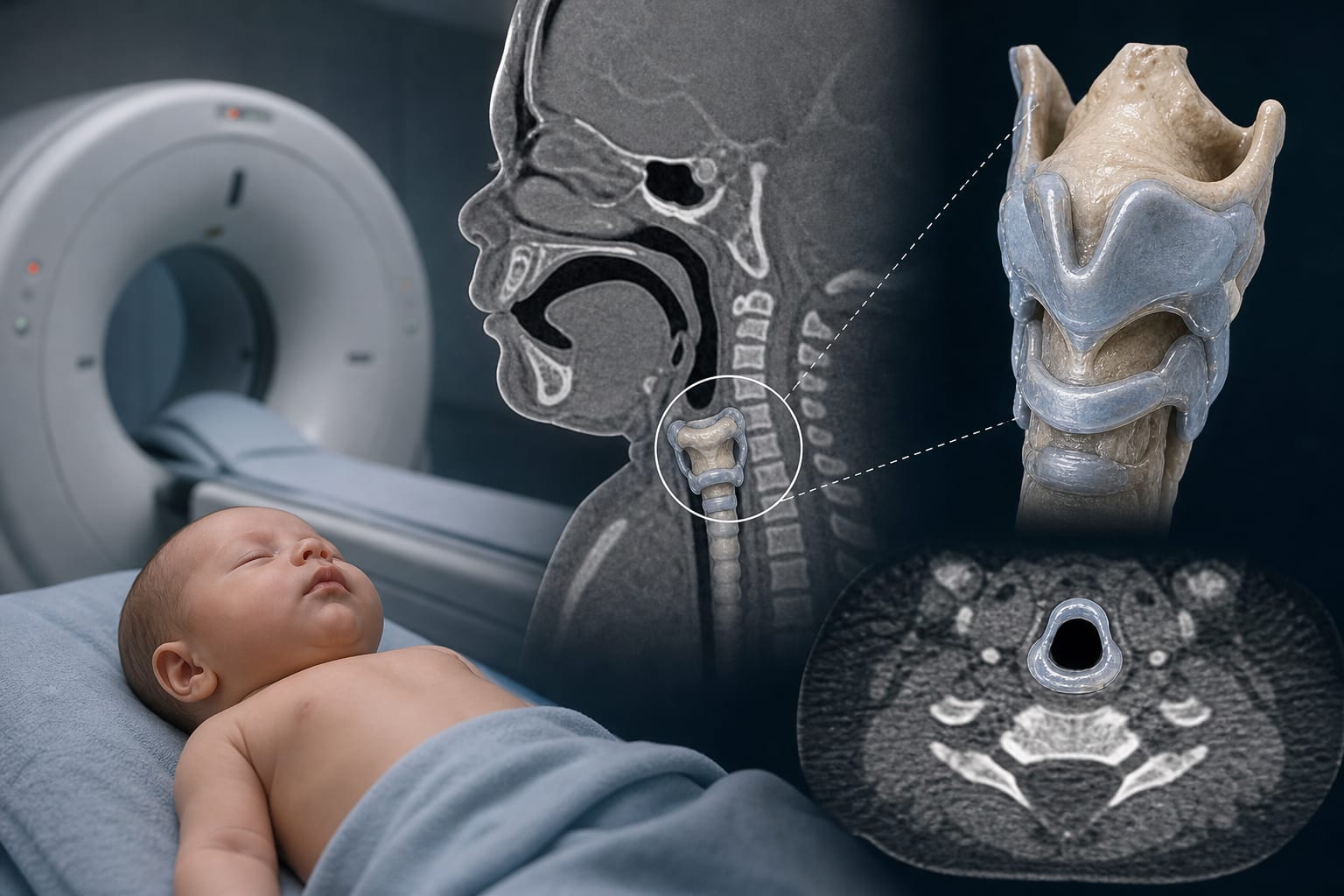
Establishment of a CT-based prediction model for endotracheal tube size in infants aged <1 year
By
Yan Li
Chao Sun
Yanqiu Wu
Xue Tian
June 18, 2026
Clinical Scorecard: Development of a CT-derived model for predicting endotracheal tube dimensions in infants under one year old
At a Glance
Category Detail
Condition Key Mechanisms Quantification of airway parameters using CT and clinical factors like age and prematurity for accurate tube size prediction. Target Population Care Setting
Key Highlights
Age and preterm birth are independent factors affecting cricoid cartilage diameter, impacting tube size selection. Prediction formulas for cricoid cartilage diameter and cricoid-to-carina distance were established to enhance individualized care. CT measurements provide individualized guidance for endotracheal tube sizing, improving patient outcomes. Guideline-Based Recommendations
Diagnosis
Management
Monitoring & Follow-up
Monitor for complications related to tube size selection, including airway obstruction and ventilation adequacy. Risks
Patient & Prescribing Data
Infants under one year of age undergoing anesthesia evaluation
Preterm infants may require smaller tubes than full-term infants of the same age.
Clinical Best Practices
Utilize CT-derived measurements for individualized airway management. Exclude infants with congenital malformations or significant medical history from predictive modeling. Conduct follow-up assessments post-intubation to ensure proper tube size and function. Related Resources & Content