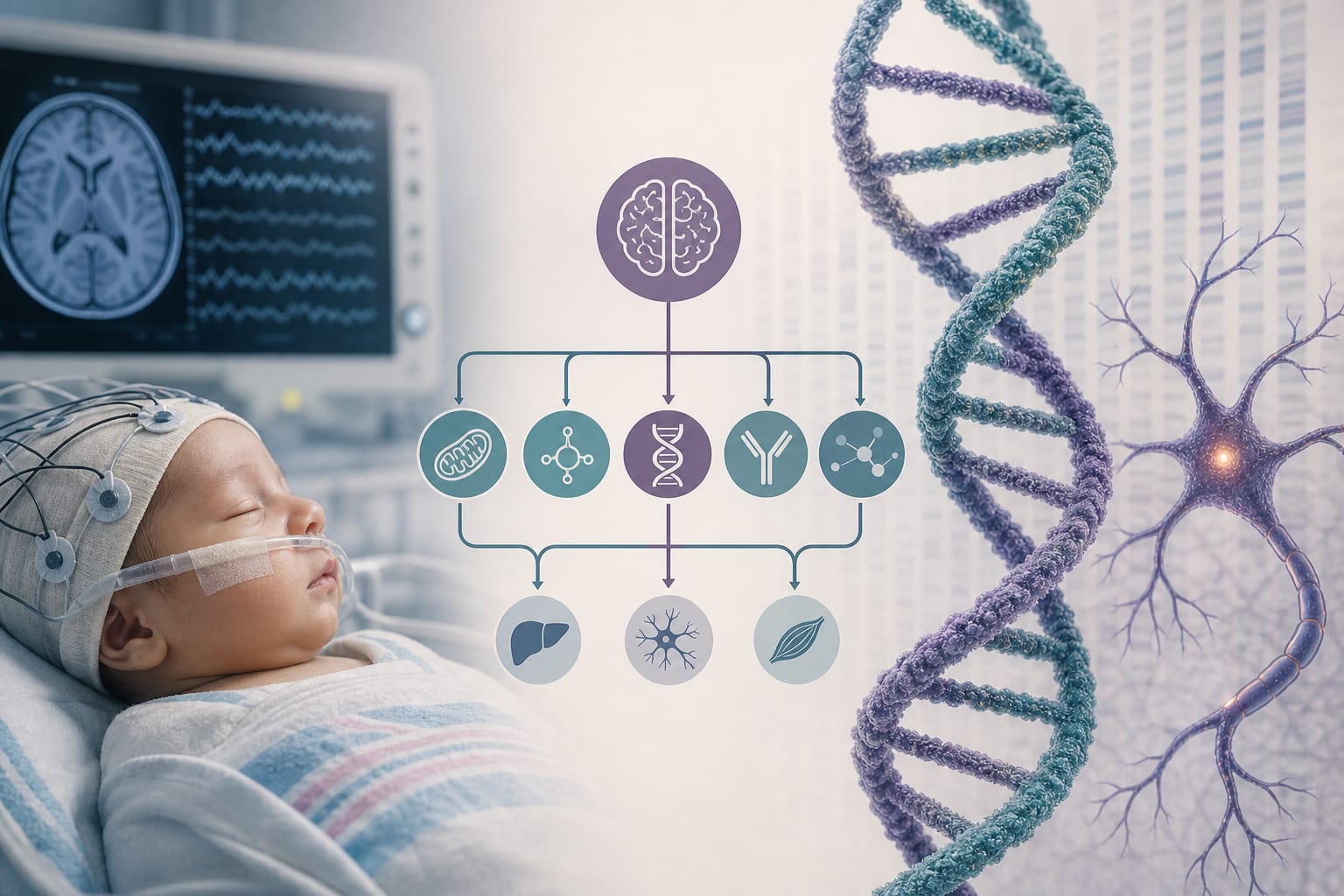
Beyond hypoxic–ischemic encephalopathy: genetic insights and precision diagnosis in neonatal encephalopathies
Clinical Scorecard: Expanding Understanding of Neonatal Encephalopathies: Genetic Factors and Precision Diagnostics Beyond Hypoxic-Ischemic Encephalopathy
At a Glance
| Category | Detail |
| Condition | |
| Key Mechanisms | Genetic, metabolic, immune-mediated, and toxic etiologies (ensure sourced). |
| Target Population | |
| Care Setting | |
Key Highlights
- NE is a heterogeneous neurological syndrome occurring in the first days of life (source).
- Genetic factors increasingly recognized as causes of NE, beyond hypoxic-ischemic injury (source).
- Next-generation sequencing (NGS) is a first-line diagnostic tool for NE (source).
- Timely recognition of genetic causes enables targeted therapies and genetic counseling (source).
- A structured diagnostic algorithm is proposed for differential diagnosis (source).
Guideline-Based Recommendations
Diagnosis
- Utilize next-generation sequencing (NGS) alongside EEG/aEEG, MRI, and metabolic evaluation (source).
Management
- Initiate targeted therapies for treatable genetic conditions identified through early diagnosis (source).
Monitoring & Follow-up
- Monitor for signs of neurological dysfunction and response to therapies (source).
Risks
- Genetic variants may increase susceptibility to hypoxic-ischemic injury (source).
Patient & Prescribing Data
Certain genetic conditions may respond to specific treatments, such as sodium channel blockers for SCN2A variants (ensure sourced).
Clinical Best Practices
- Implement a multidimensional diagnostic framework for NE (source).
- Recognize the clinical presentations of genetic neonatal encephalopathies (source).
- Provide appropriate family counseling based on genetic findings (source).
Related Resources & Content