Extracellular Vesicles: Their Functions and Future in Hepatitis B and C Infections
By
Lei Zhang
Ying Luo
Qingmei Ma
Yingtang Gao
June 23, 2026
Clinical Scorecard: Extracellular Vesicles: Their Functions and Future in Hepatitis B and C Infections
At a Glance
Category Detail
Condition Hepatitis B and C Infections Key Mechanisms Extracellular vesicles (EVs) mediate intercellular communication, influencing viral dissemination, immune regulation, and disease progression. Target Population Individuals with chronic HBV and HCV infections. Care Setting Clinical research and hepatology.
Key Highlights
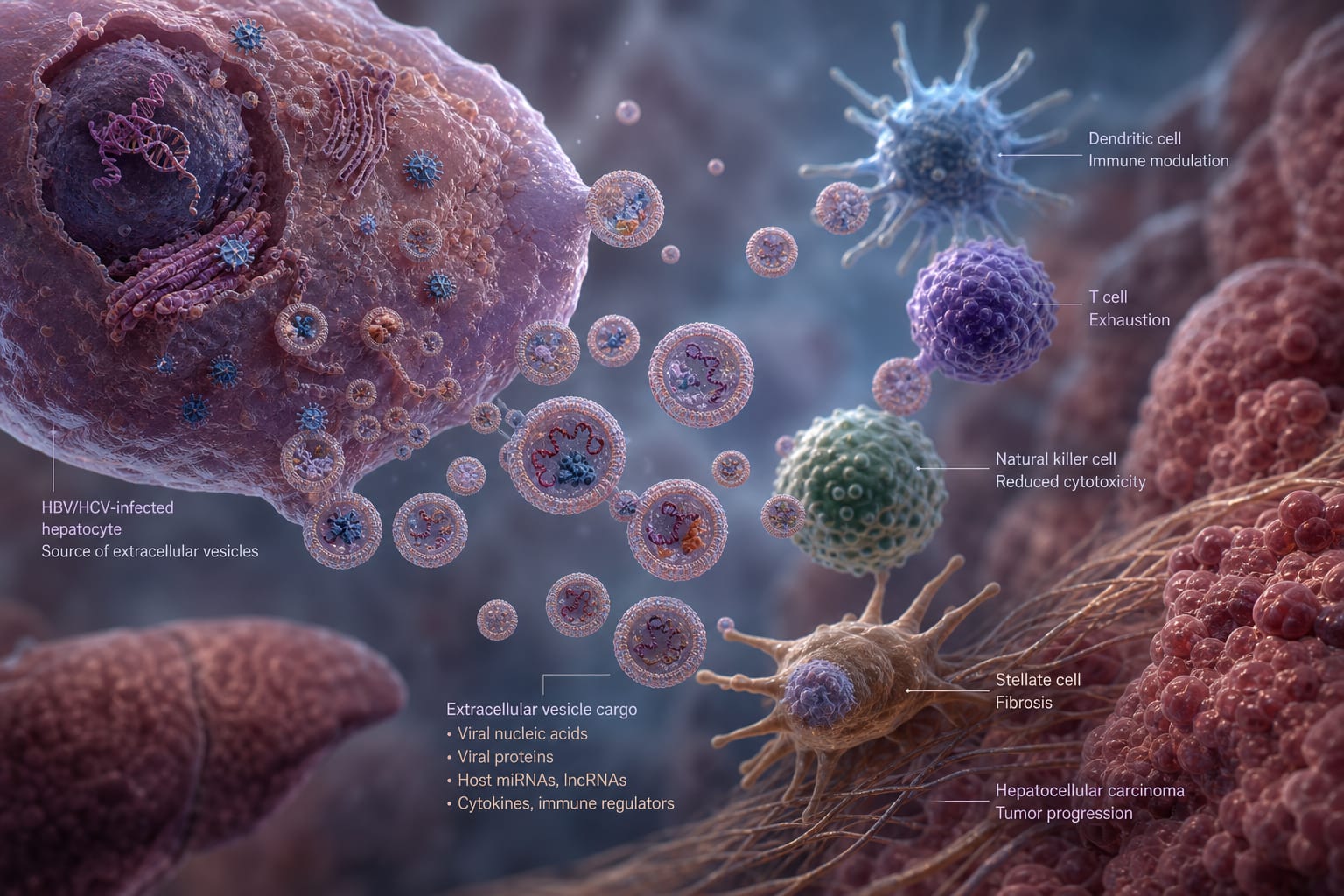
EVs carry viral nucleic acids and proteins, impacting immune responses. They play dual roles in promoting viral persistence and enhancing antiviral responses. EVs contribute to liver fibrosis and hepatocarcinogenesis. Potential for EV-derived RNAs and proteins as noninvasive biomarkers. Challenges include EV heterogeneity and co-isolation with viral particles. Guideline-Based Recommendations
Diagnosis
Utilize EVs as potential biomarkers for HBV and HCV infection. Management
Explore therapeutic targets within EV-associated cargos. Monitoring & Follow-up
Assess EV profiles to understand disease progression and treatment response. Risks
Consider the implications of EV-mediated immune modulation in chronic infections. Patient & Prescribing Data
Patients with chronic hepatitis B and C.
Investigate the role of EVs in treatment responses and immune evasion.
Clinical Best Practices
Validate EV preparations using multiple complementary methods. Report EV source and pre-analytical variables for reproducibility. Monitor EV-associated biomarkers for disease progression. Related Resources & Content