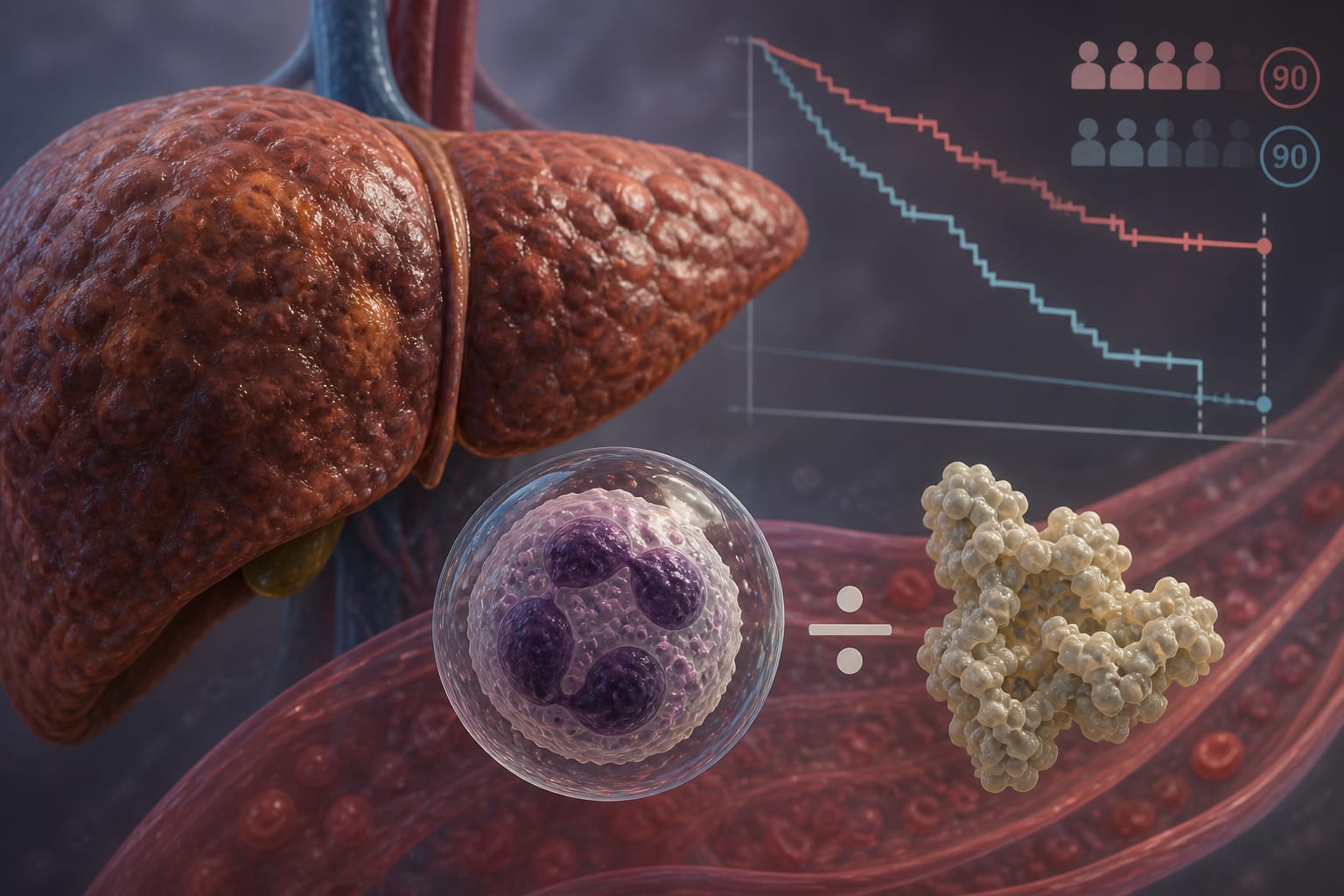
Link Between Neutrophil Percentage-to-Albumin Ratio and 90-Day Mortality in Patients with Acute-on-Chronic Liver Failure
-
By
-
Jiahua Hu
-
Lu Li
-
Xiaoli Yang
-
Maohua Guo
-
September 14, 2026
Clinical Scorecard: Link Between Neutrophil Percentage-to-Albumin Ratio and 90-Day Mortality in Patients with Acute-on-Chronic Liver Failure
At a Glance
| Category | Detail |
|---|
| Condition | Acute-on-chronic liver failure (ACLF) |
| Key Mechanisms | Neutrophil percentage-to-albumin ratio (NPAR) reflects inflammatory and nutritional status. |
| Target Population | Adults with liver failure, predominantly those with ACLF. |
| Care Setting | Infectious diseases department |
Key Highlights
- Higher NPAR is associated with increased mortality in liver failure patients.
- 27.9% of patients died within 90 days of admission.
- Univariate analysis showed an OR of 2.67 for each 1-unit increase in ln-NPAR.
- After adjusting for MELD score, the association with mortality was not statistically significant.
- No significant effect modification by sex, age, or ascites status.
Guideline-Based Recommendations
Diagnosis
- Use guideline-based criteria for diagnosing liver failure.
Management
- Monitor inflammatory status and nutritional reserves in liver failure patients.
Monitoring & Follow-up
- Assess NPAR as a potential prognostic indicator.
Risks
- High short-term mortality associated with acute-on-chronic liver failure.
Patient & Prescribing Data
Adults aged ≥18 years with liver failure.
Further studies needed to establish NPAR's role in prognosis.
Clinical Best Practices
- Conduct comprehensive assessments including blood counts and liver function tests.
- Consider NPAR in the context of established severity scores like MELD.
Related Resources & Content