Prevalence and associated factors of scabies among school going children in Khulna division: a comparative cross-sectional study between schools and madrasahs (Islamic religious schools) - Scorecard - MDSpire
Conexiant’s news site is now MDSpire News. Learn more
Advertisement
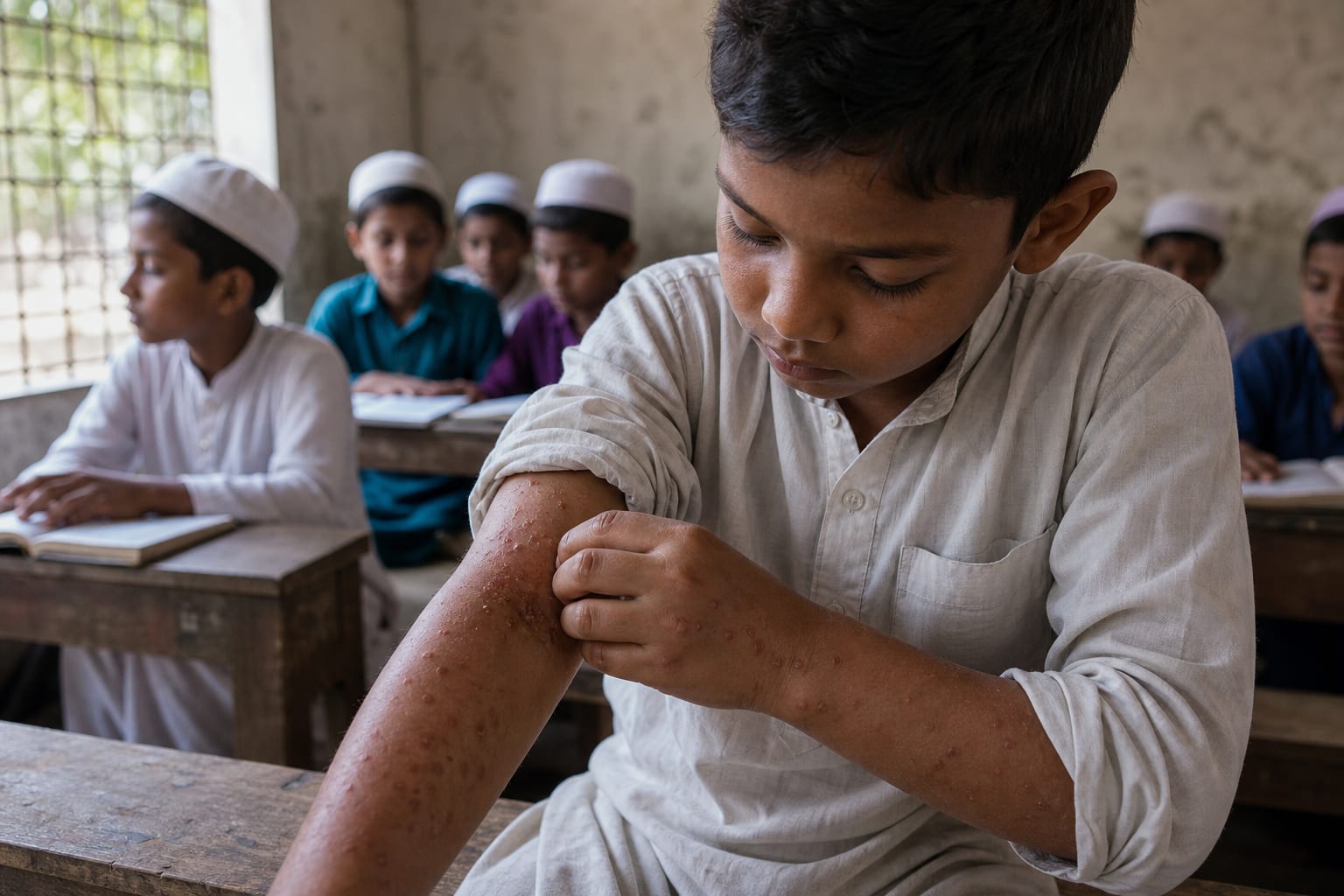
Assessment of Scabies Prevalence and Contributing Factors Among School-Aged Children in Khulna Division: A Comparative Cross-Sectional Analysis of Schools and Madrasahs
Clinical Scorecard: Assessment of Scabies Prevalence and Contributing Factors Among School-Aged Children in Khulna Division: A Comparative Cross-Sectional Analysis of Schools and Madrasahs
At a Glance
Category
Detail
Condition
Scabies
Key Mechanisms
Infestation by the mite Sarcoptes scabiei var. hominis
Target Population
School-aged children (ages 5–17) in Bangladesh
Care Setting
Cross-sectional study in educational institutions
Key Highlights
Overall prevalence of scabies was 40.35% among surveyed children.
Higher prevalence in madrasa students (51.3%) compared to school students (31.65%).
Key associated factors include poverty, overcrowding, and irregular bathing.
Significant household-level exposure to skin conditions was noted.
No government program currently exists to eliminate scabies in Bangladesh.
Guideline-Based Recommendations
Diagnosis
Diagnosis based on International Alliance for the Control of Scabies criteria.
Management
Targeted public health interventions are needed to address scabies prevalence.
Monitoring & Follow-up
School-based screening and health education recommended to reduce transmission.
Risks
Higher risk among students from poorer households and those with close contact with affected individuals.
Patient & Prescribing Data
Children aged 5–17 attending schools and madrasas in Khulna Division.
Community-level treatment strategies suggested to reduce transmission.
Clinical Best Practices
Implement health education programs in schools and madrasas.
Encourage regular bathing and personal hygiene practices.
Address overcrowding and improve housing conditions.