Clinical Outcomes in Single Ventricle Patients Who Initially Did Not Pursue Fontan Completion Following Stage II Palliation
By
Carolin Niedermaier
Cornelius Przybilla
Thibault Schaeffer
Muneaki Matsubara
Christina Ruda
Jonas Palm
Nicole Piber
Peter Ewert
Jürgen Hörer
Masamichi Ono
July 13, 2026
Clinical Scorecard: Clinical Outcomes in Single Ventricle Patients Who Initially Did Not Pursue Fontan Completion Following Stage II Palliation
At a Glance
Category Detail
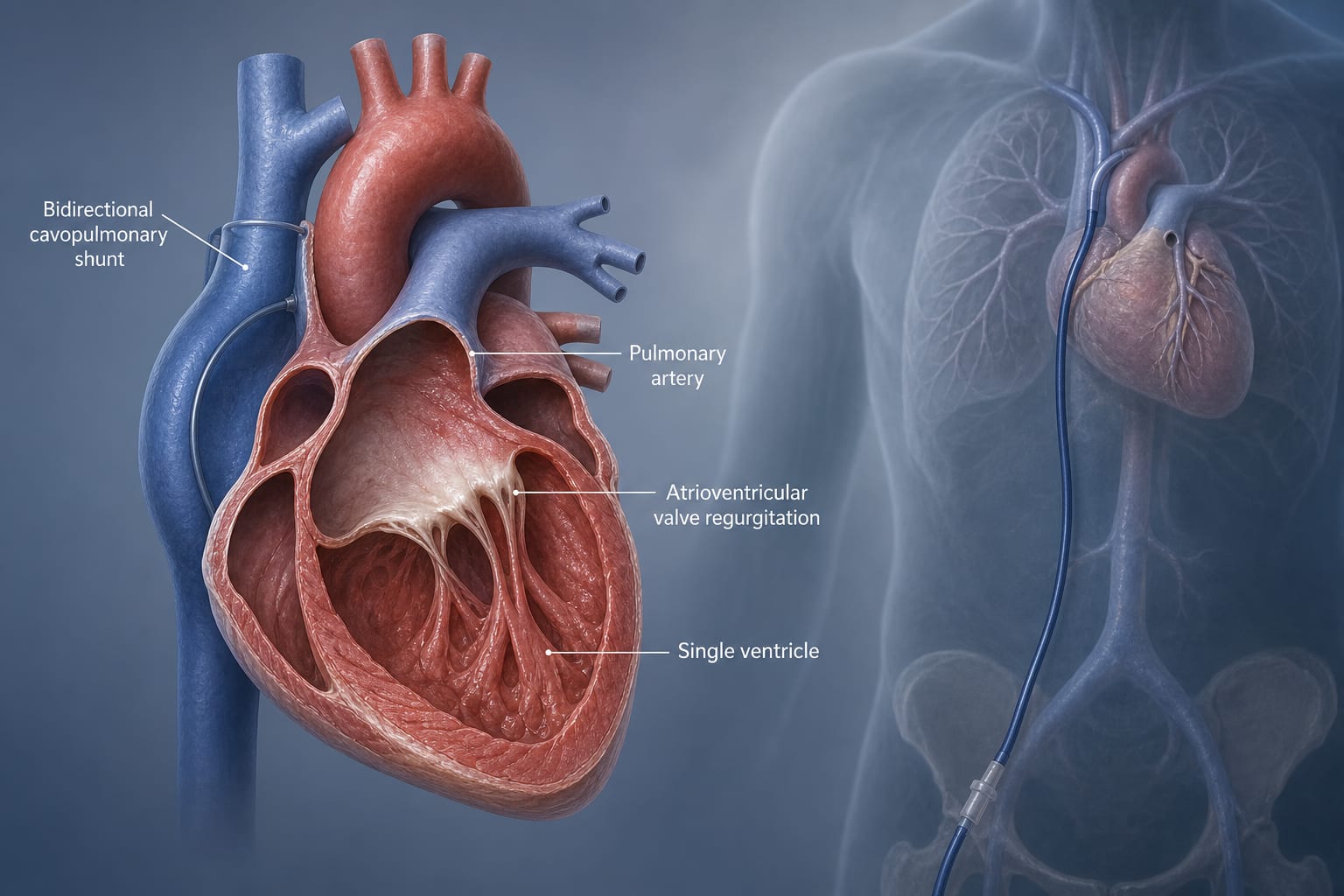
Condition Univentricular heart disease Key Mechanisms Elevated pulmonary artery pressure, pulmonary artery stenosis, reduced ventricular function, significant atrioventricular valve regurgitation Target Population Infants with univentricular hearts who underwent bidirectional cavopulmonary shunt Care Setting Single-center retrospective study
Key Highlights
Patients unable to undergo Fontan completion face high risks of heart failure and mortality. Delayed Fontan completion may be possible after re-evaluation and appropriate interventions. Key contraindications for Fontan completion include high pulmonary artery pressure and significant AV valve regurgitation. Guideline-Based Recommendations
Diagnosis
Assessment of pulmonary artery pressure and ventricular function is critical for Fontan candidacy. Management
Interventional therapies may improve candidacy for delayed Fontan completion. Monitoring & Follow-up
Regular follow-up and re-assessment of cardiac function and anatomy are necessary. Risks
Patients with high pulmonary artery pressure and reduced ventricular function have increased postoperative complications. Patient & Prescribing Data
Infants with univentricular hearts post-bidirectional cavopulmonary shunt
Medical and interventional therapies can alter candidacy for Fontan completion.
Clinical Best Practices
Perform cardiac catheterization at 15 months for Fontan candidacy assessment. Address significant AV valve regurgitation prior to Fontan completion. Related Resources & Content