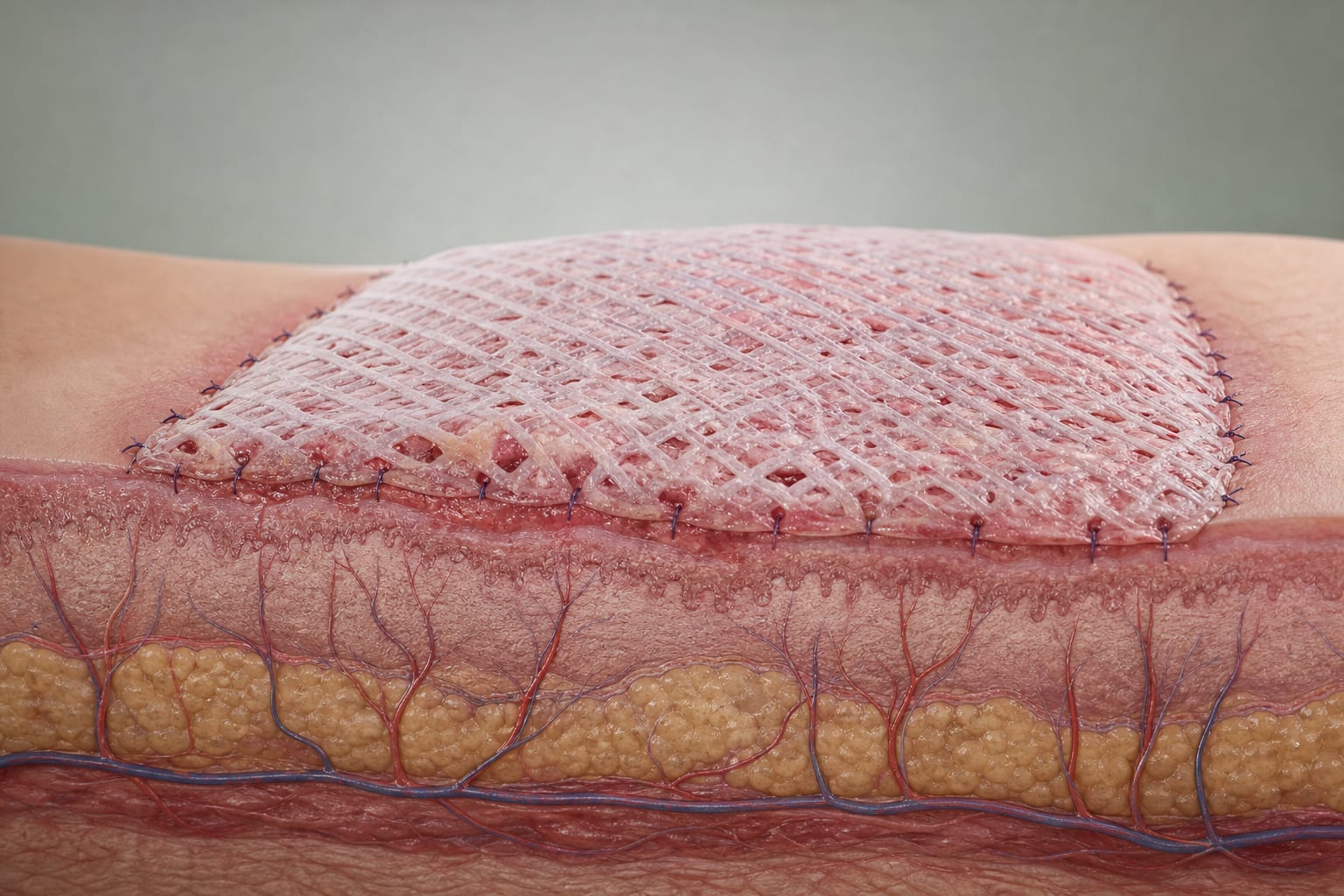
Enhanced Nursing Approaches to Improve Skin Graft Results: A Comprehensive Review of Existing Evidence
-
By
-
Wang Xing
-
Yi Huang
-
Jia Yao
-
Kan Jie
-
Tielong Xu
-
June 23, 2026
Clinical Scorecard: Enhanced Nursing Approaches to Improve Skin Graft Results: A Comprehensive Review of Existing Evidence
At a Glance
| Category | Detail |
|---|
| Condition | Skin Grafting |
| Key Mechanisms | Optimization of graft survival, healing quality, functional recovery, and aesthetic outcomes. |
| Target Population | Patients requiring skin grafts due to burns, trauma, ulcers, or tumor resection. |
| Care Setting | Clinical settings performing skin grafting procedures. |
Key Highlights
- Emergence of novel wound dressings and bioactive agents enhances skin graft outcomes.
- Evidence supports the use of functional dressings for improved healing and pain management.
- Adjunctive therapies expand the care model from passive to active healing modulation.
- Individualized perioperative pathways are forming to support skin graft success.
- Clinical practice faces dilemmas in selection and efficacy of various techniques.
Guideline-Based Recommendations
Diagnosis
- Assess the type and extent of skin defect requiring grafting.
Management
- Utilize evidence-based nursing interventions to optimize graft survival and healing.
Monitoring & Follow-up
- Regularly evaluate graft adherence, healing progress, and patient-reported outcomes.
Risks
- Consider potential complications such as infection, graft failure, and donor site morbidity.
Patient & Prescribing Data
Individuals undergoing skin grafting procedures.
Incorporate advanced dressings and adjunctive therapies to enhance recovery.
Clinical Best Practices
- Implement individualized care plans based on high-quality evidence.
- Utilize functional dressings that maintain a moist environment and reduce pain.
- Adopt adjunctive therapies to actively modulate the healing microenvironment.
Related Resources & Content