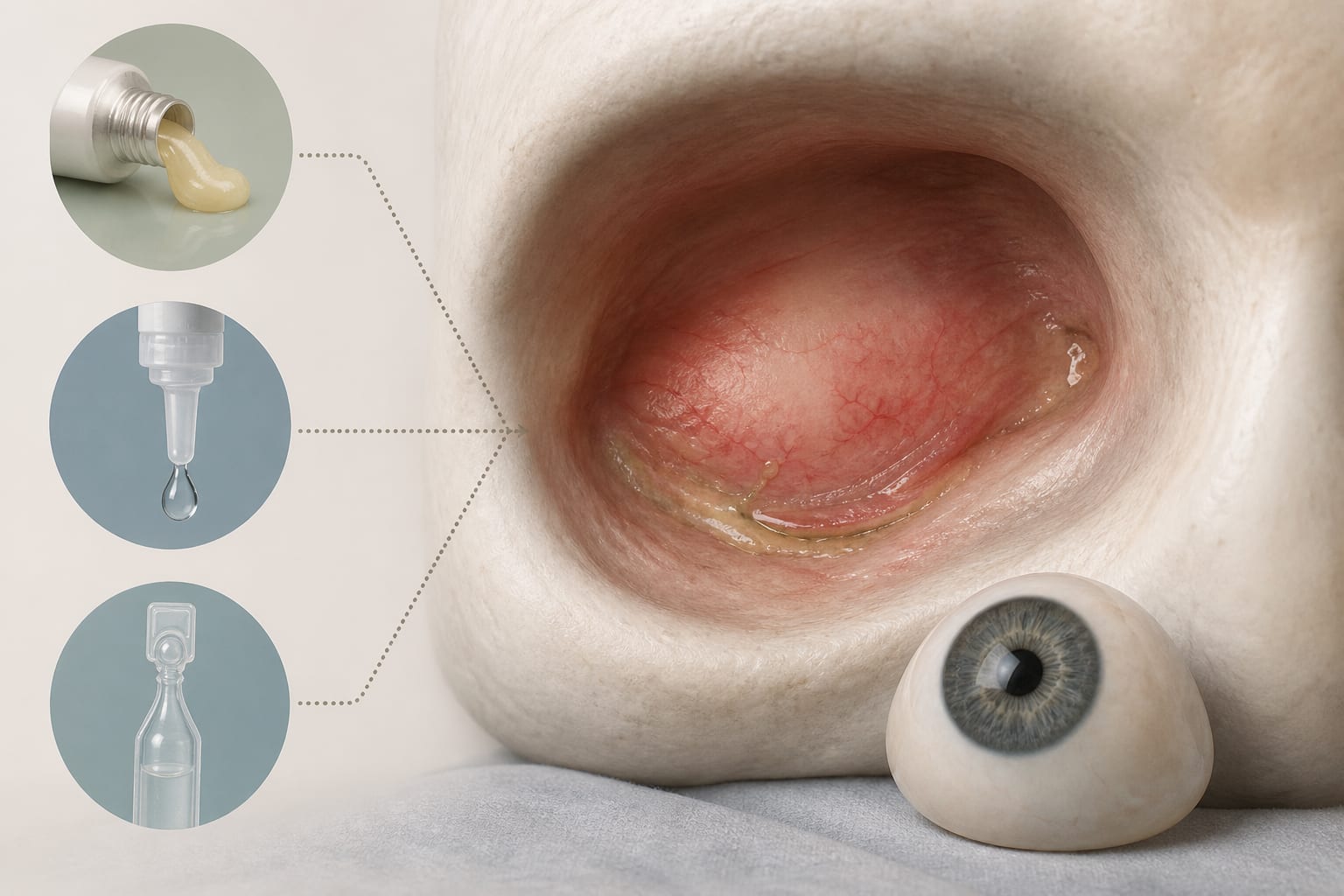
Treating socket discharge and discomfort: a crossover randomised trial of vitamin A ointment, low-dose steroid eyedrops and artificial tears - Scorecard - MDSpire
Conexiant’s news site is now MDSpire News. Learn more
Advertisement
Comparative Efficacy of Vitamin A Ointment, Low-Dose Steroid Eye Drops, and Artificial Tears for Managing Socket Discharge and Discomfort: A Randomized Crossover Study
Clinical Scorecard: Comparative Efficacy of Vitamin A Ointment, Low-Dose Steroid Eye Drops, and Artificial Tears for Managing Socket Discharge and Discomfort: A Randomized Crossover Study
At a Glance
Category
Detail
Condition
Chronic mucopurulent discharge and discomfort in anophthalmic patients
Key Mechanisms
Tear film instability, epithelial damage, inflammation, and mechanical irritation
Target Population
Patients aged ≥16 years with ocular prostheses experiencing chronic excessive mucopurulent discharge
Care Setting
Clinical management of ocular prosthesis complications
Key Highlights
Vitamin A ointment significantly outperformed artificial tears and low-dose steroids in reducing irritation and discharge.
The study utilized a randomized crossover design to improve reliability of treatment comparisons.
Chronic problems in anophthalmic patients include socket discomfort and excessive mucopurulent discharge.
Guideline-Based Recommendations
Diagnosis
Evaluate chronic excessive mucopurulent discharge and discomfort in patients with ocular prostheses.
Management
Consider vitamin A ointment as first-line treatment for managing socket discharge and discomfort.
Monitoring & Follow-up
Assess treatment efficacy through patient-reported outcomes and questionnaires.
Risks
Potential for chronic discomfort and discharge due to improper fitting of prostheses or underlying medical conditions.
Patient & Prescribing Data
Anophthalmic patients aged ≥16 years with ocular prostheses
Vitamin A ointment may provide therapeutic benefits for the conjunctival surface.
Clinical Best Practices
Implement personalized management strategies based on patient response to treatment.
Limit prosthesis handling and cleaning to reduce irritation.