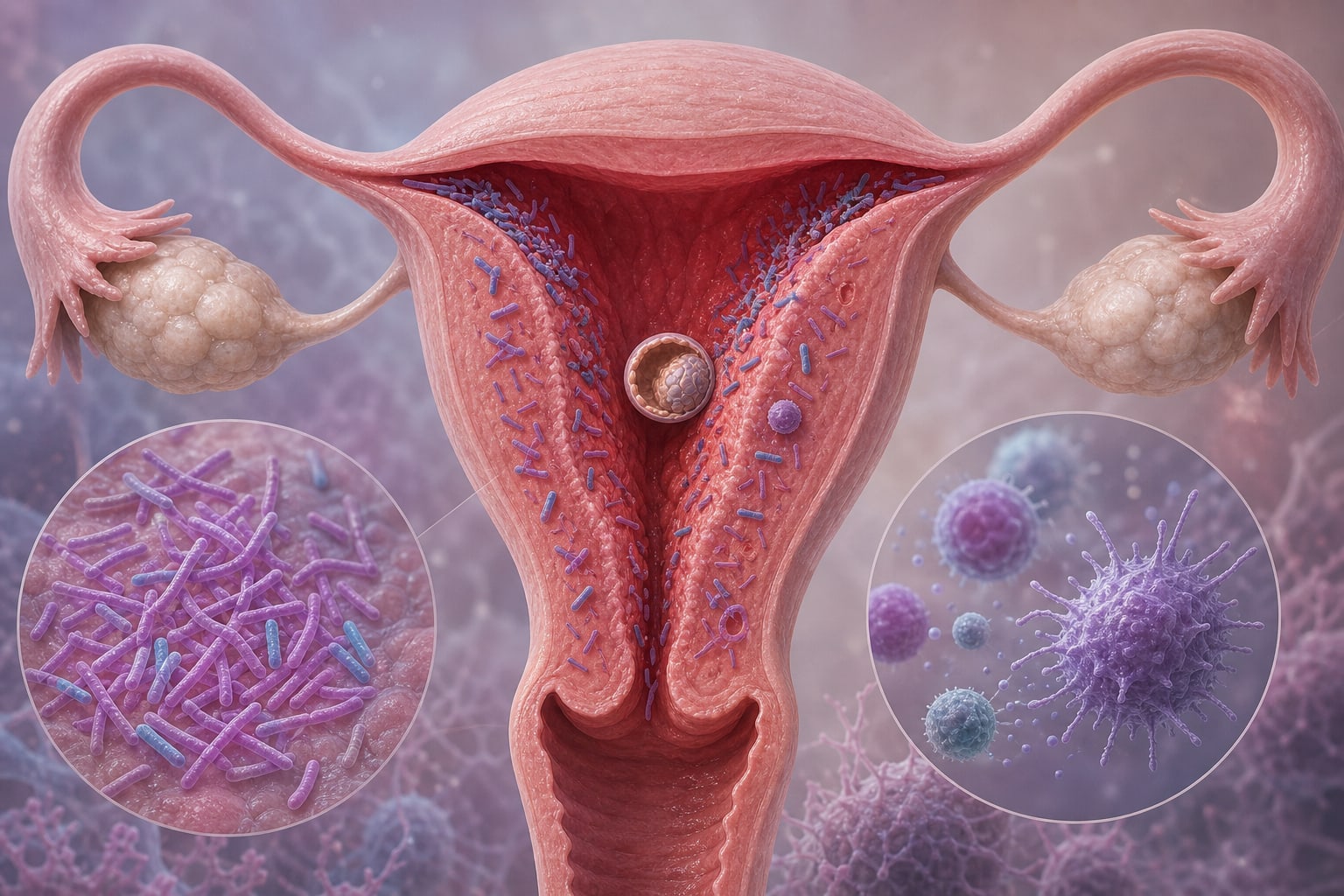
Editorial: Community series in the immunological role of the maternal microbiome in pregnancy, Volume II
By
Nicoletta Di Simone
Eytan R. Barnea
Martin Mueller
May 18, 2026
Clinical Scorecard: Insights into the Immunological Impact of the Maternal Microbiome During Pregnancy, Volume II
At a Glance
Category Detail
Condition Maternal Microbiome and Pregnancy Outcomes Key Mechanisms Crosstalk between endometrial microbiota and maternal immune system affecting implantation and early pregnancy. Target Population Pregnant women, particularly those undergoing assisted reproduction. Care Setting Obstetrics and Gynecology
Key Highlights
Endometrial microbiota is biologically relevant to reproductive success. Depletion of Lactobacillus species linked to recurrent implantation failure and miscarriage. Stable Lactobacillus-dominated microbiota associated with term delivery. Microbial shifts and metabolic profiles may precede preterm delivery. Microbiota profiling may identify women at risk for pregnancy complications. Guideline-Based Recommendations
Diagnosis
Consider microbiota profiling for women with recurrent implantation failure or miscarriage. Management
Explore interventions to modulate microbiota, such as diet and probiotics. Monitoring & Follow-up
Monitor cervicovaginal metabolite profiles alongside microbial composition. Risks
Increased diversity and depletion of protective species linked to preterm birth. Patient & Prescribing Data
Women undergoing assisted reproduction or at risk for pregnancy complications.
Current interventions lack definitive evidence for routine use.
Clinical Best Practices
Standardize microbiota assessment techniques. Conduct longitudinal studies to understand microbiota dynamics. Differentiate causation from correlation in microbiota research. Related Resources & Content