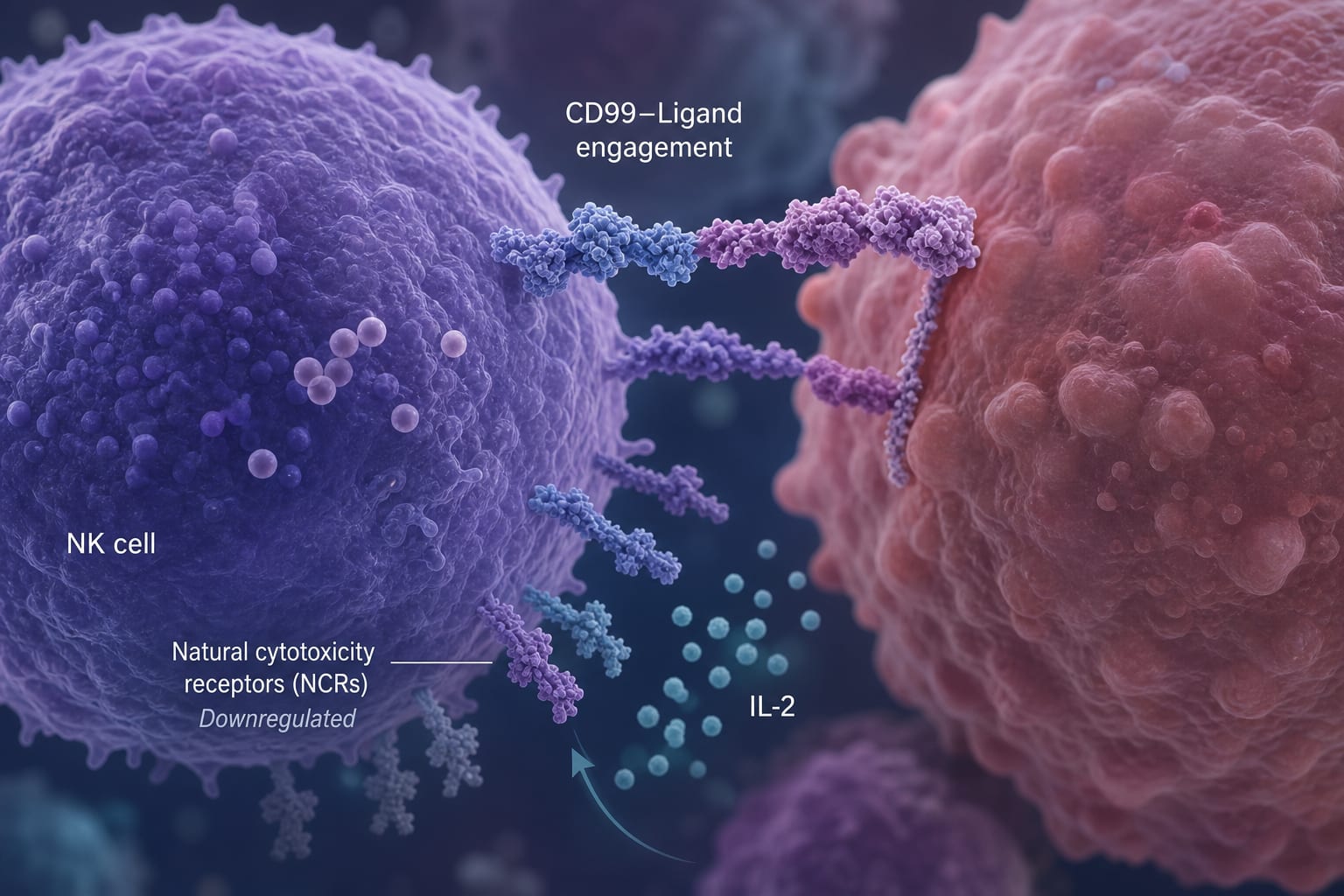
Interaction of CD99 and its ligands regulates immunoregulatory pathways in NK cells
-
By
-
Myint Myat Thu
-
Nuchjira Takheaw
-
Witida Laopajon
-
Watchara Kasinrerk
-
Supansa Pata
-
June 4, 2026
-
Clinical Scorecard: CD99 and Its Ligands Influence Immunoregulatory Mechanisms in Natural Killer Cells
At a Glance
| Category | Detail |
|---|
| Condition | Natural Killer Cell Modulation |
| Key Mechanisms | CD99 engagement modulates NK cell receptor expression and phenotypes. |
| Target Population | Individuals with tumors and viral infections. |
| Care Setting | Clinical research and immunology laboratories. |
Key Highlights
- CD99 interaction downregulates natural cytotoxicity receptors (NCRs) in NK cells.
- Differential effects observed between PBMCs and purified NK cells.
- No significant changes in cytokine production in NK cells after CD99 engagement.
- CD99 plays a role in shaping NK cell activation states and phenotypic diversity.
- Cytokines like IL-2 influence NK cell receptor dynamics.
Guideline-Based Recommendations
Diagnosis
- Evaluate NK cell receptor expression in patients with tumors and viral infections.
Management
- Consider the role of CD99 in NK cell modulation during therapeutic interventions.
Monitoring & Follow-up
- Monitor changes in NK cell phenotypes and receptor expression in response to CD99 engagement.
Risks
- Potential for immune evasion due to altered NK cell receptor balance.
Patient & Prescribing Data
Patients with cancer or viral infections requiring NK cell assessment.
CD99 engagement may influence NK cell functionality and receptor expression.
Clinical Best Practices
- Utilize flow cytometry for assessing NK cell receptor expression.
- Incorporate cytokine stimulation in NK cell studies to evaluate receptor dynamics.
- Consider the immune cell environment when interpreting NK cell responses.
Related Resources & Content