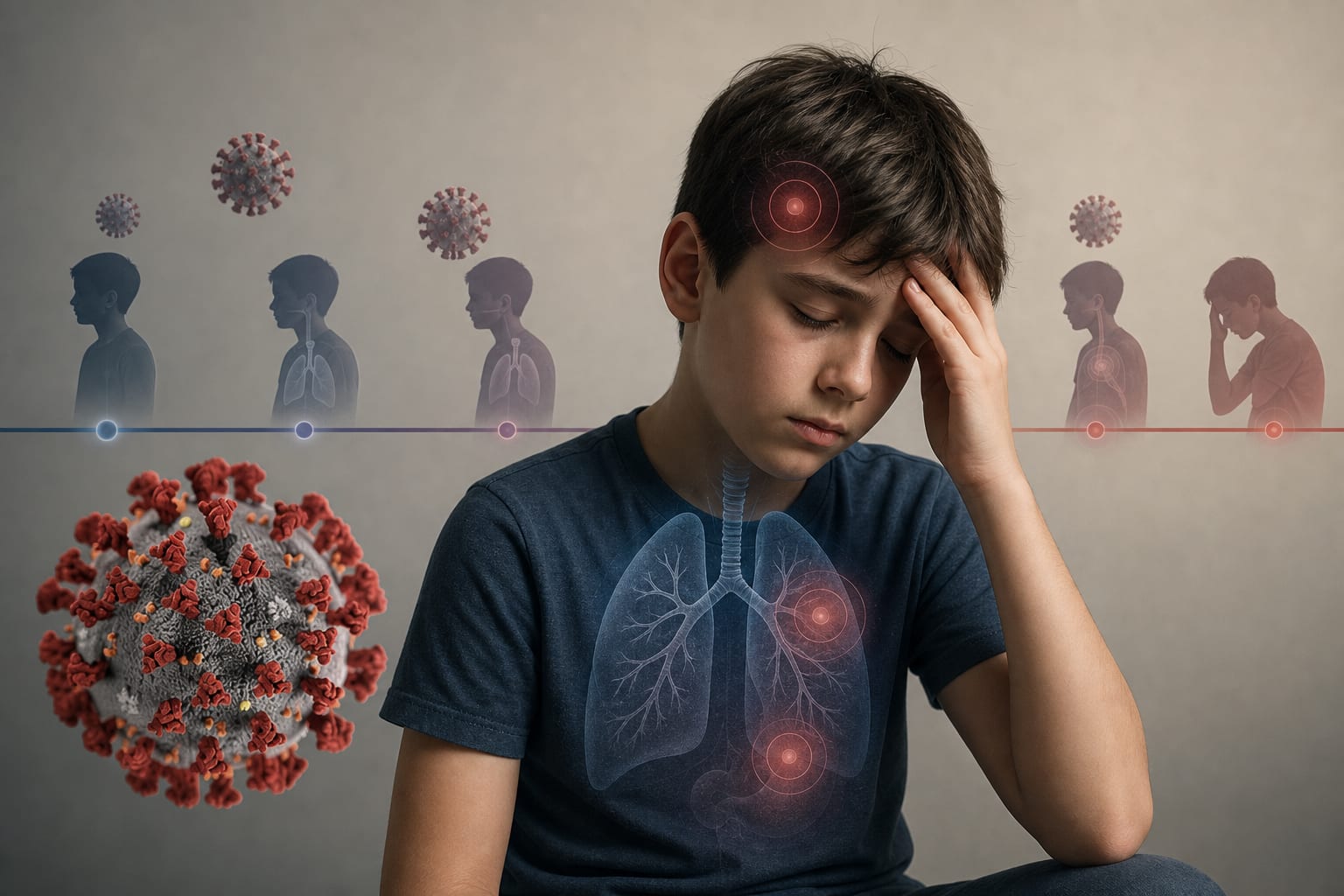
SARS-CoV-2 reinfection: a possible contributing factor to long COVID in children and adolescents
By
Rosela Lucero Chipol-Ceja
Jaime Morales-Romero
Carlos Alonso Rivero-López
María del Sagario Pérez-Callejas
Geovani López-Ortiz
Luis Del Carpio-Orantes
Claudia Iveth Spinoso-Torres
Santiago González-Periañez
María de Jesús Rodríguez-Cordoba
Liliana Ovando-Diego
Jorge Iván Zurutuza-Lorméndez
June 16, 2026
Clinical Scorecard: Reinfection with SARS-CoV-2: A Potential Factor in Long COVID Among Pediatric Patients
At a Glance
Category Detail
Condition Key Mechanisms Reinfection with SARS-CoV-2, BMI association, and their impact on long COVID risk. Target Population Care Setting
Key Highlights
Prevalence of long COVID in children was 11.8%. Common symptoms included cough (50%), myalgia (33.3%), and rhinorrhea (15.4%). Reinfection history was a significant risk factor for children over 8 years (OR 9.7). Male sex was a significant risk factor for children under 8 years (OR 4.7). Further research is necessary to understand long COVID in pediatric populations. Guideline-Based Recommendations
Diagnosis
Consider long COVID in children with persistent or new symptoms post-COVID-19. Management
Monitor symptoms and provide supportive care for long COVID manifestations. Encourage further research to understand long COVID implications in pediatric populations. Monitoring & Follow-up
Regular follow-up for children with a history of COVID-19 to assess for long COVID. Risks
Reinfection with SARS-CoV-2 may increase the risk of long COVID. Patient & Prescribing Data
Children and adolescents treated for symptomatic COVID-19.
Focus on symptom management and monitoring for long-term effects.
Clinical Best Practices
Educate families about the potential for long COVID. Implement screening for long COVID symptoms in pediatric patients post-COVID-19. Encourage vaccination to reduce the risk of severe disease and potential long COVID. Address the economic burden of long COVID in management strategies. Related Resources & Content