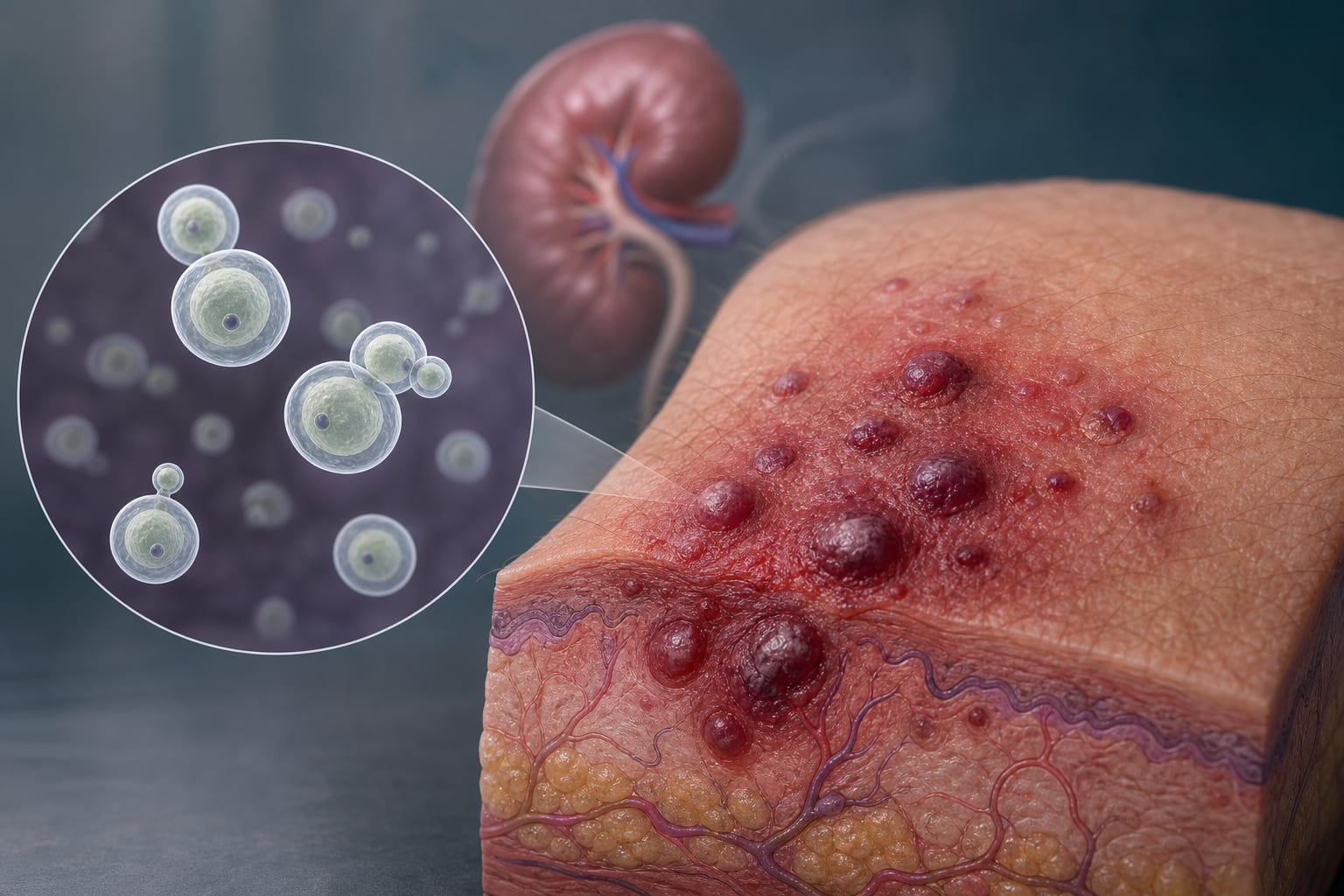
Clinical Scorecard: Understanding Melasma: A Comprehensive Overview of the Skin Condition
At a Glance
Category
Detail
Condition
Melasma
Key Mechanisms
Increased pigment production by melanocytes due to UV exposure, hormonal factors, and family history.
Target Population
Primarily women of reproductive age, but can affect men and individuals of various backgrounds, especially those of African, Asian, Hispanic, and Middle Eastern ancestry.
Care Setting
Dermatology
Key Highlights
Melasma is characterized by dark patches on the face.
It affects approximately 1 in 100 individuals.
Diagnosis is primarily clinical, with possible use of dermatoscope or Wood lamp.
Treatment includes sunscreen, topical agents, and procedural options like chemical peels and laser treatments.
Melasma may resolve on its own in some cases, particularly during pregnancy.
Guideline-Based Recommendations
Diagnosis
Clinical examination of skin lesions; use of dermatoscope or Wood lamp may assist.
Management
Daily use of broad-spectrum, tinted sunscreen with SPF of at least 30.
Topical creams containing lightening agents.
Oral tranexamic acid for severe cases.
Procedures like chemical peels and laser treatments performed by board-certified dermatologists.
Monitoring & Follow-up
Monitor for changes in lesions and response to treatment.
Risks
Melasma is not contagious or life-threatening but may affect emotional well-being.
Patient & Prescribing Data
Individuals with melasma, particularly women of reproductive age.
Treatment may require several months for noticeable improvement, and melasma is often a long-term condition.
Clinical Best Practices
Encourage sun protection measures to prevent exacerbation.
Consider individual patient factors when prescribing treatments.