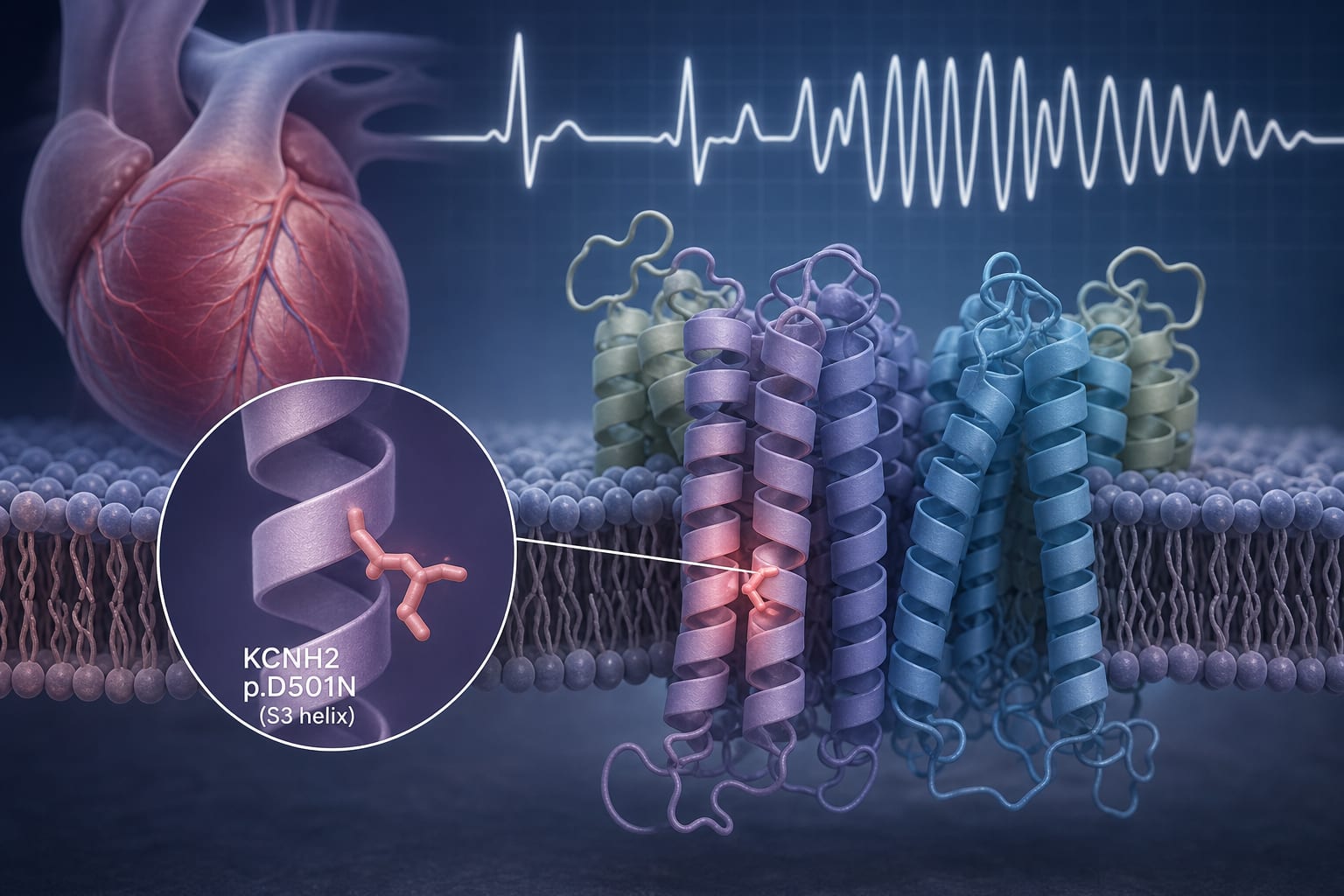
Rare pathogenic mutation of KCNH2 p.D501N associated with early-onset malignant long QT syndrome
-
By
-
Yubi Lin
-
Xingchen Li
-
Mingsui Gao
-
Yechang Chen
-
Zhuguo Wu
-
Jia Chen
-
June 10, 2026
-
Clinical Scorecard: Uncommon KCNH2 p.D501N Mutation Linked to Early-Onset Malignant Long QT Syndrome
At a Glance
| Category | Detail |
|---|
| Condition | |
| Key Mechanisms | KCNH2 p.D501N mutation alters Kv11.1 protein structure, impairing cardiac IKr current. |
| Target Population | |
| Care Setting | |
Key Highlights
- 16-year-old girl presented with prolonged QT interval, TdP, VT, and VF.
- De novo KCNH2 p.D501N mutation leads to significant structural changes in Kv11.1 protein.
- Condition requires ICD therapy, long-term β-blocker, and potassium–magnesium supplementation.
Guideline-Based Recommendations
Diagnosis
- Diagnosis based on clinical standard score and genetic testing.
Management
- ICD therapy combined with long-term β-blocker administration and potassium–magnesium supplementation.
Monitoring & Follow-up
- Regular ECG monitoring for QT interval and arrhythmia.
Risks
- Risk of torsades de pointes, ventricular tachycardia, ventricular fibrillation, and sudden cardiac death.
Patient & Prescribing Data
Young patients with congenital LQTS, particularly those with KCNH2 mutations.
Clinical Best Practices
- Perform genetic testing for suspected cases of LQTS.
- Monitor for arrhythmias in patients with prolonged QT intervals.
Related Resources & Content