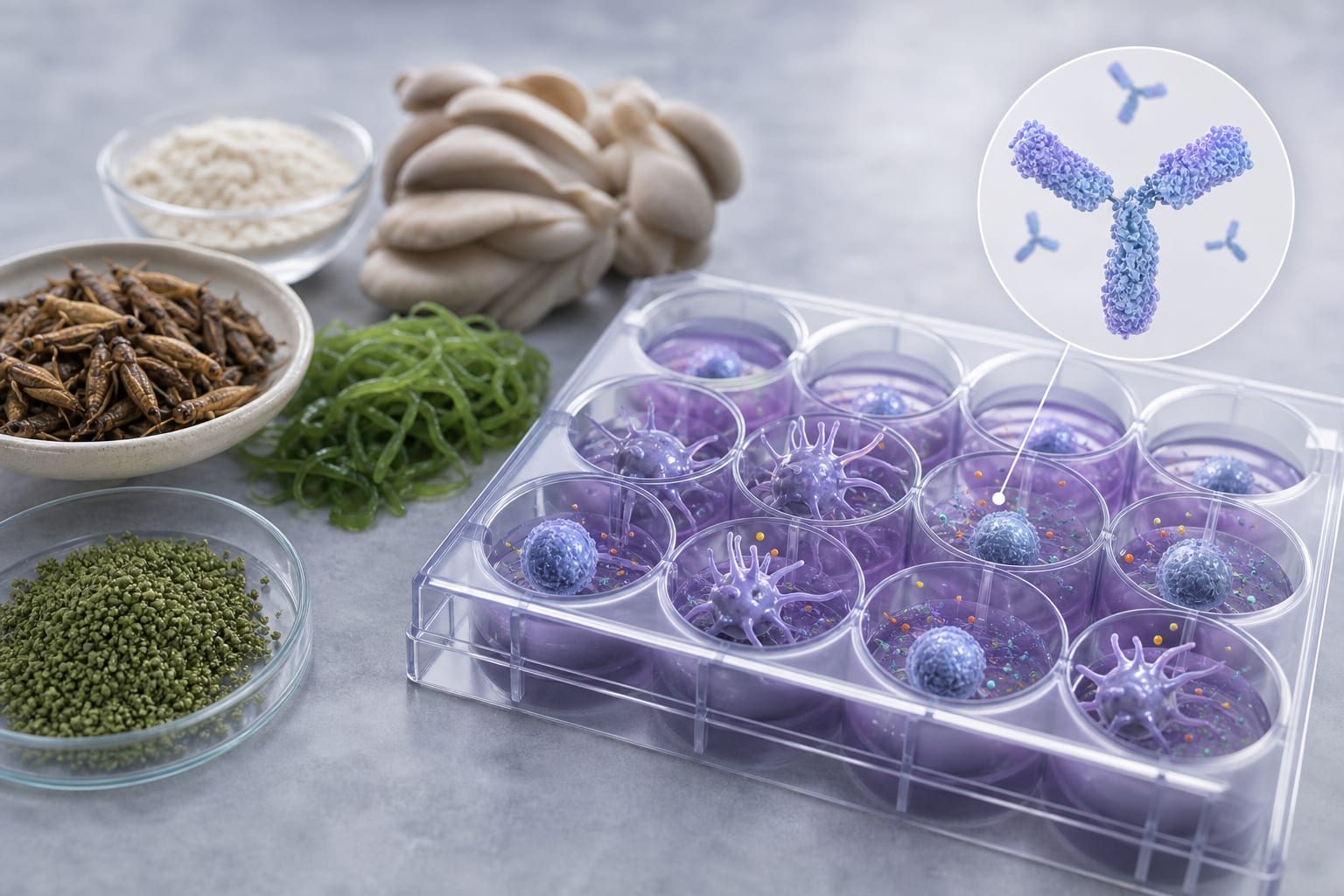
Allergenicity assessment of novel foods - lessons from immune endotyping of food-allergic patients
-
By
-
Isabela Assugeni
-
Melike Gezen
-
Gül Duman
-
Naphisabet Wanniang
-
Françoise Codreanu-Morel
-
Gabriele Gadermaier
-
Theresa-Maria Boehm
-
Annette Kuehn
-
June 10, 2026
-
Clinical Scorecard: Evaluation of Allergenicity in Novel Foods: Insights from Immune Endotyping in Patients with Food Allergies
At a Glance
| Category | Detail |
|---|
| Condition | |
| Key Mechanisms | |
| Target Population | Individuals with food allergies, particularly children aged 0-18. |
| Care Setting | |
Key Highlights
- Food allergy affects up to 10% of the global population, with increasing prevalence among children. [Source needed]
- Current guidelines for novel foods (NF) focus on potential IgE cross-reactivity but lack direction for unknown allergenic potential.
- Immune endotyping can differentiate between food allergy, asymptomatic IgE sensitization, and healthy states.
- Functional assays using immune cells can provide insights into the severity and reactivity of food allergies.
- Regulatory frameworks for NF require safety assessments before market introduction.
Guideline-Based Recommendations
Diagnosis
Management
- Risk assessment of novel foods through a weight-of-evidence approach. [Source needed]
Monitoring & Follow-up
Risks
Patient & Prescribing Data
Patients with food allergies exhibiting diverse clinical reactivity profiles.
Endotyping approaches can help tailor management strategies based on individual immune responses.
Clinical Best Practices
- Incorporate immune endotyping in the assessment of food allergies. [Source needed]
- Utilize multiplex platforms for measuring molecular spreading of IgE responses. [Source needed]
- Consider functional IgE-cross-linking tests to evaluate patient reactivity. [Source needed]
Related Resources & Content