The functions and inhibitors of protein tyrosine phosphatase B from Mycobacterium tuberculosis
By
Haonan Wang
Leiliang Zhang
June 4, 2026
Clinical Scorecard: Exploring the Role and Inhibitors of Protein Tyrosine Phosphatase B in Mycobacterium tuberculosis
At a Glance
Category Detail
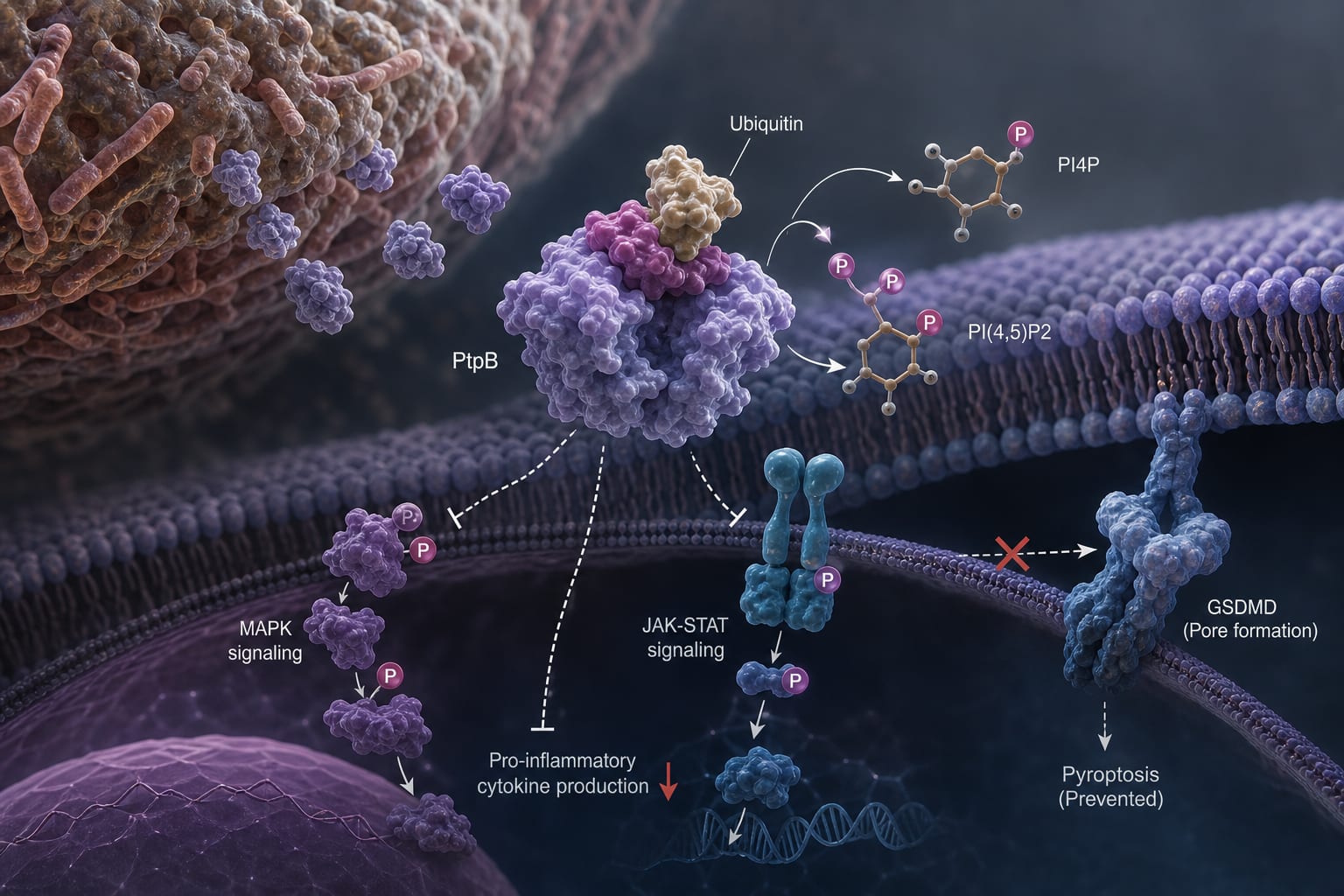
Condition Key Mechanisms PtpB disrupts host innate immune defenses by dephosphorylating key signaling pathways, including MAPK and JAK-STAT, and plasma membrane lipids. Target Population Care Setting
Key Highlights
PtpB is a low molecular weight protein tyrosine phosphatase that plays a critical role in immune evasion. It dephosphorylates components of the MAPK and JAK-STAT signaling pathways. PtpB inhibits pyroptosis by dephosphorylating phosphoinositide lipids. Selective inhibitors of PtpB, such as Kuwanol E and OMTS, have been discovered and show promise in clinical applications. PtpB is a promising target for novel host-directed therapies against tuberculosis. Guideline-Based Recommendations
Diagnosis
Management
Monitoring & Follow-up
Assess the efficacy of PtpB inhibitors in preclinical models of tuberculosis. Monitor patient responses to PtpB inhibitors in clinical trials, focusing on immune response metrics. Risks
Patient & Prescribing Data
Inhibitors of PtpB may enhance host immune responses against Mtb by restoring phosphorylation levels of key signaling proteins.
Clinical Best Practices
Utilize structural insights from PtpB to guide the design of selective inhibitors, such as those targeting the dynamic lid structure. Incorporate findings from genetic studies to inform therapeutic strategies, including the use of specific inhibitors in resistant strains. Related Resources & Content