Case Report: [225Ac]Ac-PSMA-617 therapy in a patient with metastatic castration-resistant prostate cancer (mCRPC) and intracranial meningioma - Scorecard - MDSpire
Advertisement
Case Report: [225Ac]Ac-PSMA-617 therapy in a patient with metastatic castration-resistant prostate cancer (mCRPC) and intracranial meningioma
Clinical Scorecard: Case Study: Administration of [225Ac]Ac-PSMA-617 in a Patient with Metastatic Castration-Resistant Prostate Cancer and Intracranial Meningioma
At a Glance
Category
Detail
Condition
Key Mechanisms
Prostate-specific membrane antigen (PSMA) expression in tumors allows for targeted radioligand therapy.
Target Population
Care Setting
Key Highlights
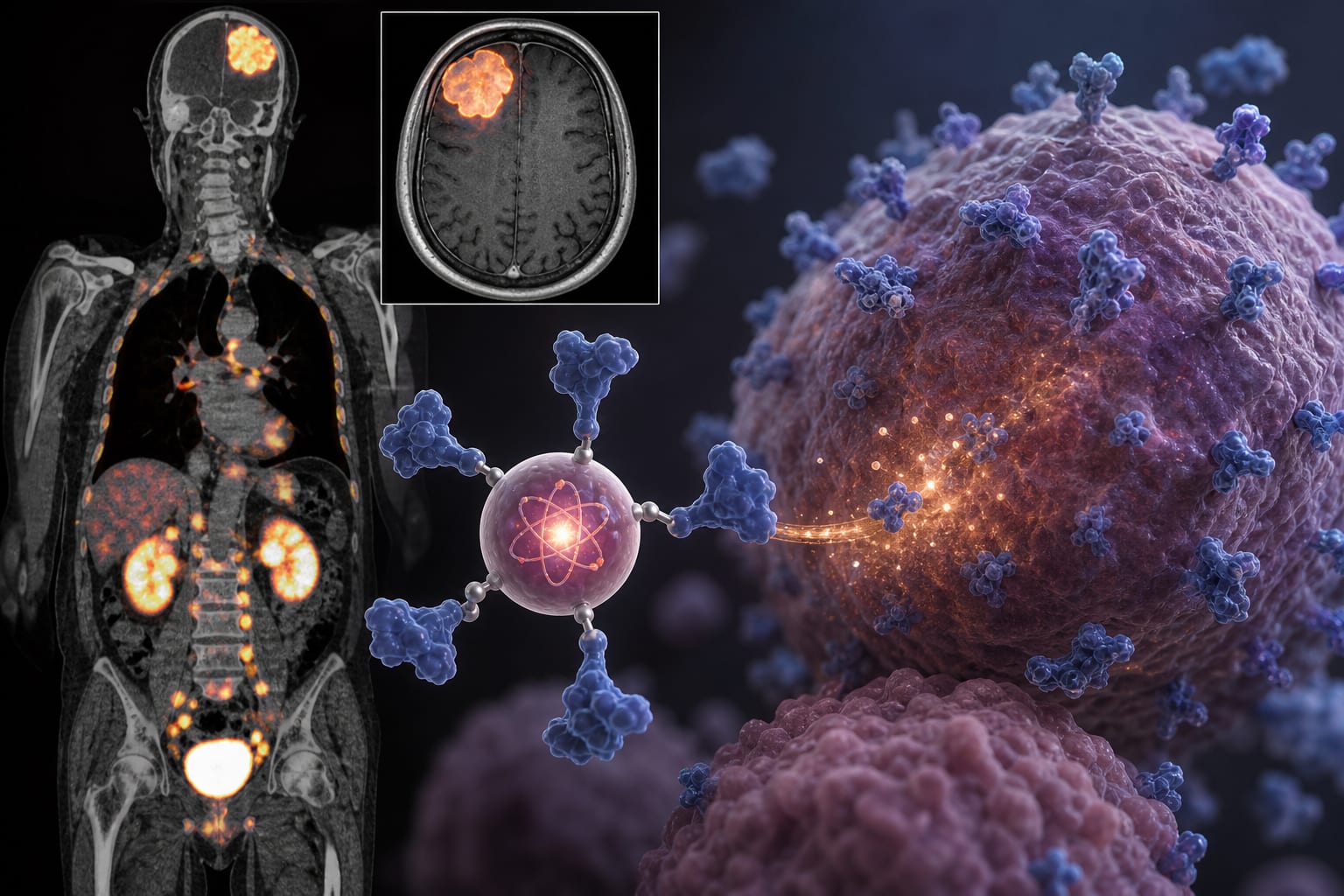
Significant decrease in PSA level by 99.8% post-treatment.
90.6% reduction in meningioma size observed.
Stable hematological parameters throughout the treatment.
High-grade xerostomia reported as an adverse effect.
Guideline-Based Recommendations
Diagnosis
Use PET/CT with [68Ga]Ga-PSMA-11 for assessing PSMA expression in tumors.
Management
Consider [225Ac]Ac-PSMA-617 therapy for patients with PSMA-expressing tumors.
Monitoring & Follow-up
Monitor PSA levels and perform imaging studies (MRI, PET/CT) to assess treatment response.
Risks
Potential for high-grade xerostomia and other adverse effects.
Patient & Prescribing Data
77-year-old male with advanced prostate cancer and meningioma.
Patient received four administrations of [225Ac]Ac-PSMA-617 after prior therapies failed.
Clinical Best Practices
Evaluate PSMA expression in tumors for targeted therapy.
Monitor adverse effects closely during radioligand therapy.