Radiological response of primary central nervous system lymphoma after corticosteroid therapy and its predictive value on overall survival: a multicenter study - Scorecard - MDSpire
Conexiant’s news site is now MDSpire News. Learn more
Advertisement
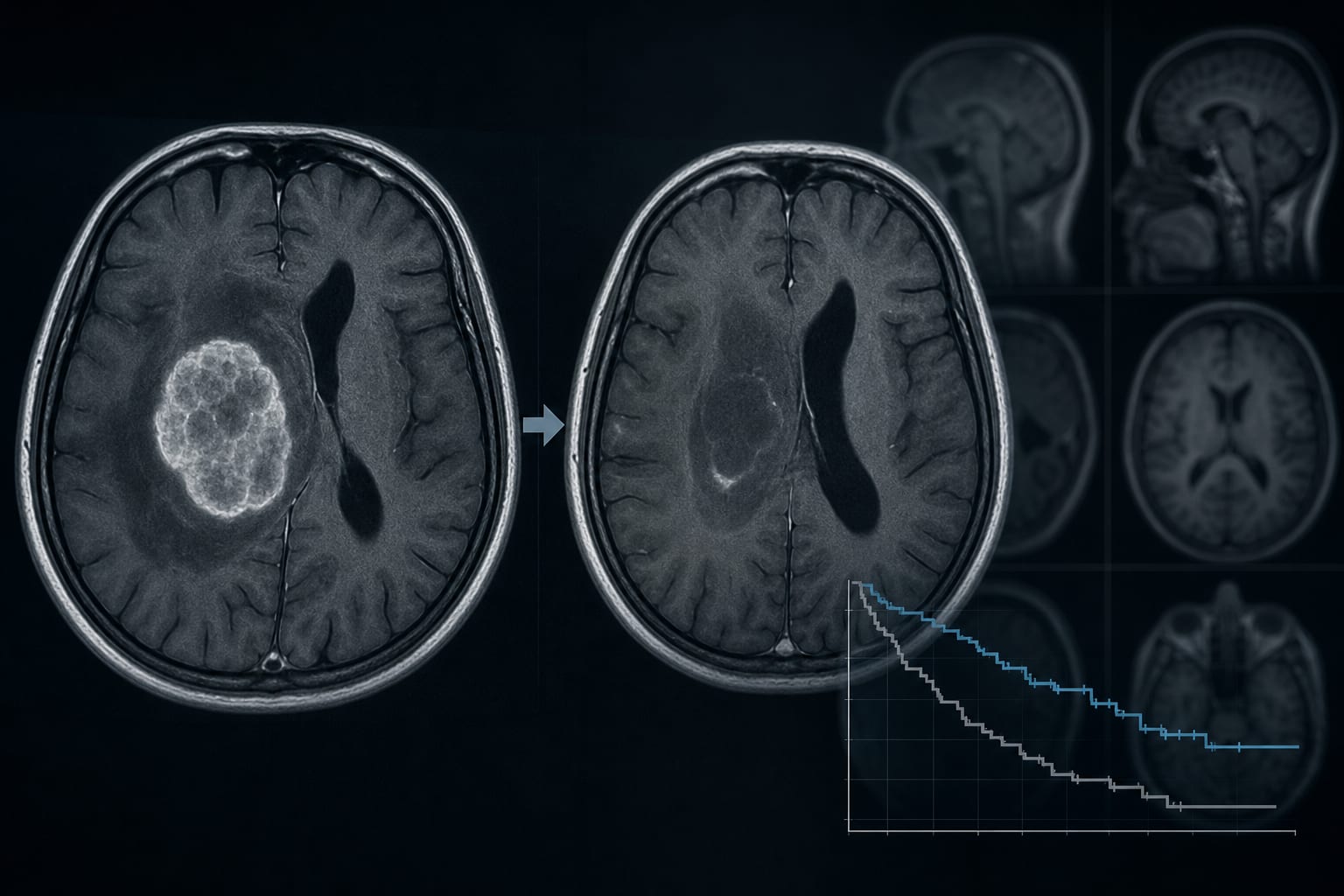
Assessment of Radiological Changes in Primary Central Nervous System Lymphoma Following Corticosteroid Treatment and Its Prognostic Implications for Overall Survival: A Multicenter Analysis
Clinical Scorecard: Assessment of Radiological Changes in Primary Central Nervous System Lymphoma Following Corticosteroid Treatment and Its Prognostic Implications for Overall Survival: A Multicenter Analysis
At a Glance
Category
Detail
Condition
Primary Central Nervous System Lymphoma (PCNS-LBCL)
Key Mechanisms
Corticosteroid therapy (CST) may reduce contrast-enhancing tumor visible on MRI.
Target Population
Patients with suspected PCNS-LBCL scheduled for biopsy.
Care Setting
Multicenter neurosurgical centers
Key Highlights
PCNS-LBCL represents approximately 3% of intracranial tumors.
CST can lead to subtotal or complete disappearance of neoplastic B-cells.
Radiological response patterns have been characterized only in retrospective studies.
Most tumors relapse shortly after initial regression with CST.
The study evaluated the prognostic significance of radiological changes post-CST.
Guideline-Based Recommendations
Diagnosis
Histopathological examination required to confirm PCNS-LBCL.
Management
CST should be withheld until diagnostic tissue is obtained when feasible.
Monitoring & Follow-up
Postoperative MRI should be performed 5 to 10 days after CST initiation.
Risks
CST may produce inconclusive biopsy findings due to tumor regression.
Patient & Prescribing Data
18 patients with suspected PCNS-LBCL.
Initial 40 mg dexamethasone bolus followed by 16 mg daily, reducing by half every 3 days.
Clinical Best Practices
Perform MRI assessments to evaluate tumor response to CST.
Consider patient heterogeneity in response to CST when planning treatment.
by Florian Scheichel, D. Pinggera, T. Rossmann, B. Popadic, S. Aspalter, V. Schön, A. Woehrer, M. M. Dorostkar, C. Dorfer, C. F. Freyschlag, F. Marhold
he U.S. Food and Drug Administration (FDA) has approved daraxonrasib, an oral multi-selective RAS(ON) inhibitor, for adults with metastatic pancreatic adenocarcinoma who have received at least one prior systemic therapy or are not candidates for multiagent systemic therapy.