Case Report: Acute myeloid leukemia with mixed immunophenotypic features and TCF3::ZNF384 fusion in a pediatric patient with CNS involvement: a diagnostic and therapeutic challenge - Scorecard - MDSpire
Advertisement
Case Report: Acute myeloid leukemia with mixed immunophenotypic features and TCF3::ZNF384 fusion in a pediatric patient with CNS involvement: a diagnostic and therapeutic challenge
Clinical Scorecard: Case Study: Pediatric Acute Myeloid Leukemia Exhibiting Mixed Immunophenotype and TCF3::ZNF384 Fusion with Central Nervous System Involvement: Diagnostic and Treatment Challenges
At a Glance
Category
Detail
Condition
Key Mechanisms
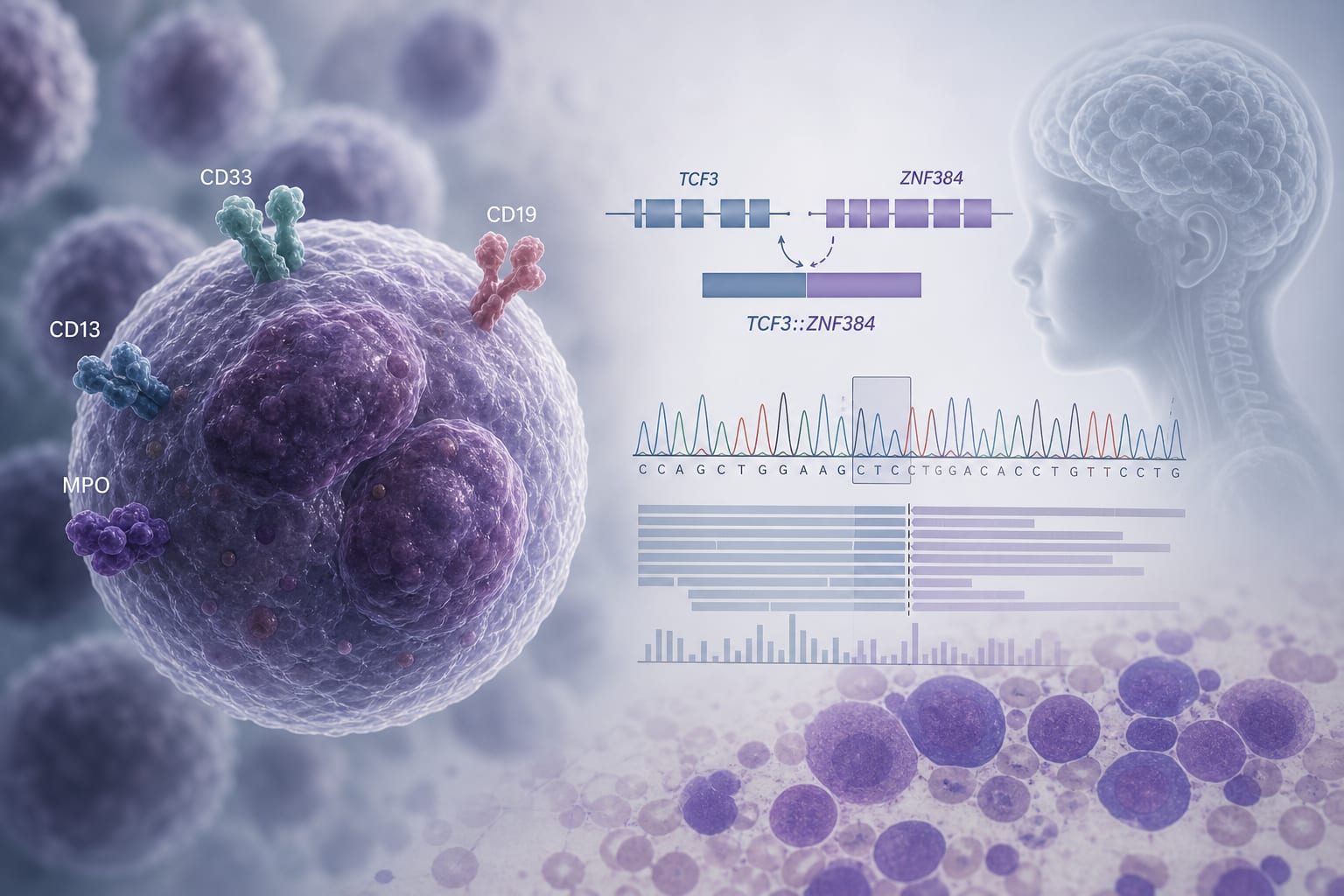
Mixed lineage features with TCF3::ZNF384 fusion and central nervous system involvement.
Target Population
Care Setting
Key Highlights
AML accounts for 15%-20% of childhood acute leukemias.
TCF3::ZNF384 fusion is associated with mixed-phenotype acute leukemia (MPAL).
Comprehensive molecular testing is crucial for accurate diagnosis.
CNS involvement complicates diagnosis and management.
Guideline-Based Recommendations
Diagnosis
Utilize flow cytometry and next-generation sequencing for characterization.
Identify mixed lineage features to avoid misclassification.
Management
Consider combined or sequential AML/ALL treatment regimens for TCF3::ZNF384 fusion cases.