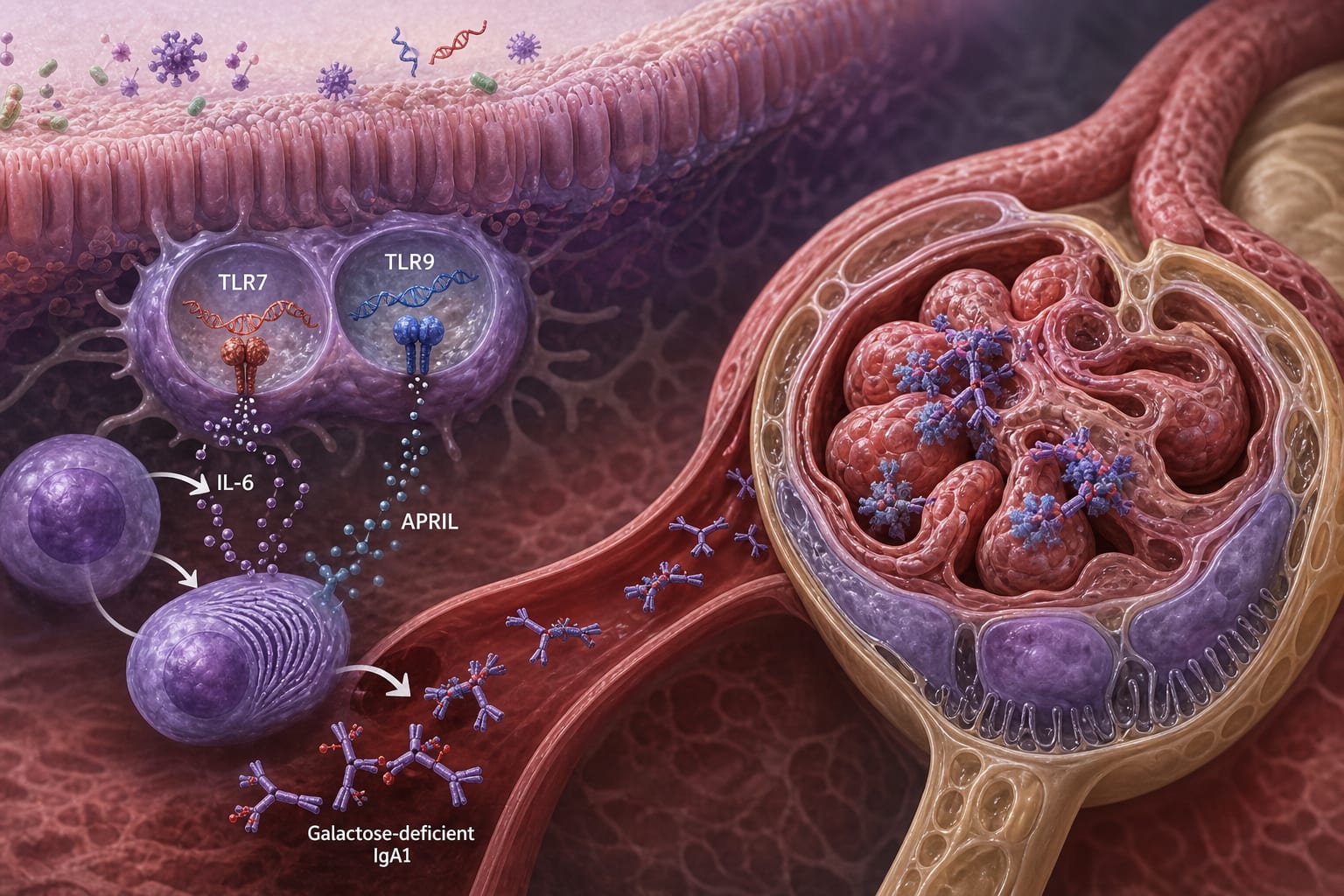
TLR7/9-mediated mucosal innate immune dysregulation in IgA nephropathy
By
Mingfeng Lee
Hitoshi Suzuki
Yuko Makita
Yusuke Suzuki
July 8, 2026
Clinical Scorecard: Dysregulation of Mucosal Innate Immunity via TLR7 and TLR9 in IgA Nephropathy
At a Glance
Category Detail
Condition IgA Nephropathy Key Mechanisms Dysregulated mucosal innate immune responses via TLR7 and TLR9 activation. Target Population Patients with IgA nephropathy, particularly prevalent in East Asia. Care Setting Clinical and experimental studies on glomerulonephritis.
Key Highlights
IgA nephropathy is the most common primary glomerulonephritis worldwide. Dysregulated mucosal immunity contributes to disease pathogenesis. TLR7 and TLR9 are implicated in abnormal IgA responses. Elevated levels of galactose-deficient IgA1 (Gd-IgA1) are key in disease progression. Therapeutic advances targeting mucosal immunity show clinical relevance. Guideline-Based Recommendations
Diagnosis
Diagnosis is based on clinical presentation and histological findings. Management
Current management includes monitoring and supportive care; no curative therapy established. Monitoring & Follow-up
Regular assessment of renal function and urinary abnormalities. Risks
Up to 40% of untreated patients may progress to end-stage kidney disease within two decades. Patient & Prescribing Data
Patients with IgA nephropathy, particularly those with elevated Gd-IgA1 levels.
Emerging therapies include hydroxychloroquine and APRIL/BAFF-directed therapies.
Clinical Best Practices
Consider tonsillectomy in patients with elevated Gd-IgA1 levels and urinary abnormalities. Monitor for microbial triggers of mucosal immune activation. Integrate findings from genetic and translational studies into clinical practice. Related Resources & Content