Efficacy and safety of an implantable tibial neuromodulation system for overactive bladder with urgency urinary incontinence: an open-label, single arm trial - Scorecard - MDSpire
Advertisement
Efficacy and safety of an implantable tibial neuromodulation system for overactive bladder with urgency urinary incontinence: an open-label, single arm trial
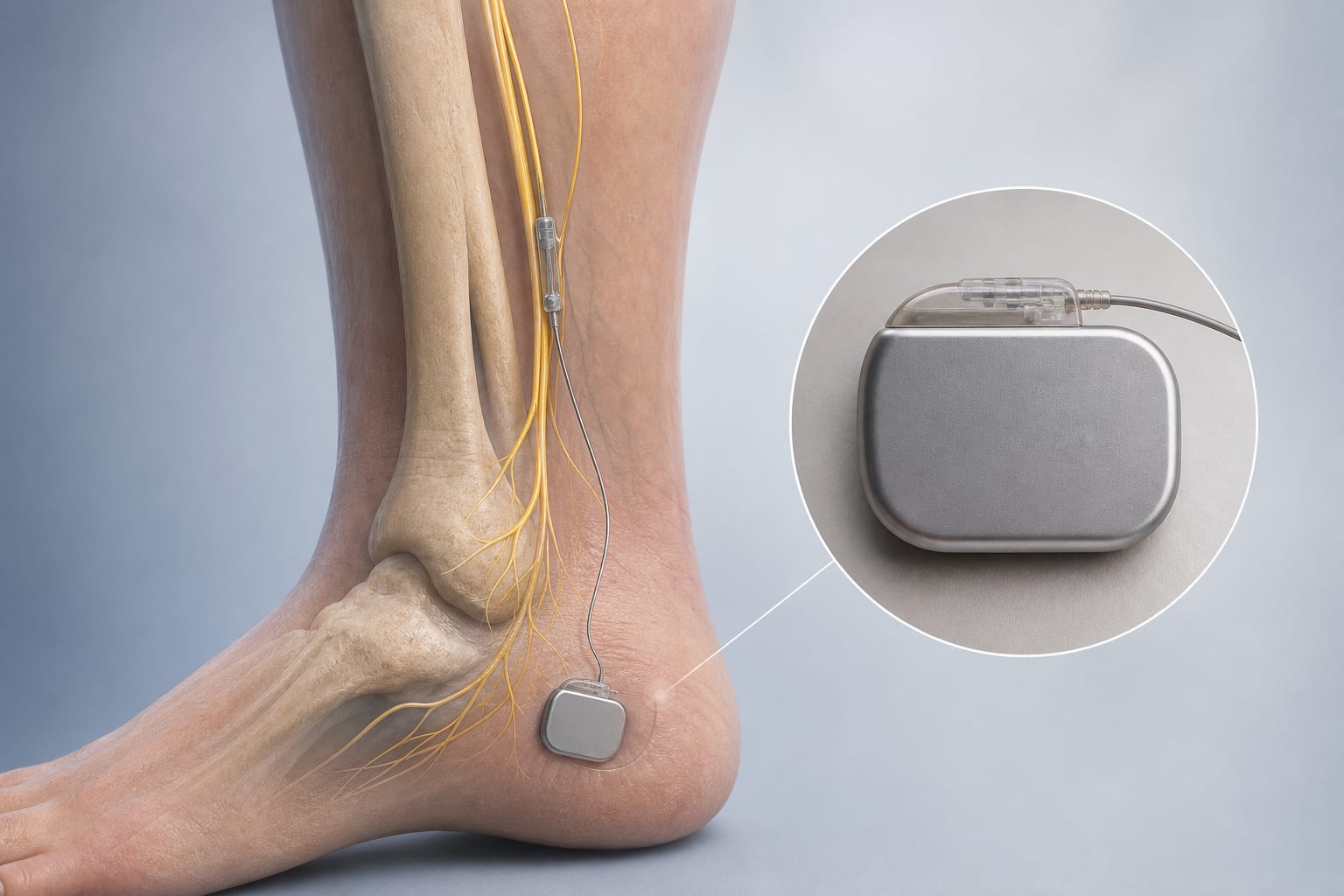
Clinical Scorecard: Assessment of Safety and Effectiveness of an Implantable Tibial Neuromodulation Device for Treating Overactive Bladder with Urgency Urinary Incontinence: Results from a Single-Arm Open-Label Study
At a Glance
Category
Detail
Condition
Overactive Bladder with Urgency Urinary Incontinence
Key Mechanisms
Implantable tibial neuromodulation system (iTNS) for neuromodulation of bladder activity.
Target Population
Patients with refractory overactive bladder and urgency urinary incontinence.
Care Setting
Single-center open-label trial.
Key Highlights
90% response rate at 6 months with iTNS system.
40% of patients achieved ≥3 consecutive dry days.
Significant reduction in UUI episodes from 3.235 to 0.632 per day at 6 months.
Quality of life improved significantly as per validated questionnaires.
80% of patients reported satisfaction with symptoms at 6 months.
Guideline-Based Recommendations
Diagnosis
Diagnosis of OAB can be made in the absence of urinary tract infection or identifiable pathologies.
Management
Consider iTNS for patients with intractable symptoms despite first-line and second-line treatments.
Monitoring & Follow-up
Follow-up evaluations at 1, 3, and 6 months post-implantation.
Risks
Potential device-related adverse events such as pain and infection.
Patient & Prescribing Data
Chinese patients with refractory overactive bladder.
iTNS offers a minimally invasive alternative with continuous, patient-controlled neuromodulation.
Clinical Best Practices
Utilize validated questionnaires for assessing quality of life and symptom satisfaction.
Implement a step-wise treatment approach for OAB management.