Predictors of cough resolution following endoscopic minimally invasive treatment in patients with GERD and chronic cough: a retrospective study - Scorecard - MDSpire
Advertisement
Predictors of cough resolution following endoscopic minimally invasive treatment in patients with GERD and chronic cough: a retrospective study
Clinical Scorecard: Factors Associated with Cough Improvement After Endoscopic Minimally Invasive Therapy in GERD Patients with Chronic Cough: A Retrospective Analysis
At a Glance
Category
Detail
Condition
Gastroesophageal reflux disease (GERD) with chronic cough
Key Mechanisms
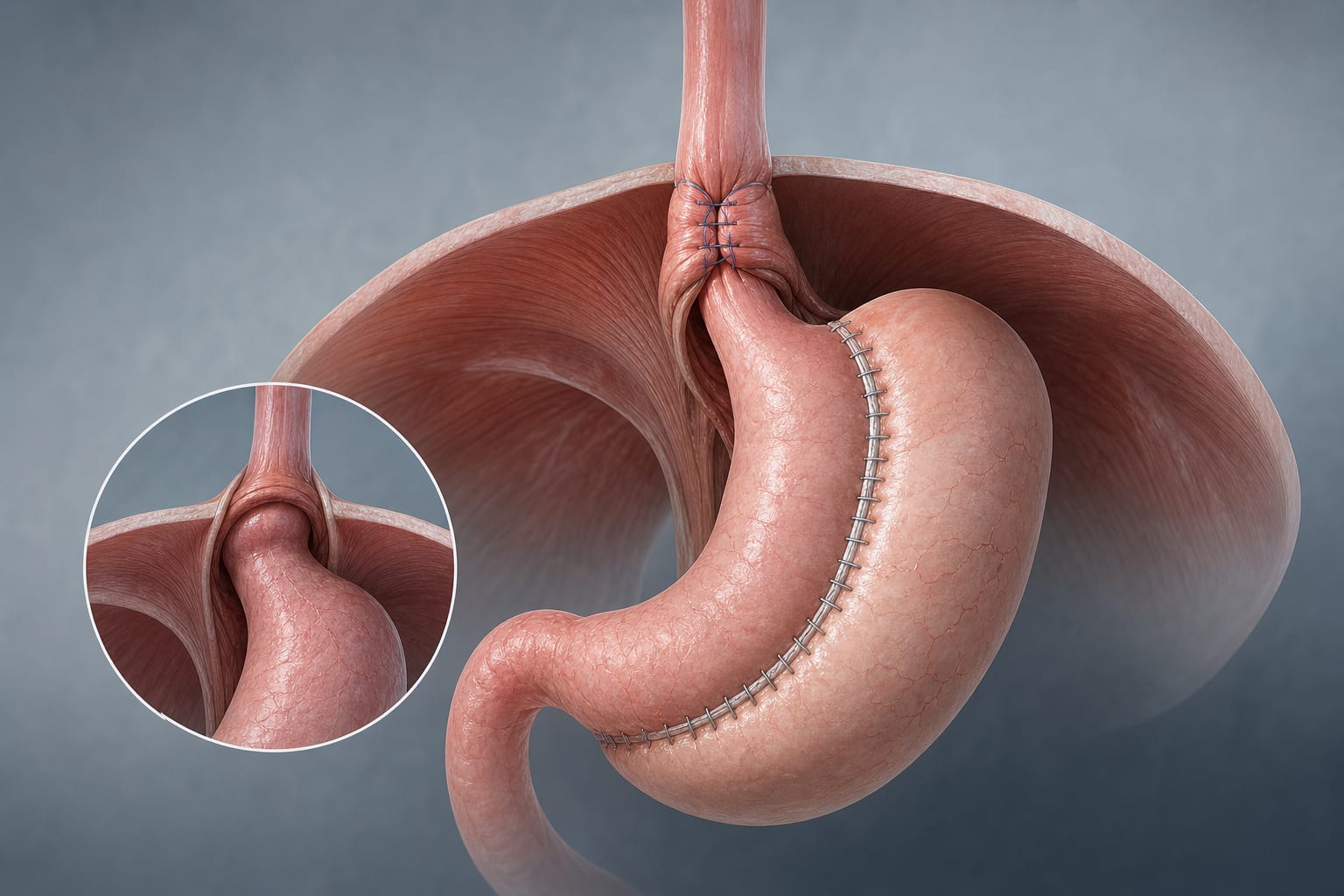
Endoscopic minimally invasive therapy aimed at enhancing lower esophageal sphincter (LES) function
Target Population
Patients with GERD and chronic cough undergoing endoscopic treatment
Care Setting
Hospital-based endoscopic treatment
Key Highlights
200 patients analyzed, divided into cough non-relief (n=35) and cough-relief (n=165) groups
Significant risk factors for persistent cough include ineffective esophageal motility, cough duration, DeMeester score, pepsin, and FeNO
SIgA identified as a protective factor against persistent cough
Nomogram model developed shows good predictive efficacy with ROC-AUC of 0.967
Study emphasizes the importance of identifying high-risk patients for better treatment outcomes
Guideline-Based Recommendations
Diagnosis
Diagnosis of GERD based on Lyon Consensus 2.0 criteria
Management
Endoscopic minimally invasive therapy such as fundoplication or radiofrequency ablation
Monitoring & Follow-up
Post-treatment evaluation of cough resolution using validated cough score reduction criteria
Risks
Higher age, smoking history, and ineffective esophageal motility are associated with persistent cough
Patient & Prescribing Data
Patients with GERD and chronic cough, aged over 18
Endoscopic therapy may vary based on disease severity and patient selection criteria
Clinical Best Practices
Utilize predictive models for preoperative patient screening
Monitor cough resolution post-treatment to assess efficacy
Consider individual risk factors when planning treatment