Clinical Scorecard: Unraveling Autoimmune Disorders Through Single-Cell Immune Repertoire and Transcriptomic Analysis: Insights into Mechanisms and Treatment Potential
At a Glance
Category
Detail
Condition
Autoimmune Diseases
Key Mechanisms
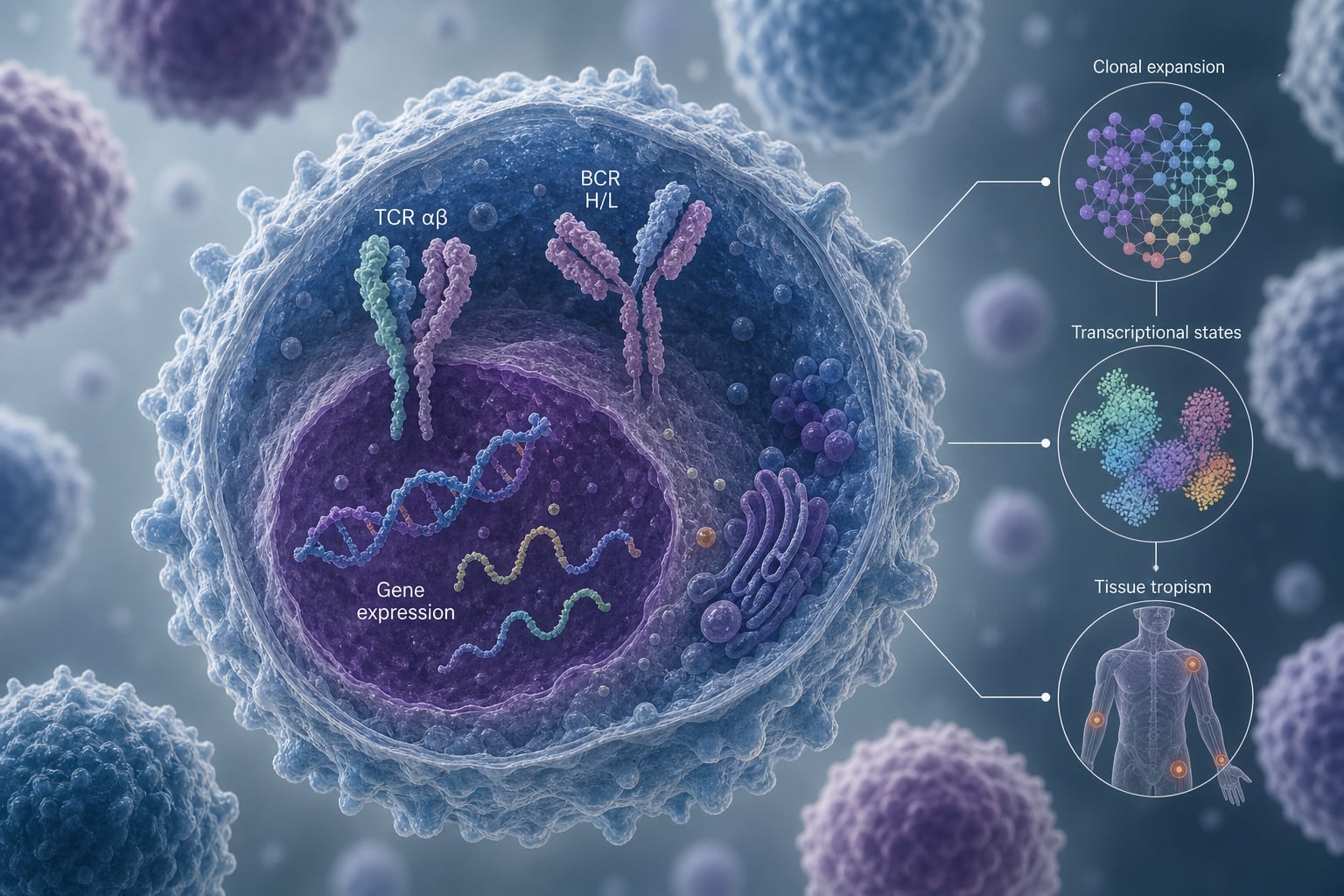
Breakdown of immune tolerance leading to activation and clonal expansion of self-reactive T and B cells.
Target Population
Individuals with autoimmune diseases, including organ-specific and systemic forms.
Care Setting
Clinical and research settings focusing on immunological studies.
Key Highlights
Single-cell T/B cell receptor sequencing (scTCR/BCR-seq) links clonal identity to functional states.
Mechanistic insights into pathogenic clones and immune dysregulation.
Potential for precision medicine through targeted therapies and biomarker development.
Integration of multi-omics frameworks enhances understanding of autoimmune responses.
Challenges include inter-individual heterogeneity and clonal complexity.
Guideline-Based Recommendations
Diagnosis
Utilize scTCR/BCR-seq for precise identification of pathogenic clones.
Management
Consider therapies targeting specific immune pathways, such as anti-CD20 or BAFF-targeted agents.
Monitoring & Follow-up
Track clonal dynamics to inform prognosis and predict therapy responses.
Risks
Broad immunosuppressants may incur substantial side effects and variable efficacy.
Patient & Prescribing Data
Patients with autoimmune diseases exhibiting diverse clonal responses.
Therapies should be tailored to target specific pathogenic clones rather than general immune pathways.
Clinical Best Practices
Employ single-cell sequencing to dissect autoimmune pathogenesis.
Integrate scTCR/BCR-seq with other omics for comprehensive analysis.
Focus on antigen-specific tolerance strategies for therapeutic development.