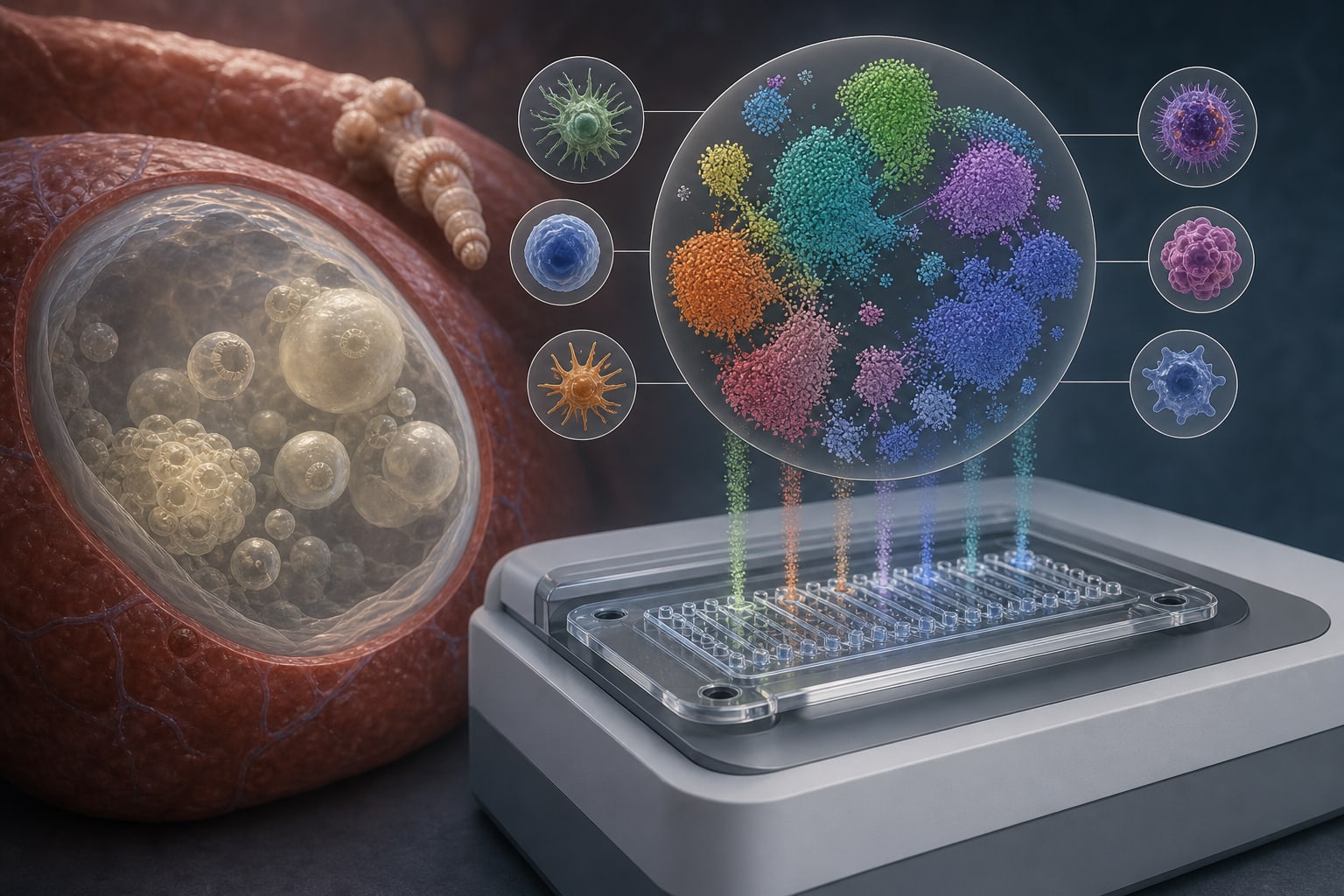
Detailed Chromatin Conformation Mapping in HBeAg-Exposed Macrophages Reveals Mechanisms Behind HBV-Associated Liver Disease Pathogenesis
By
Tiantian Liu
Xiaoyu Xie
Shujun Ma
Huiling Cao
Wenwen Wang
Zhen Yu
Yuemin Feng
Jianni Qi
Hongjun Bian
July 16, 2026
Clinical Scorecard: Detailed Chromatin Conformation Mapping in HBeAg-Exposed Macrophages Reveals Mechanisms Behind HBV-Associated Liver Disease Pathogenesis
At a Glance
Category Detail
Condition Hepatitis B Virus (HBV) Infection Key Mechanisms 3D chromatin reorganization and epigenetic reprogramming in macrophages Target Population Individuals with HBV infection and associated liver diseases Care Setting Clinical research and treatment development
Key Highlights
HBeAg activates pro-inflammatory transcriptional programs in macrophages. Significant 3D chromatin reorganization is observed in HBeAg-stimulated macrophages. Key genes such as MET, FLNB, and BLVRB are upregulated through chromatin structural changes. Disruption of intrachromosomal loops leads to downregulation of specific genes. Epigenetic reprogramming is driven by H3K27ac enhancer deposition. Guideline-Based Recommendations
Diagnosis
Utilize RNA-seq and Hi-C for understanding macrophage activation in HBV infection. Management
Target identified genes and pathways for therapeutic interventions in HBV-related liver diseases. Monitoring & Follow-up
Assess changes in chromatin structure and gene expression in macrophages during HBV infection. Risks
Monitor for liver inflammation and progression to cirrhosis or hepatocellular carcinoma in HBV-infected patients. Patient & Prescribing Data
Patients with chronic HBV infection and liver disease.
Focus on therapies that target macrophage dysfunction and inflammatory pathways.
Clinical Best Practices
Integrate genomic and epigenetic analyses in the study of HBV pathogenesis. Consider the role of macrophage activation in the progression of liver disease. Related Resources & Content