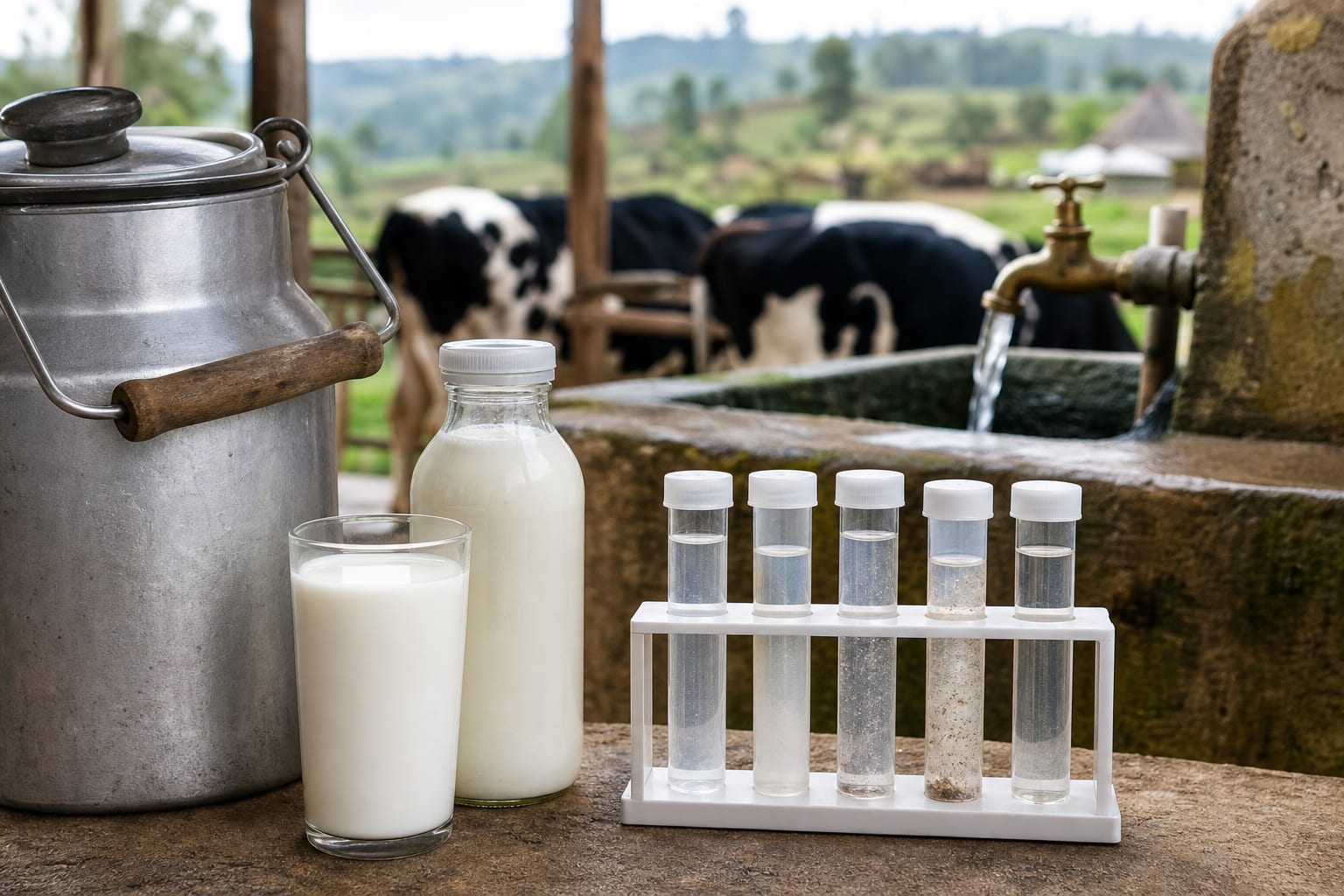
Evaluation of Raw Milk Quality and Water Contamination in the Dairy Value Chain of West Hararghe Zone, Eastern Ethiopia
By
Nuredin Seid Ali
Teressa Fekata Jebessa
Workneh Ensermu Bayisa
August 20, 2026
Clinical Scorecard: Evaluation of Raw Milk Quality and Water Contamination in the Dairy Value Chain of West Hararghe Zone, Eastern Ethiopia
At a Glance
Category Detail
Condition Raw Milk Quality and Water Contamination Key Mechanisms Adulteration through water addition and other substances affecting nutritional value and safety. Target Population Producers, collectors, and consumers in the West Hararghe Zone, Ethiopia. Care Setting Dairy value chain and informal market systems.
Key Highlights
Ethiopia produces approximately 3.32 billion liters of cow milk annually. Water addition is the most common method of milk adulteration. Contaminated water poses significant public health risks, especially for infants. 95% of marketed milk is channeled through informal dairy value chains. Routine quality monitoring and regulatory enforcement are necessary. Guideline-Based Recommendations
Diagnosis
Routine testing for milk composition and adulteration. Management
Enhance regulatory enforcement and quality control measures. Monitoring & Follow-up
Implement regular quality monitoring in the dairy value chain. Risks
Increased risk of foodborne illnesses due to contaminated milk. Patient & Prescribing Data
Consumers of raw milk in the West Hararghe Zone.
Focus on ensuring the safety and quality of milk through improved practices.
Clinical Best Practices
Conduct regular quality assessments of raw milk. Educate producers and consumers about the risks of milk adulteration. Strengthen the regulatory framework for dairy production. Related Resources & Content