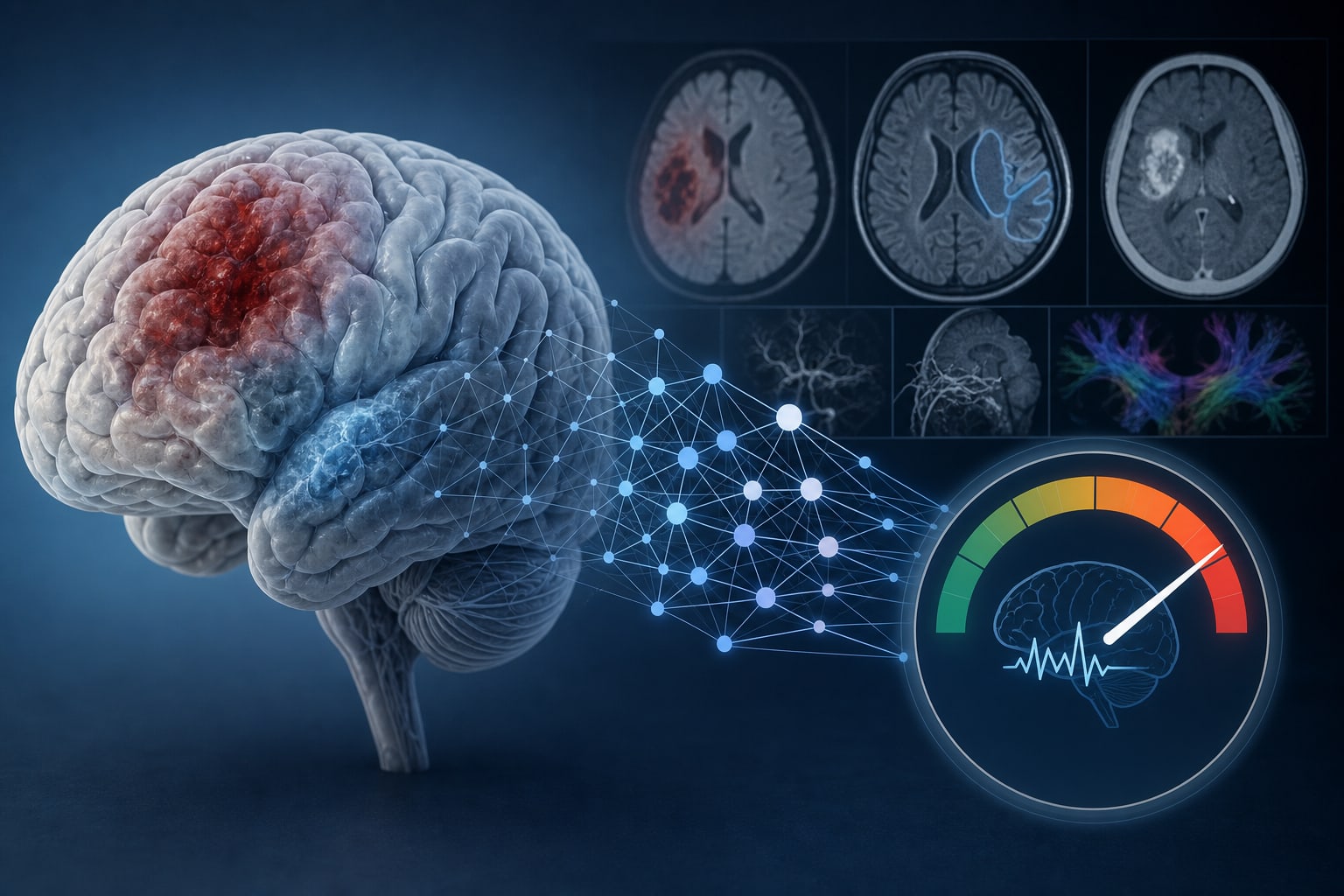
Advancements in Predictive Models for Epilepsy Following Stroke
-
By
-
Hao Chen
-
Lei Ge
-
July 9, 2026
Clinical Scorecard: Advancements in Predictive Models for Epilepsy Following Stroke
At a Glance
| Category | Detail |
|---|
| Condition | Post-stroke epilepsy (PSE) |
| Key Mechanisms | Predictive models based on stroke subtype, lesion characteristics, and early seizure occurrence. |
| Target Population | Patients who have experienced ischemic or hemorrhagic strokes. |
| Care Setting | Clinical settings focusing on stroke management and epilepsy prevention. |
Key Highlights
- PSE affects 2-14% of ischemic stroke survivors and 10-20% following hemorrhagic stroke.
- Multiple predictive models exist for PSE, including CAVE, CAVS, SeLECT, and PSEiCARe.
- Machine learning approaches show improved predictive accuracy for PSE risk stratification.
Guideline-Based Recommendations
Diagnosis
- Seizures occurring within 7 days of a stroke are classified as acute symptomatic.
- Unprovoked seizures occurring later indicate a persistent epileptogenic predisposition.
Management
- Early identification and prevention strategies are essential for improving patient outcomes.
Monitoring & Follow-up
- Integration of multimodal data may enhance seizure prediction.
Risks
- Risk factors for PSE vary by stroke type, lesion characteristics, and patient demographics.
Patient & Prescribing Data
Individuals with a history of ischemic or hemorrhagic stroke.
Machine learning models can optimize healthcare resource allocation and facilitate timely interventions.
Clinical Best Practices
- Utilize predictive models for early risk stratification of PSE.
- Incorporate machine learning approaches to improve prediction accuracy.
Related Resources & Content