The Impact of Treatment on Host Dynamics: A Framework for Understanding the Development of Second Primary Cancers
Clinical Scorecard: The Impact of Treatment on Host Dynamics: A Framework for Understanding the Development of Second Primary Cancers
At a Glance
| Category | Detail |
|---|
| Condition | Second Primary Cancers (SPCs) |
| Key Mechanisms | Therapy-associated mutagenesis, somatic mosaicism, environmental influences, and tissue-field phenomena. |
| Target Population | Cancer survivors at risk for second primary cancers. |
| Care Setting | Oncology survivorship care. |
Key Highlights
- Cumulative incidence of SPC increases from 6.3% at 5 years to 13.5% at 15 years post-initial cancer.
- SPCs arise through diverse biological pathways, including inherited susceptibility and treatment effects.
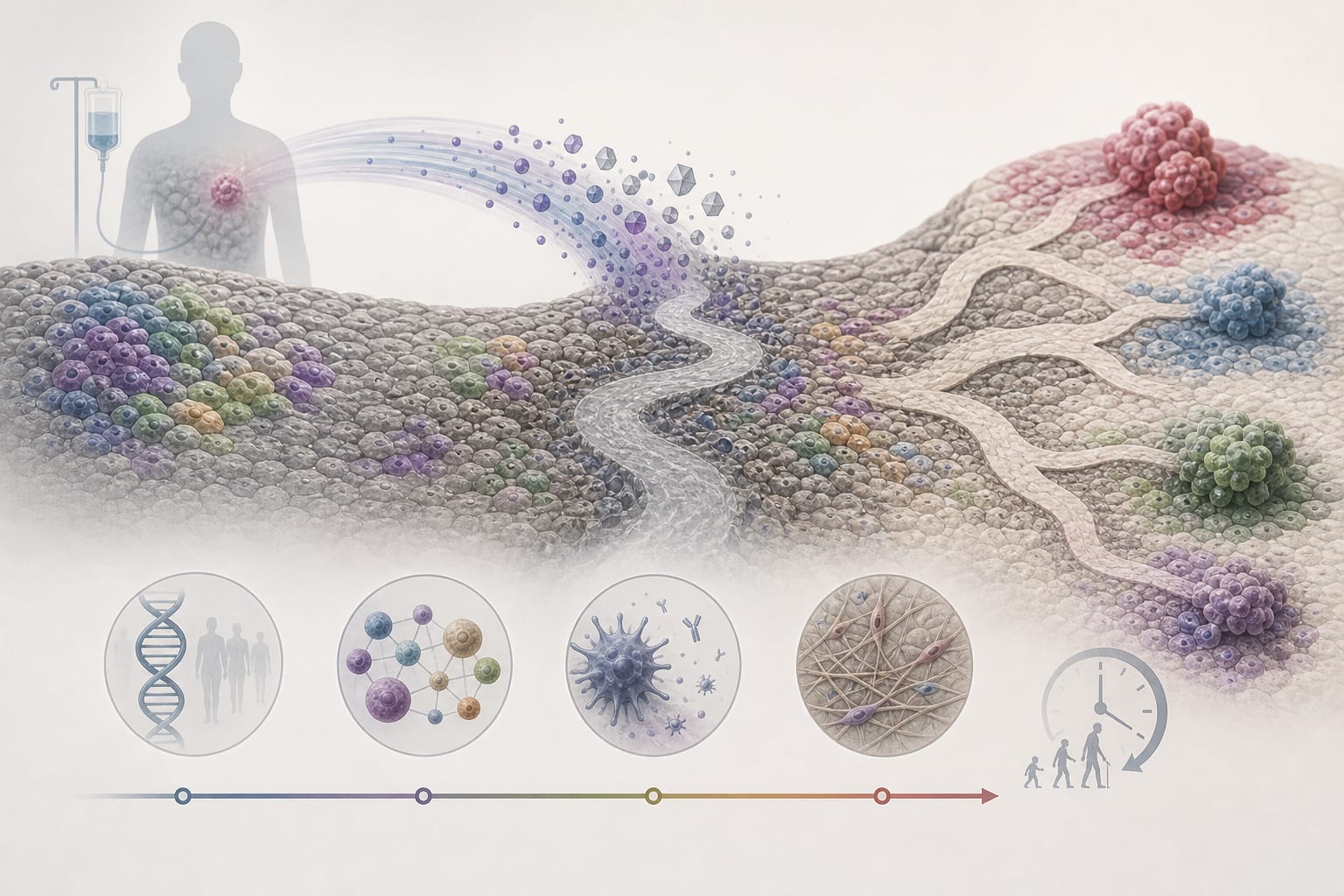
- Therapy can reshape somatic selection and clonal organization in normal tissues.
- The therapy-conditioned host framework distinguishes between treatment exposure and biological outcomes.
- Longitudinal validation is necessary for clinical application of the therapy-conditioned host model.
Guideline-Based Recommendations
Diagnosis
- Consider genetic predisposition and treatment history in assessing risk for SPC.
Management
- Monitor survivors for signs of SPC, considering both treatment exposure and biological state.
Monitoring & Follow-up
- Utilize genomic studies to differentiate origins of second malignancies.
Risks
- Evaluate the impact of therapy on somatic evolution and potential for subsequent cancers.
Patient & Prescribing Data
Survivors of initial malignancies with potential for SPC development.
Therapy may induce mutagenic changes in normal tissues, influencing future cancer risk.
Clinical Best Practices
- Implement a longitudinal approach to monitor changes in biological states post-treatment.
- Incorporate genetic and environmental factors into risk assessment for SPC.
Related Resources & Content