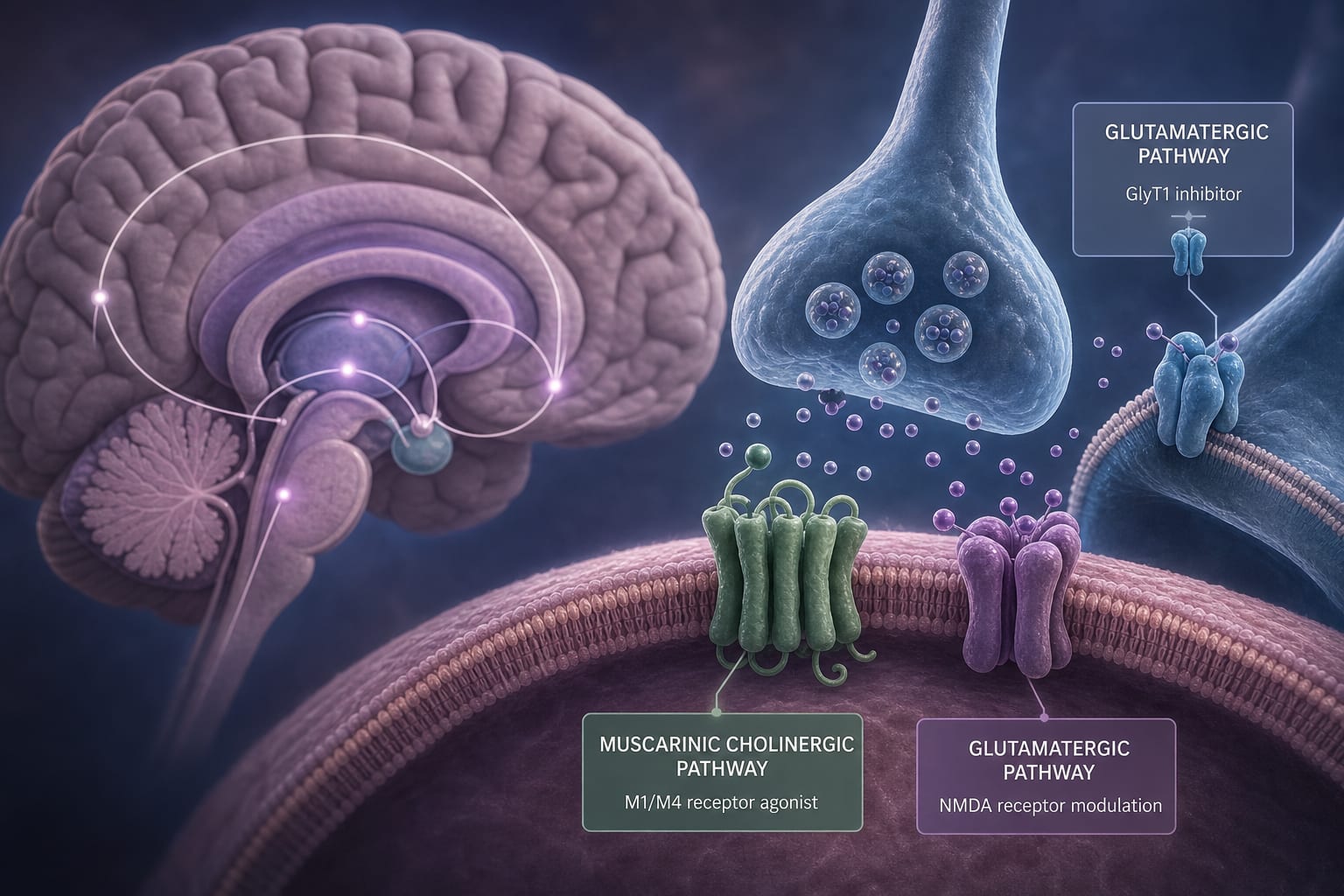
Innovative Therapies for Schizophrenia Beyond D2 Receptor Antagonism: Emphasizing Muscarinic and Glutamatergic Mechanisms
-
By
-
Yunxiang Wang
-
Jiajia Wang
-
Xiao Zhang
-
Xudong Liu
-
July 10, 2026
Clinical Scorecard: Innovative Therapies for Schizophrenia Beyond D2 Receptor Antagonism: Emphasizing Muscarinic and Glutamatergic Mechanisms
At a Glance
| Category | Detail |
|---|
| Condition | Schizophrenia |
| Key Mechanisms | Muscarinic acetylcholine receptor agonism and glutamatergic modulation |
| Target Population | Individuals with schizophrenia, including those with treatment-resistant schizophrenia |
| Care Setting | Neuropsychiatric disorder management |
Key Highlights
- KarXT is the first non-D2 receptor-based antipsychotic approved in over 70 years.
- KarXT significantly improves both positive and negative symptoms with favorable metabolic safety.
- Cognitive impairment is a major unmet need in schizophrenia treatment.
- GlyT1 inhibitors have shown inconsistent clinical trial outcomes.
- Clozapine remains the only approved treatment for treatment-resistant schizophrenia.
Guideline-Based Recommendations
Diagnosis
- Schizophrenia is diagnosed based on clinical presentation of positive, negative, and cognitive symptoms.
Management
- Consider KarXT for patients with inadequate response to traditional antipsychotics.
Monitoring & Follow-up
- Monitor for adverse effects associated with antipsychotic treatments, especially clozapine.
Risks
- Clozapine requires hematological monitoring due to risks of agranulocytosis and other safety liabilities.
Patient & Prescribing Data
Approximately 24 million individuals globally affected by schizophrenia.
No pharmacological agent has received approval specifically for cognitive impairment associated with schizophrenia.
Clinical Best Practices
- Utilize precision psychiatry approaches for patient stratification.
- Conduct rigorous head-to-head comparative trials for emerging therapies.
Related Resources & Content