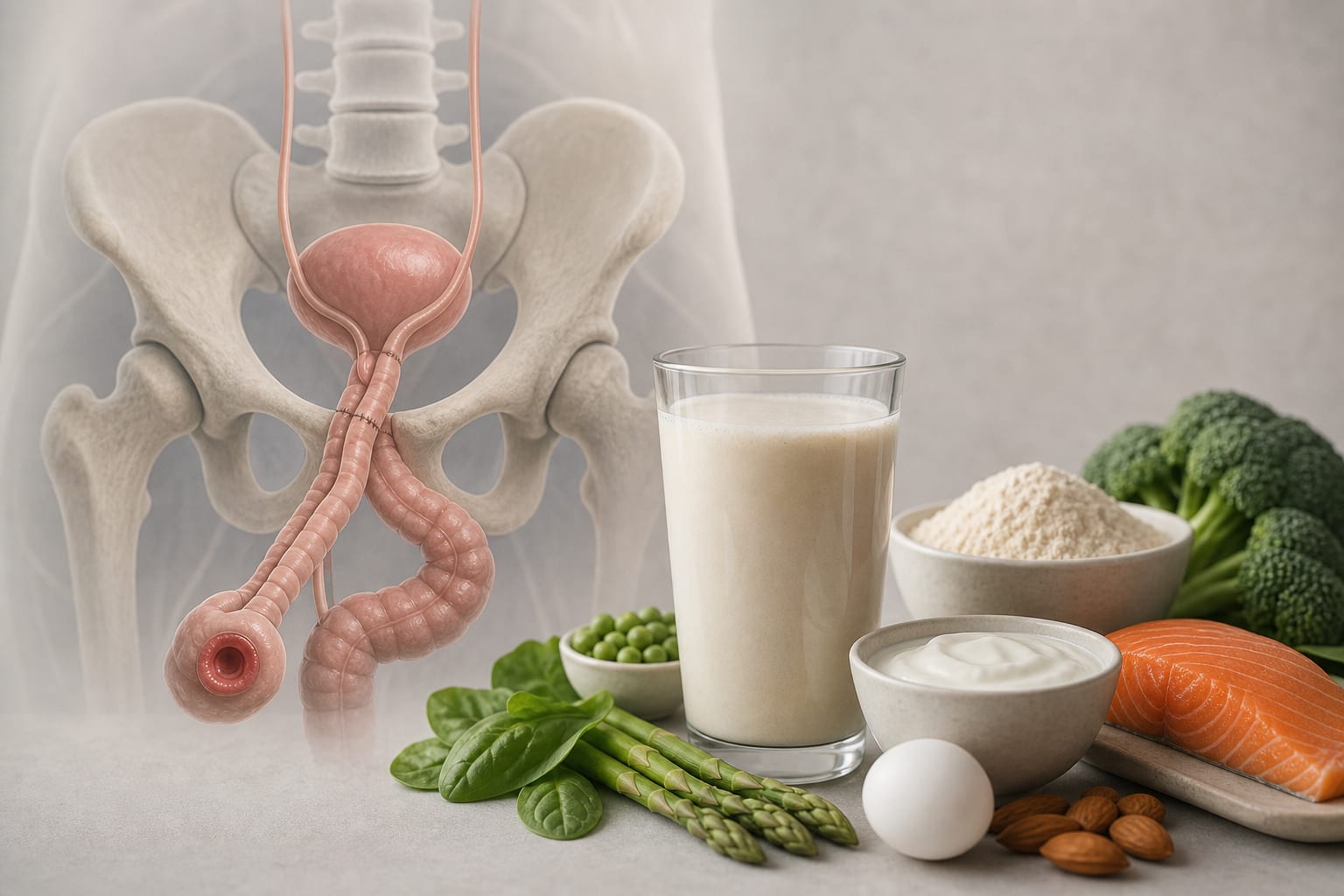
Clinical Scorecard: Nutritional Interventions to Boost Immunity and Their Impact on Recovery Following Radical Cystectomy: Results from a Randomized Clinical Study
At a Glance
Category
Detail
Condition
Muscle-invasive bladder cancer
Key Mechanisms
Enhanced Recovery After Surgery (ERAS) pathways and specialized immunonutrition (SIM) to mitigate catabolic effects and support immune function.
Target Population
Patients aged 18 years or older with histologically confirmed primary urothelial carcinoma of the bladder scheduled for radical cystectomy.
Care Setting
Perioperative care in surgical oncology.
Key Highlights
Radical cystectomy induces physiological stress and increases susceptibility to infections.
Specialized immunonutrition may reduce postoperative complications compared to standard oral nutrition support.
The study evaluates the impact of perioperative nutrition on recovery outcomes in bladder cancer surgery.
Guideline-Based Recommendations
Diagnosis
Histologically confirmed primary urothelial carcinoma of the bladder.
Management
Perioperative or preoperative administration of specific nutritional formulas to prevent or correct deficiencies.
Monitoring & Follow-up
Assessment of postoperative complications using the Clavien-Dindo scale.
Risks
Patients with severe malnutrition were excluded from the study.
Patient & Prescribing Data
Patients undergoing radical cystectomy for bladder cancer.
Patients received either specialized immunonutrition or isocaloric, isonitrogenous oral nutrition support.
Clinical Best Practices
Implement Enhanced Recovery After Surgery (ERAS) protocols.
Consider specialized immunonutrition for patients undergoing radical cystectomy.
by Jill M. Hamilton-Reeves, Joseph M. Unger, Jeffrey M. Holzbeierlein, Danika L. Lew, J. Ryan Mark, Siamak Daneshmand, Seth P. Lerner, Janet E. B. Kukreja, Eugene K. Lee, William B. Tabayoyong, Dawn L. Hershman, Michael J. Fisch, N. Lynn Henry