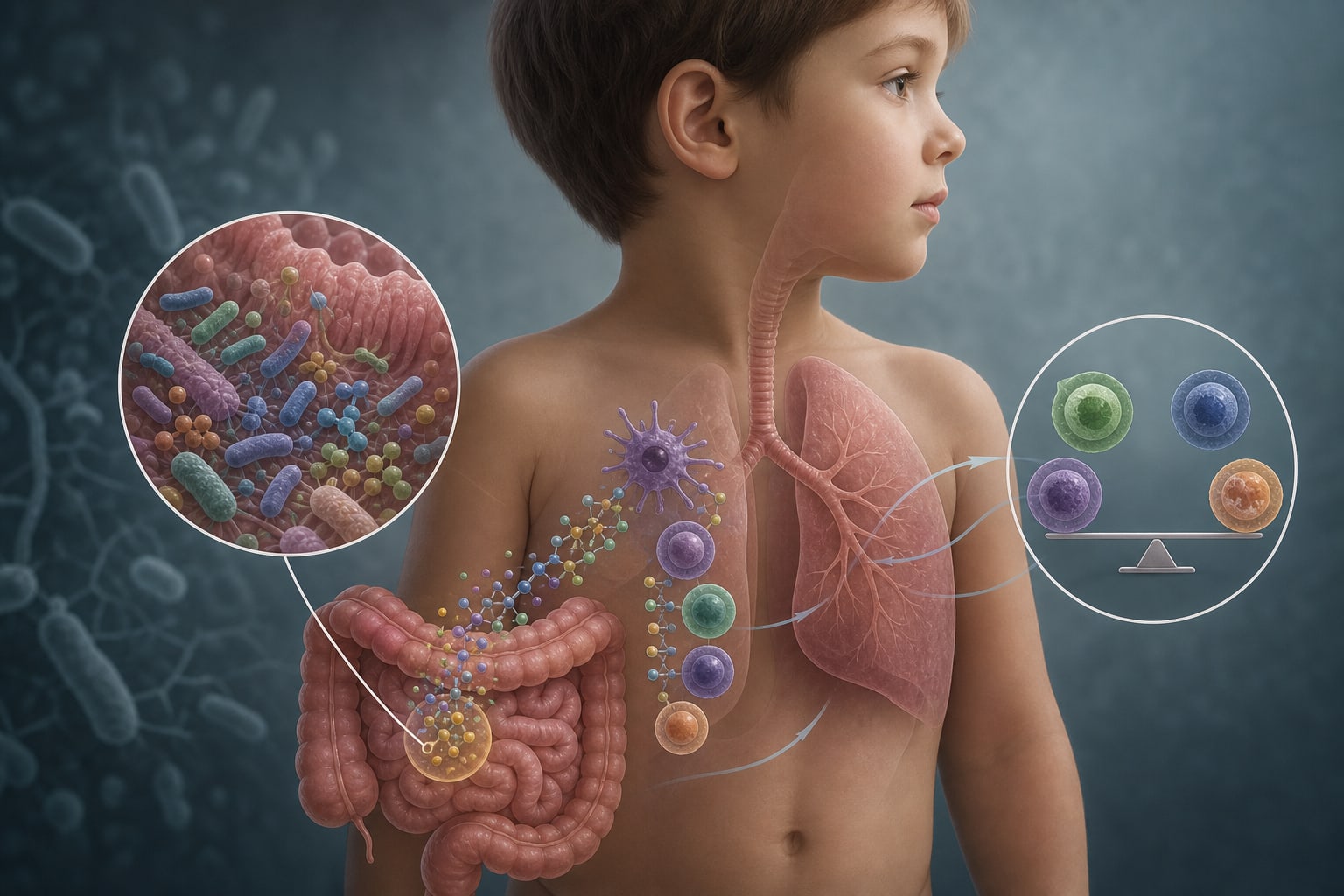
The role of intestinal microbiota in the pathogenesis of childhood asthma
-
By
-
Lulu Zhang
-
Li Wu
-
Chunlin Shi
-
Qin Huang
-
Lu Zhan
-
Yan Zeng
-
Quanmin Deng
-
May 8, 2026
-
Clinical Scorecard: The impact of gut microbiota on the development of asthma in children
At a Glance
| Category | Detail |
|---|
| Condition | |
| Key Mechanisms | Influence of gut microbiota on immune responses, T lymphocyte modulation, airway inflammation, and specific microbial metabolites. |
| Target Population | |
| Care Setting | |
Key Highlights
- Gut microbiota composition differs significantly between asthmatic and healthy children, with specific metabolites impacting inflammation.
- Microbial metabolites play dual roles in modulating airway inflammation, including SCFAs and LPS.
- Dysbiosis in early life is linked to increased asthma risk.
- Probiotics may help restore immune balance and reduce asthma symptoms.
- The gut-lung axis illustrates the connection between gut health and respiratory immunity.
Guideline-Based Recommendations
Diagnosis
- Assess gut microbiota composition in children with asthma using specific diagnostic methods.
Management
- Consider probiotic supplementation and specific dietary interventions to promote gut health and immune balance.
Monitoring & Follow-up
- Monitor changes in gut microbiota and associated immune responses in asthmatic children through regular assessments.
Risks
- Increased risk of asthma associated with microbial dysbiosis and reduced microbial diversity.
Patient & Prescribing Data
Probiotics and specific dietary interventions may enhance gut microbiota diversity and improve asthma outcomes.
Clinical Best Practices
- Encourage early microbial exposure to promote healthy gut microbiota.
- Integrate dietary strategies to support gut health in pediatric asthma management.
- Educate families on the importance of gut microbiota in respiratory health and monitor changes.
References