Revealing the pathogenesis of autoimmune hepatitis and research progress in drug discovery from hepatic immune cells and intercellular communication signaling mechanisms - Scorecard - MDSpire
Conexiant’s news site is now MDSpire News. Learn more
Advertisement
Understanding the Mechanisms Behind Autoimmune Hepatitis Pathogenesis and Advances in Drug Development Targeting Hepatic Immune Cells and Intercellular Communication Pathways
Clinical Scorecard: Understanding the Mechanisms Behind Autoimmune Hepatitis Pathogenesis and Advances in Drug Development Targeting Hepatic Immune Cells and Intercellular Communication Pathways
At a Glance
Category
Detail
Condition
Autoimmune Hepatitis (AIH)
Key Mechanisms
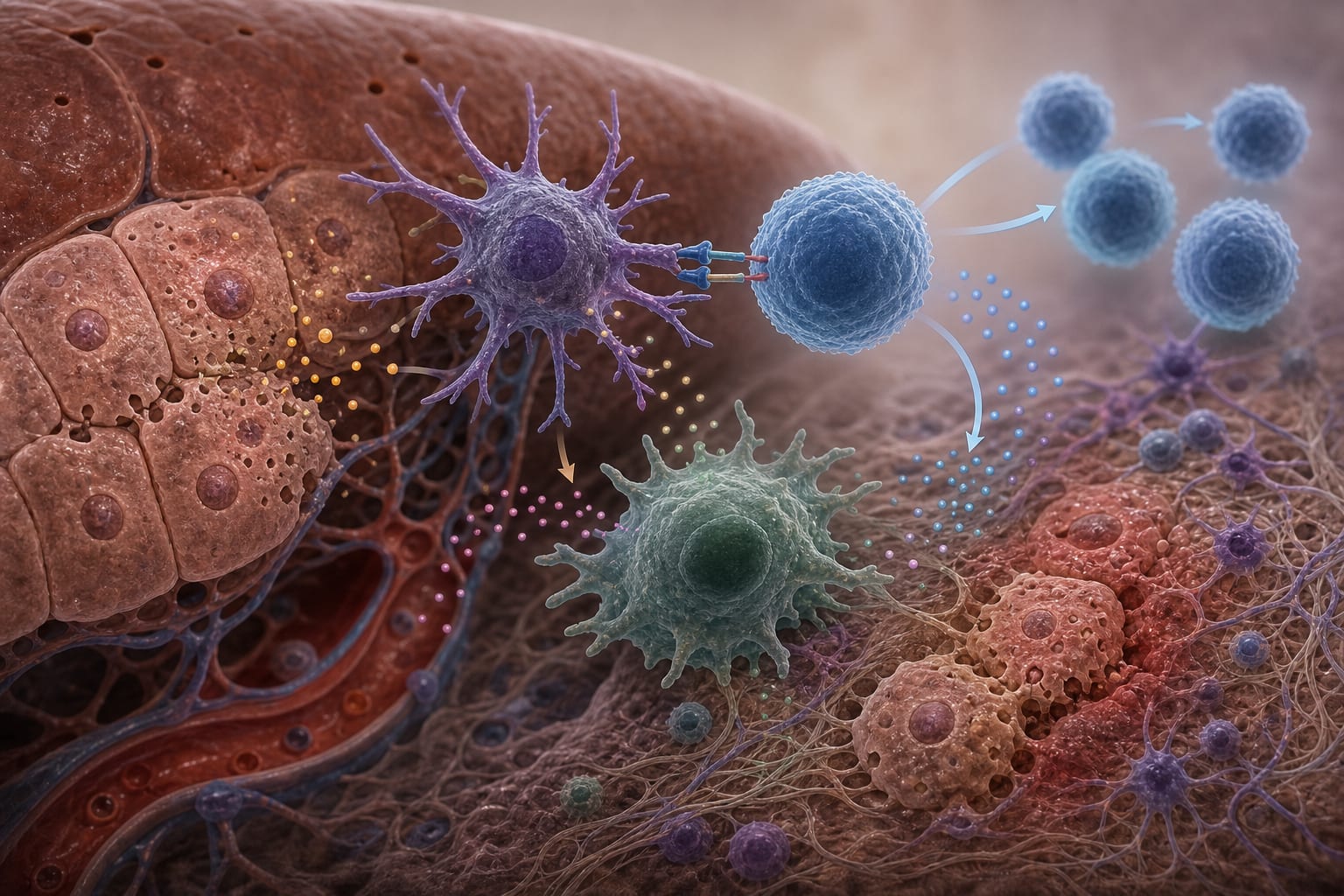
Aberrant activation of immune cells, intercellular communication networks, and immune–metabolic interplay.
Target Population
Patients with autoimmune hepatitis, including those with chronic, acute, and fulminant liver failure.
Care Setting
Clinical settings for diagnosis and management of autoimmune hepatitis.
Key Highlights
AIH is characterized by immune-mediated liver injury and can progress to cirrhosis and liver failure.
Current treatments include corticosteroids and immunosuppressants, but many patients experience poor responses.
Emerging therapies focus on precision immune regulation rather than broad-spectrum immunosuppression.
CD20 inhibitors and BAFF/BLyS inhibitors show clinical efficacy but have associated risks.
Low-dose IL-2 therapy has potential to restore Treg function but does not increase intrahepatic Tregs.
Guideline-Based Recommendations
Diagnosis
Diagnosis is based on clinical presentation, serological markers, and liver biopsy findings.
Management
First-line treatment typically involves corticosteroids and immunosuppressants.
Monitoring & Follow-up
Regular monitoring for treatment response and side effects is essential.
Risks
Corticosteroid side effects include diabetes and osteoporosis; risk of infection with CD20 inhibitors.
Patient & Prescribing Data
Patients with autoimmune hepatitis, including those with refractory cases.
Long-term immunosuppressive therapy has weak evidence and high relapse rates post-withdrawal.
Clinical Best Practices
Consider precision immune regulation strategies for treatment.
Evaluate the risk of infection and other side effects when prescribing CD20 inhibitors.
Monitor patients closely for response to therapy and potential complications.