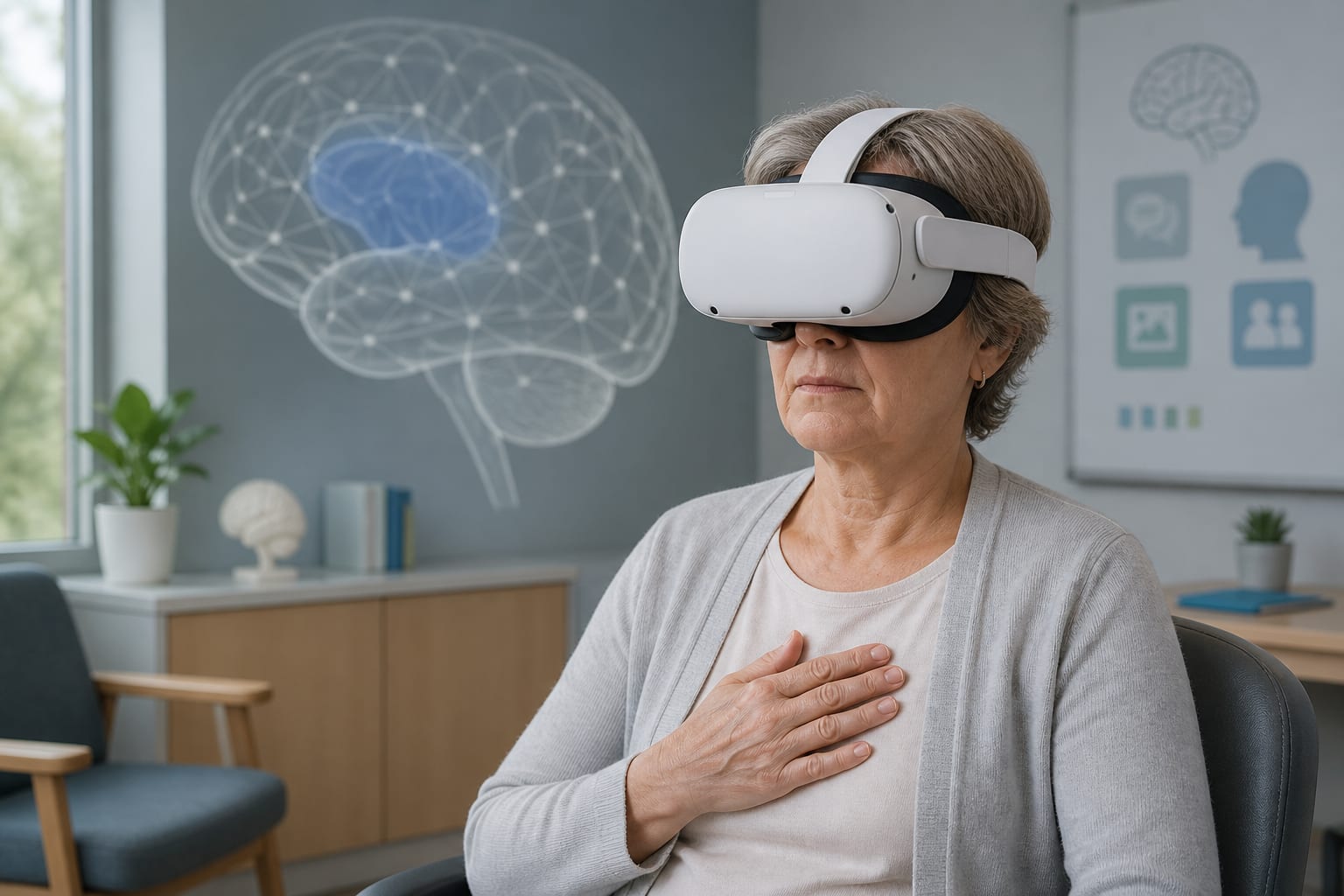
Exploring Motion Sickness Induced by Head-Mounted Displays in Individuals with Aphasia
By
Muhammed Intiaz
Rajath Shenoy
Apoorva Pauranik
Girish Menon
Shivani Tiwari
Aparna Pai
Gopee Krishnan
August 22, 2026
Clinical Scorecard: Exploring Motion Sickness Induced by Head-Mounted Displays in Individuals with Aphasia
At a Glance
Category Detail
Condition Aphasia Key Mechanisms Simulation sickness due to visual-vestibular sensory conflict in immersive environments. Target Population Individuals with aphasia, particularly post-stroke. Care Setting Rehabilitation using Extended Realities (XR) technologies.
Key Highlights
Aphasia affects one-third of stroke survivors, impairing communication and quality of life. XR technologies, including VR, AR, and MR, are being integrated into aphasia rehabilitation. Simulation sickness is a common adverse effect of head-mounted displays (HMDs) in XR. Factors influencing simulation sickness include user characteristics and display properties. Younger adults may experience more simulation sickness than older adults. Guideline-Based Recommendations
Diagnosis
Assess communication impairments in individuals with aphasia. Management
Utilize XR technologies for rehabilitation targeting linguistic outcomes. Monitoring & Follow-up
Monitor for symptoms of simulation sickness during XR interventions. Risks
Be aware of potential adverse effects such as nausea, dizziness, and discomfort from XR use. Patient & Prescribing Data
Individuals with aphasia post-brain injury.
XR interventions can enhance communication skills and engagement.
Clinical Best Practices
Incorporate XR technologies into speech-language therapy for aphasia. Evaluate individual tolerance to XR to minimize simulation sickness. Use context-based cueing in AR to support word retrieval and comprehension. Related Resources & Content