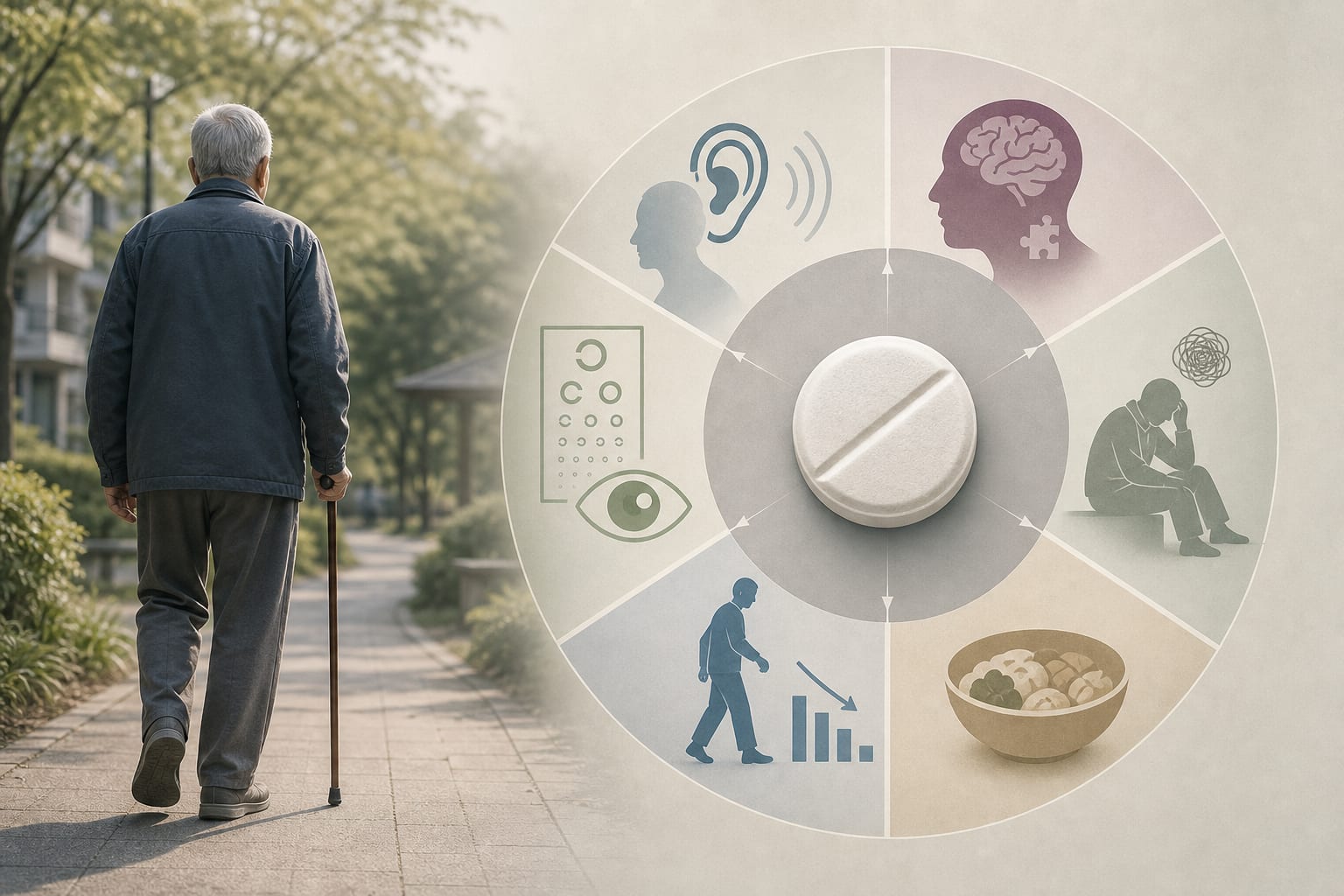
Association between aspirin use and decline in intrinsic capacity among community-dwelling elderly: a study based on the Lianyungang ICOPE pilot project - Scorecard - MDSpire
Advertisement
Association between aspirin use and decline in intrinsic capacity among community-dwelling elderly: a study based on the Lianyungang ICOPE pilot project
Clinical Scorecard: Link Between Aspirin Consumption and Deterioration of Intrinsic Capacity in Elderly Individuals Residing in the Community: Insights from the Lianyungang ICOPE Pilot Study
At a Glance
Category
Detail
Condition
Intrinsic Capacity Deterioration
Key Mechanisms
Aspirin use and its interaction with ACEI/ARBs
Target Population
Older adults aged ≥ 60 years in Chinese communities
Care Setting
Community-dwelling older adults
Key Highlights
Aspirin use linked to negative outcomes in sensory function.
No significant correlation between aspirin use and severe loss of intrinsic capacity.
Combination of aspirin with ACEI/ARBs may reduce severe loss of intrinsic capacity.
Guideline-Based Recommendations
Diagnosis
Assess intrinsic capacity using WHO's framework.
Management
Consider aspirin use in conjunction with ACEI/ARBs for older adults.
Monitoring & Follow-up
Monitor sensory function in older adults using aspirin.
Risks
Evaluate potential risks of aspirin use in older adults.
Patient & Prescribing Data
Older adults residing in the community in China.
Aspirin may have adverse effects on sensory function.
Clinical Best Practices
Utilize a comprehensive assessment of intrinsic capacity.
Tailor medication regimens considering the interaction of aspirin with other medications.
A review of cardiogenic shock studies suggests serial lactate measurements provide more prognostic information than isolated values and may better reflect treatment response.