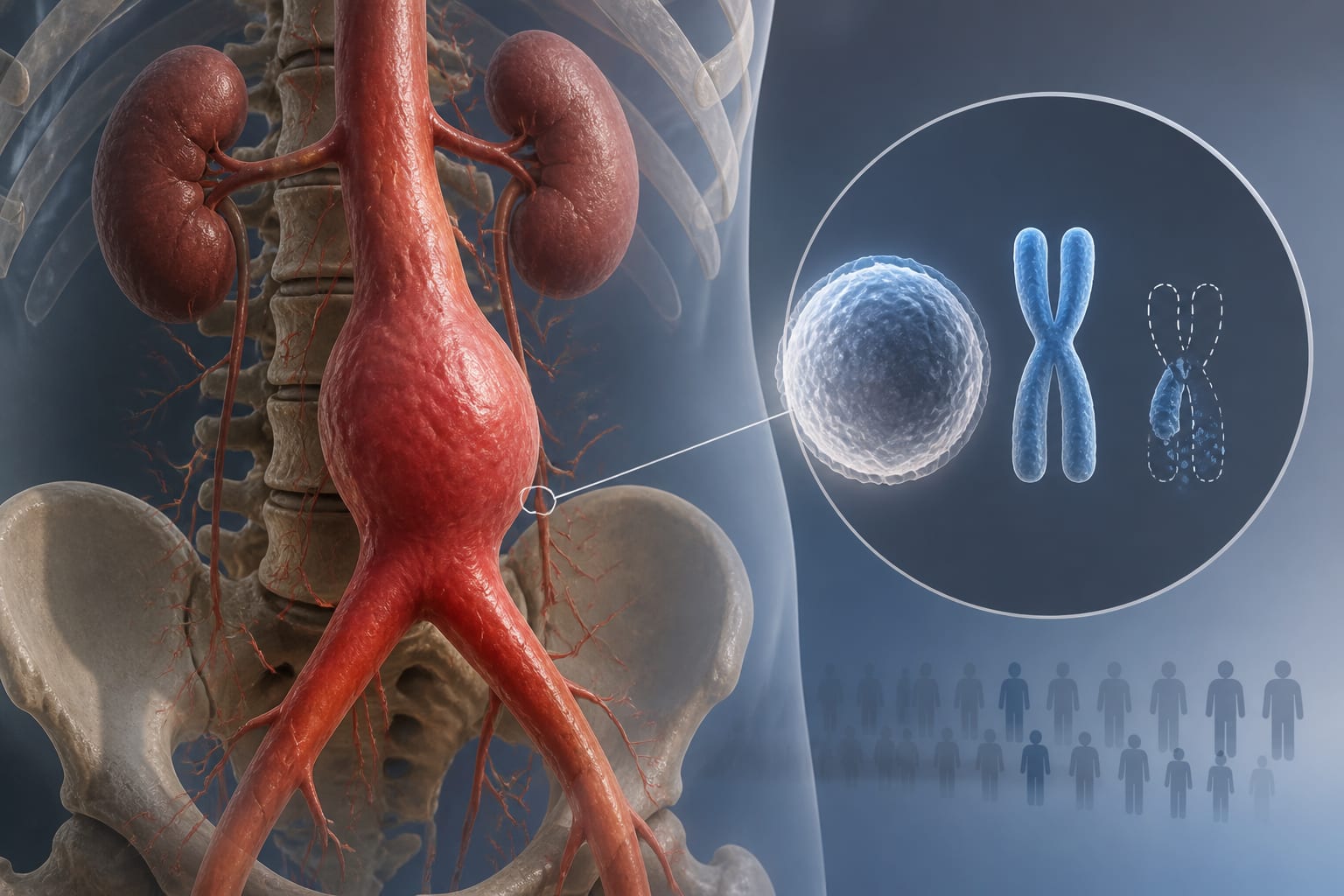
Clinical Scorecard: Y-Chromosome Loss and Its Association With Abdominal Aortic Aneurysm Risk
At a Glance
Category
Detail
Condition
Clinical topic addressed by the source article: Y-Chromosome Loss and Its Association With Abdominal Aortic Aneurysm Risk
Key Mechanisms
Mechanisms or clinical associations described in the source article.
Target Population
Men with genotyping and covariate data in the UK Biobank and Mass General Brigham Biobank; the study assessed associations between LOY and aortic aneurysm incidence.
Care Setting
Care setting described in the source article.
Key Highlights
In the UK Biobank, adjusted AAA risk increased across mid- and high-cell-fraction LOY groups; the low-cell-fraction estimate was not statistically significant.
Continuous LOY burden was associated with AAA incidence in the UK Biobank (sHR 1.02 per 1% cell-fraction increase; 95% CI, 1.01-1.04).
The Mass General Brigham Biobank showed an association between high-cell-fraction LOY and AAA (aOR 1.38; 95% CI, 1.02-1.87); lower-category estimates were not statistically significant.
Neither cohort found a statistically significant association between LOY and TAA.
Guideline-Based Recommendations
Diagnosis
The study identified AAA and TAA using ICD-9, ICD-10, and procedure codes; Mass General Brigham Biobank diagnoses were additionally confirmed through radiology reports.
Management
Monitoring & Follow-up
Risks
In the UK Biobank, greater LOY burden was associated with higher AAA risk after adjustment for age, smoking, type 2 diabetes, hyperlipidemia, hypertension, and genetic principal components.
The observational study does not establish that LOY causes AAA.
Neither cohort found a statistically significant association between LOY and TAA.
Patient & Prescribing Data
The UK Biobank analysis included 221,486 men without known aortic aneurysms at baseline; the validation cohort included 14,569 men. The study did not evaluate a treatment or prescribing intervention.
No treatment was studied. The article states that no effective treatment is currently available to prevent AAA enlargement.
by Taylor Nordan, Tiffany R. Bellomo, Md Mesba Uddin, Liying Xue, So Mi Jemma Cho, Kaavya Paruchuri, Marie Billaud, Peter Libby, Pradeep Natarajan, Tetsushi Nakao
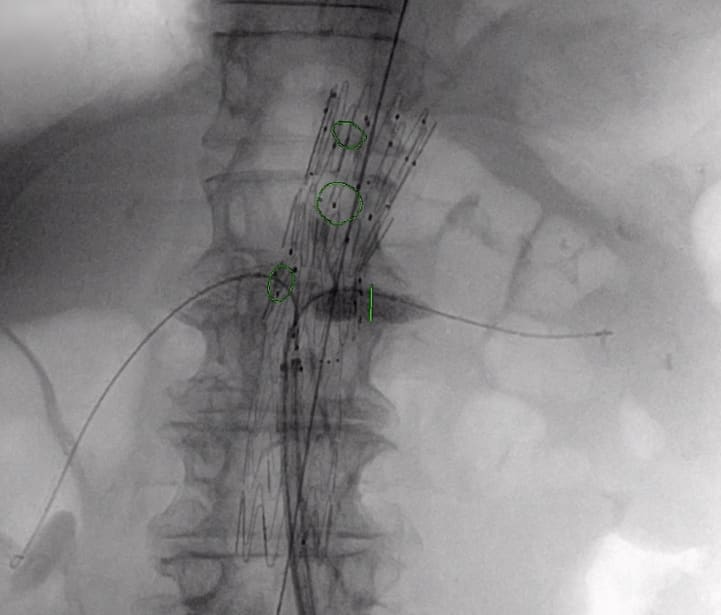
Sentara vascular surgeon Animesh Rathore, MD, presents the case of a 76-year-old man with a large abdominal aortic aneurysm measuring approximately 5.5 cm. Advanced COPD, congestive heart failure, and chronic renal failure made him unsuitable for open surgical repair.