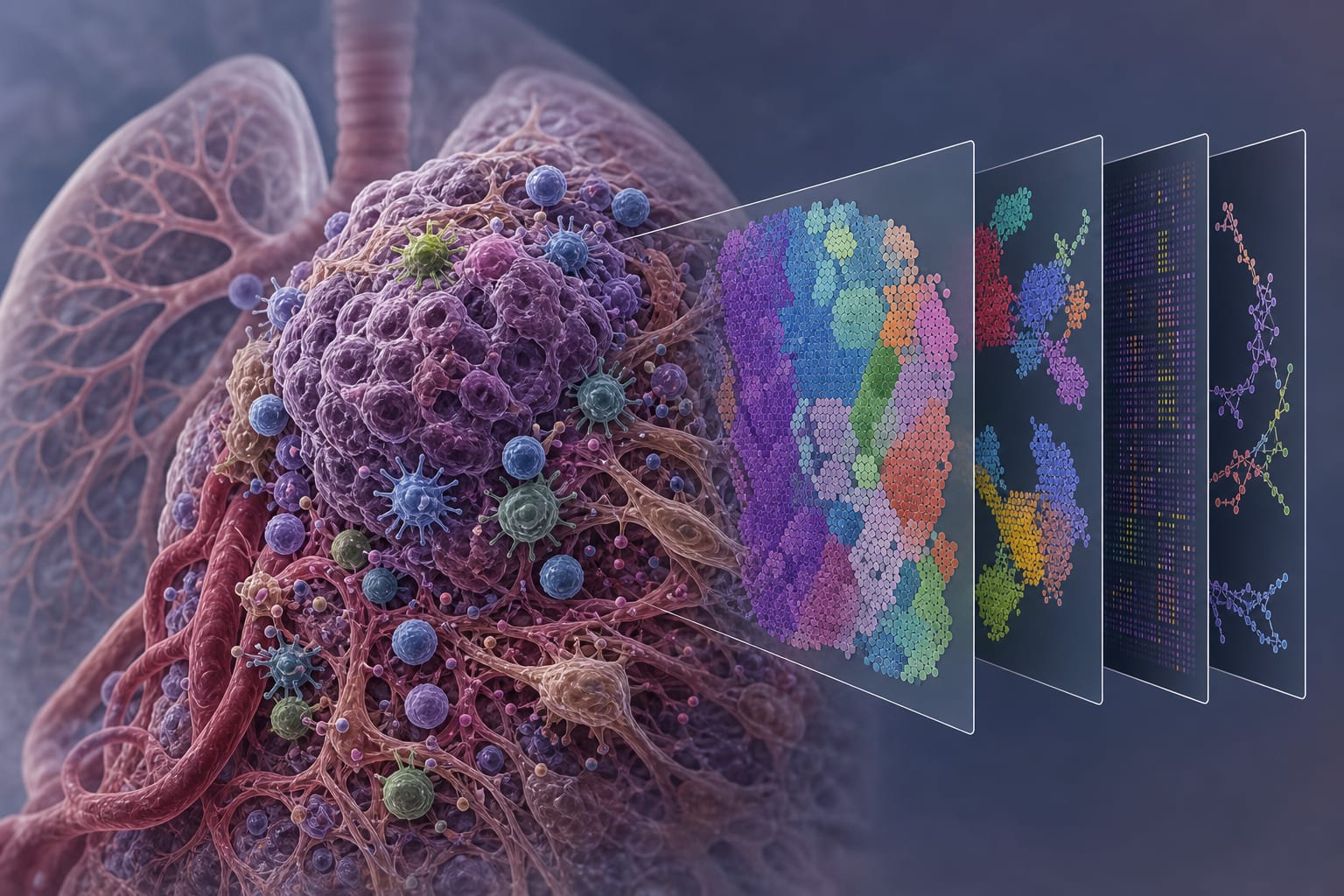
Single-cell and spatial omics in non-small cell lung cancer: dissecting metabolic reprogramming and tumor-immune ecosystems for precision pharmacology
-
By
-
Zhenzhen Lian
-
Xu Jing Wu
-
Yangyang Zhou
-
Pengfei Tang
-
Honglei Ge
-
July 6, 2026
-
Clinical Scorecard: Exploring Single-Cell and Spatial Omics in Non-Small Cell Lung Cancer: Analyzing Metabolic Reprogramming and Tumor-Immune Interactions for Enhanced Precision Pharmacotherapy
At a Glance
| Category | Detail |
|---|
| Condition | Non-small cell lung cancer (NSCLC) |
| Key Mechanisms | Metabolic reprogramming, tumor-immune interactions, cellular heterogeneity |
| Target Population | Patients with advanced NSCLC |
| Care Setting | Precision oncology |
Key Highlights
- Single-cell and spatial omics provide insights into tumor heterogeneity and immune interactions.
- Metabolic reprogramming is linked to malignant progression and therapeutic resistance.
- Tumor cells exhibit diverse states affecting treatment response and relapse.
- Single-cell RNA sequencing identifies rare resistant cell populations.
- Spatial transcriptomics helps map tumor-immune ecosystems.
Guideline-Based Recommendations
Diagnosis
- Utilize molecular and immune biomarkers for treatment selection.
Management
- Consider single-cell and spatial profiling for personalized treatment strategies.
Monitoring & Follow-up
- Monitor for adaptive drug resistance and shifts in tumor cell states.
Risks
- Patients may experience relapse due to tumor heterogeneity and immune escape.
Patient & Prescribing Data
Patients with molecularly defined or immune-responsive NSCLC
Targeted agents and immune checkpoint inhibitors are key treatment modalities.
Clinical Best Practices
- Incorporate single-cell and spatial omics in clinical research to enhance biomarker discovery.
- Stratify patients based on metabolic dependencies and immune landscape.
Related Resources & Content