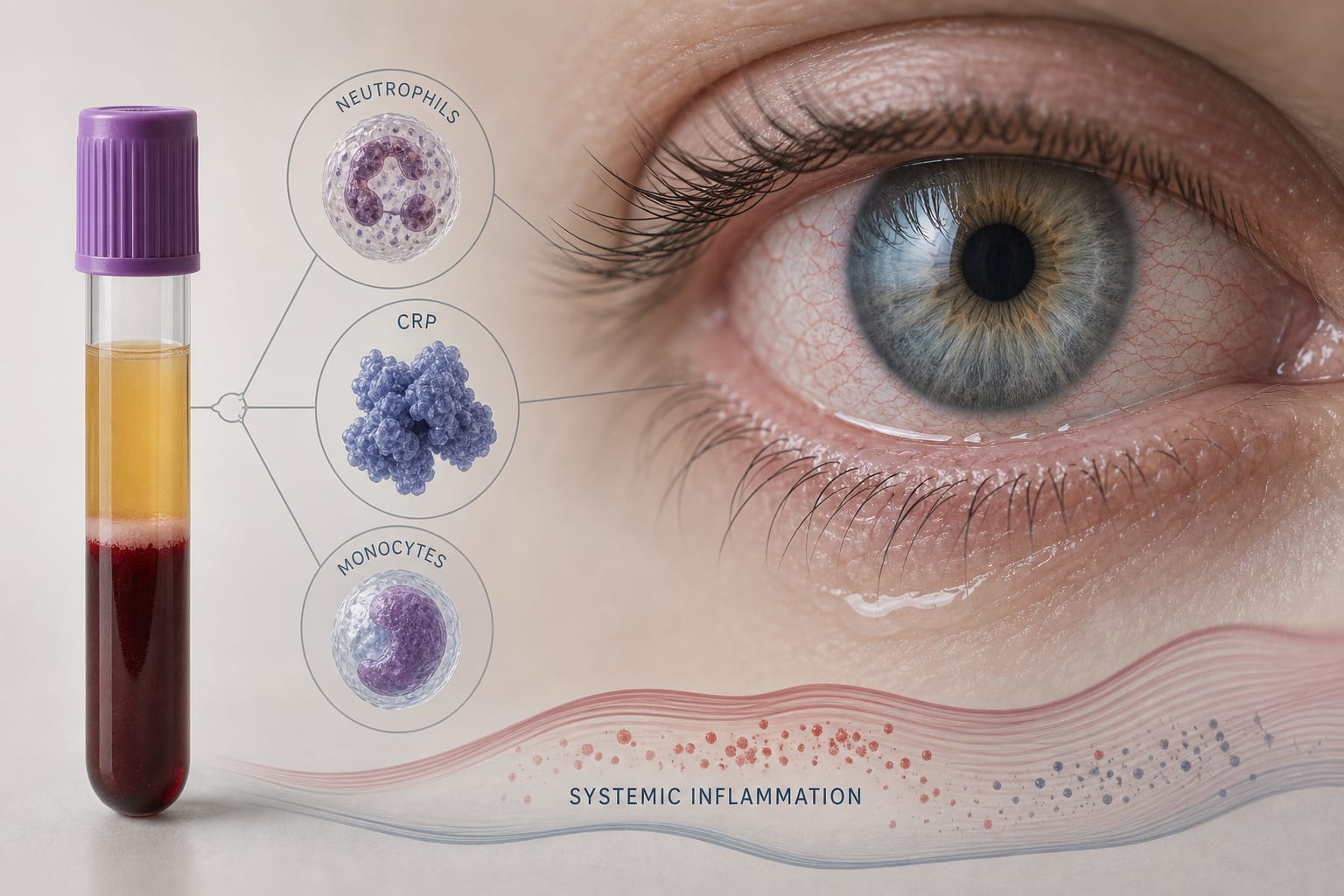
Evaluation of Systemic Inflammation Index in Patients with Dyslipidemia and Dry Eye Disease: A Retrospective Case-Control Study
-
By
-
Amani Y. Alhalwani
-
Asma Altasan
-
Nawaf Alasmari
-
Asma Almutiri
-
Mustafa Sunbul
-
Razan Khalifa
-
Jumanah Makhtoum
-
Shatha Jambi
-
June 11, 2026
Clinical Scorecard: Evaluation of Systemic Inflammation Index in Patients with Dyslipidemia and Dry Eye Disease: A Retrospective Case-Control Study
At a Glance
| Category | Detail |
|---|
| Condition | Dyslipidemia and Dry Eye Disease |
| Key Mechanisms | Inflammation assessed via aggregate index of systemic inflammation (AISI) and inflammatory biomarkers like C-reactive protein (CRP). |
| Target Population | Patients diagnosed with dyslipidemia, specifically those with and without dry eye disease. |
| Care Setting | Outpatient clinic at King Abdulaziz Medical City, Jeddah, Saudi Arabia. |
Key Highlights
- DLP is prevalent in 43% of the Saudi population.
- Higher neutrophil and monocyte counts were observed in DLP-DED patients compared to DLP-only patients.
- AISI positively correlated with CRP and negatively correlated with HDL and total cholesterol.
- DED is characterized by discomfort, blurred vision, and tear-film instability.
- Inflammation may act as both a cause and effect in the relationship between DLP and DED.
Guideline-Based Recommendations
Diagnosis
- Diagnosis of DLP and DED based on clinical assessment.
Management
- Control lipid levels to prevent and treat DED.
Monitoring & Follow-up
- Monitor lipid profiles and inflammatory biomarkers in patients with DLP.
Risks
- Increased levels of triglycerides, LDL cholesterol, and total cholesterol are associated with a higher risk of DED.
Patient & Prescribing Data
Patients with dyslipidemia, with a focus on those also diagnosed with dry eye disease.
Further evaluation of inflammatory biomarkers may improve understanding of DED pathogenesis.
Clinical Best Practices
- Consider the aggregate index of systemic inflammation (AISI) as a biomarker for systemic inflammation in DLP.
- Evaluate the correlation between lipid profiles and dry eye disease progression.
Related Resources & Content