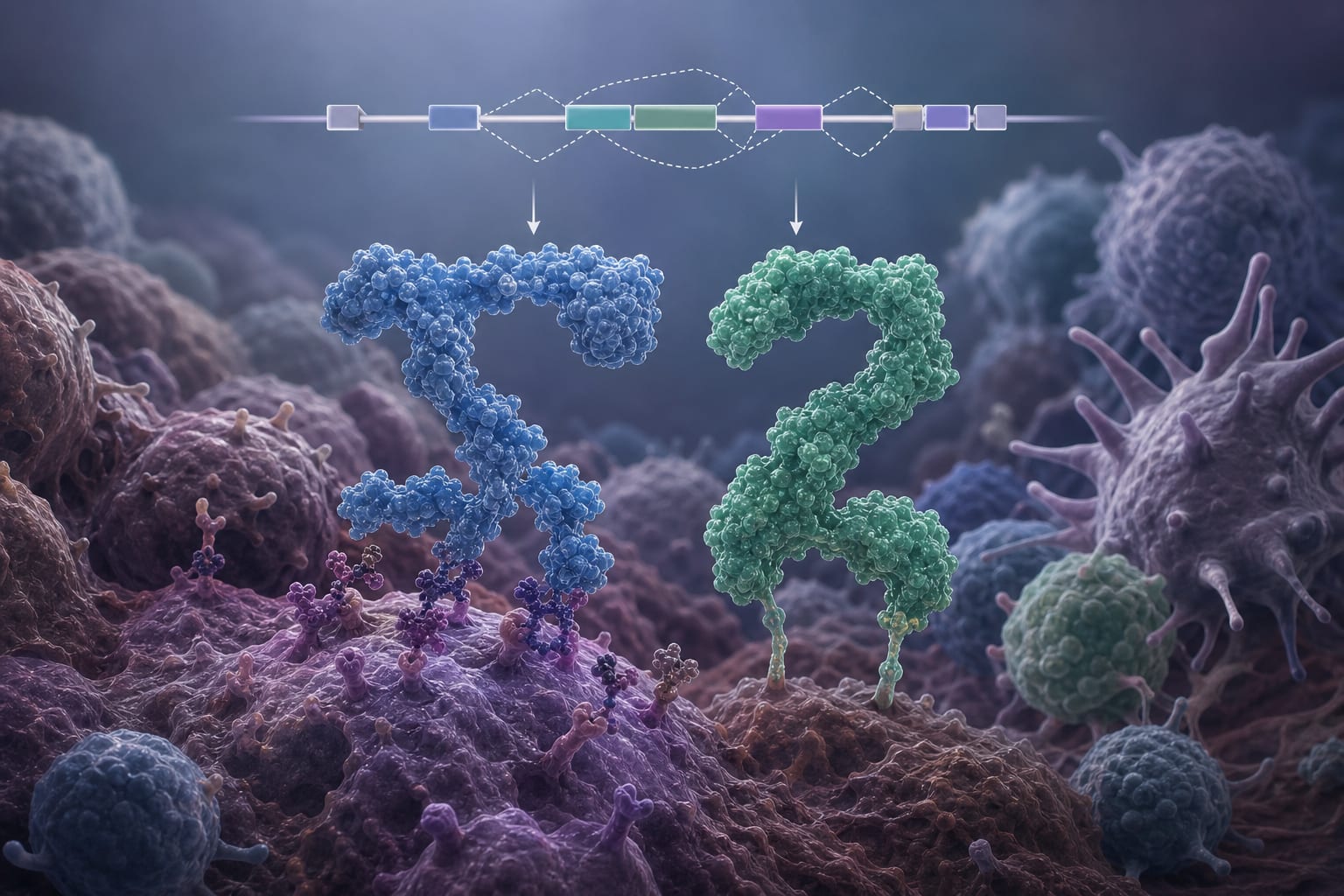
Clinical Scorecard: What's Next for Prenatal Screening?
At a Glance
| Category | Detail |
|---|---|
| Condition | Clinical topic addressed by the source article: What's Next for Prenatal Screening? |
| Key Mechanisms | Mechanisms or clinical associations described in the source article. |
| Target Population | The article describes NIPT as screening for fetal genetic abnormalities from around 10 weeks’ gestation. |
| Care Setting | Care setting described in the source article. |
Key Highlights
- NIPT screens for fetal genetic abnormalities using cffDNA in maternal blood, but positive results require confirmation by invasive testing.
- The review identifies low fetal fraction, difficulty distinguishing fetal from maternal DNA, and differences between placental and fetal genotype as biological barriers.
- Most circulating cffDNA is approximately 143 base pairs, but circular, approximately 50-base-pair, and longer fragments have also been reported.
- The mechanism by which cffDNA circulates remains unresolved; the authors report that direct evidence for apoptotic extracellular vesicles as its release route is lacking.
- The authors identify determining cffDNA’s cellular origin and how much circulating DNA is associated with extracellular particles as research priorities before NIPT can reliably progress toward comprehensive genetic diagnosis.
Guideline-Based Recommendations
Diagnosis
- The article says positive NIPT results require confirmation by invasive diagnostic testing, such as chorionic villus sampling or amniocentesis.
Management
- The review describes research approaches, not clinical management recommendations; it proposes investigating immunoaffinity enrichment and microfluidics to isolate selected DNA-containing particles or longer fetal DNA fragments.
Monitoring & Follow-up
- The article does not provide clinical monitoring recommendations.
Risks
- The lead author states that 47% of high-risk results in the cited account were false alarms, creating stress and an unnecessary invasive procedure.
- The review notes that placental mosaicism can cause cffDNA to differ from the true fetal genotype and complicate result interpretation.
Patient & Prescribing Data
The article describes NIPT as screening for fetal genetic abnormalities from around 10 weeks’ gestation; it does not provide prescribing or treatment data.
NIPT is a screening test, not a confirmed diagnosis. The article says positive results require follow-up diagnostic testing; the review discusses possible future improvements to fetal DNA enrichment and test performance.
Clinical Best Practices
- The article states that positive NIPT results require confirmation by invasive diagnostic testing.
- The review notes that DNA described as fetal in maternal blood is predominantly placental and may not always reflect the fetal genotype.
- The review reports that cffDNA release and circulation mechanisms remain uncertain.
Related Resources & Content
Based on findings from:
What's Next for Prenatal Screening?
The Pathologist, 2026.
https://www.thepathologist.com/issues/2026/articles/october/whats-next-for-prenatal-screening/
This content is an AI-generated, fully rewritten summary based on a published scholarly article. It does not reproduce the original text and is not a substitute for the original publication. Readers are encouraged to consult the source for full context, data, and methodology.