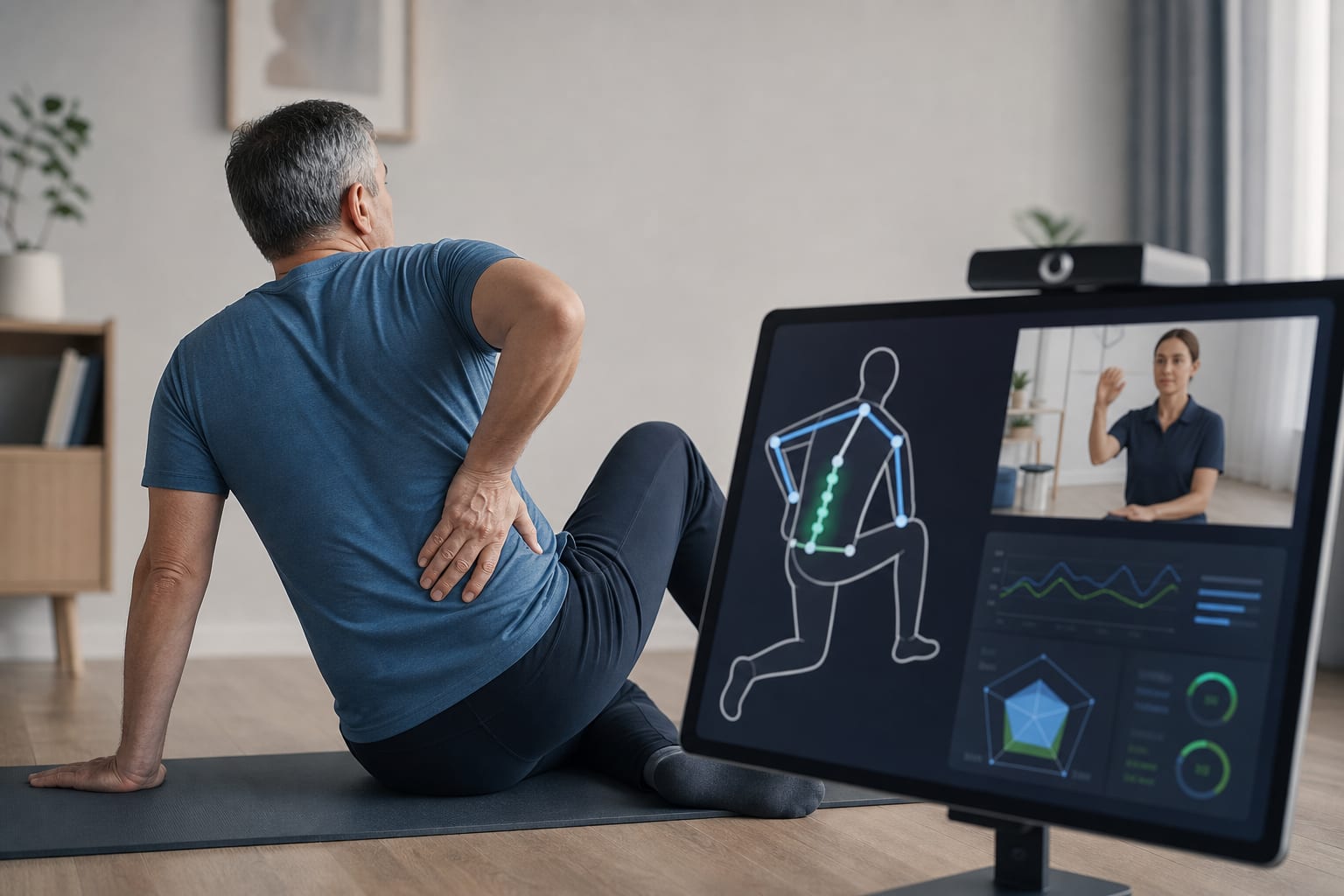
Comparative Effectiveness of AI-Assisted Telerehabilitation, Telerehabilitation, In-Person Care, and Usual Care for Chronic Nonspecific Low Back Pain: Bayesian Network Meta-Analysis - Scorecard - MDSpire
Advertisement
Comparative Effectiveness of AI-Assisted Telerehabilitation, Telerehabilitation, In-Person Care, and Usual Care for Chronic Nonspecific Low Back Pain: Bayesian Network Meta-Analysis
Clinical Scorecard: Evaluating the Effectiveness of AI-Enhanced Telerehabilitation Compared to Traditional Telerehabilitation, In-Person Treatment, and Standard Care for Chronic Nonspecific Low Back Pain: A Bayesian Network Meta-Analysis
At a Glance
Category
Detail
Condition
Chronic nonspecific low back pain (CNSLBP)
Key Mechanisms
Integration of digital health and rehabilitation medicine through telerehabilitation and AI-enhanced systems.
Target Population
Individuals with chronic nonspecific low back pain lasting ≥12 weeks.
Care Setting
Rehabilitation management integrating digital health solutions.
Key Highlights
CNSLBP accounts for approximately 90% of all low back pain cases.
Supervised exercise therapy is a core strategy for managing CNSLBP.
Telerehabilitation improves accessibility of rehabilitation services.
AI-enhanced telerehabilitation provides real-time feedback and personalized training.
Ethical and equity considerations are critical in telerehabilitation implementation.
Guideline-Based Recommendations
Diagnosis
CNSLBP is diagnosed based on persistent low back pain without identifiable specific causes.
Management
Nonpharmacological and noninvasive interventions are recommended, including education, self-management, and exercise therapy.
Monitoring & Follow-up
Continuous professional guidance is essential for effective exercise therapy.
Risks
Disparities in access to telerehabilitation may affect patient engagement and outcomes.
Patient & Prescribing Data
Patients with chronic nonspecific low back pain, particularly those facing barriers to traditional rehabilitation.
Telerehabilitation can achieve outcomes comparable to in-person rehabilitation in selected populations.
Clinical Best Practices
Implement individualized exercise prescriptions under professional supervision.
Utilize telerehabilitation to enhance accessibility and patient engagement.
Address ethical and equity considerations in telerehabilitation design and implementation.