Lower preoperative vitamin D levels are associated with poor clinical outcomes in elderly patients with osteoporotic vertebral compression fractures after percutaneous vertebroplasty - Scorecard - MDSpire
Advertisement
Lower preoperative vitamin D levels are associated with poor clinical outcomes in elderly patients with osteoporotic vertebral compression fractures after percutaneous vertebroplasty
Clinical Scorecard: Association of Preoperative Vitamin D Deficiency with Adverse Outcomes in Elderly Patients Undergoing Percutaneous Vertebroplasty for Osteoporotic Vertebral Compression Fractures
At a Glance
Category
Detail
Condition
Key Mechanisms
Target Population
Elderly patients (≥65 years) with single-level OVCFs
Care Setting
Key Highlights
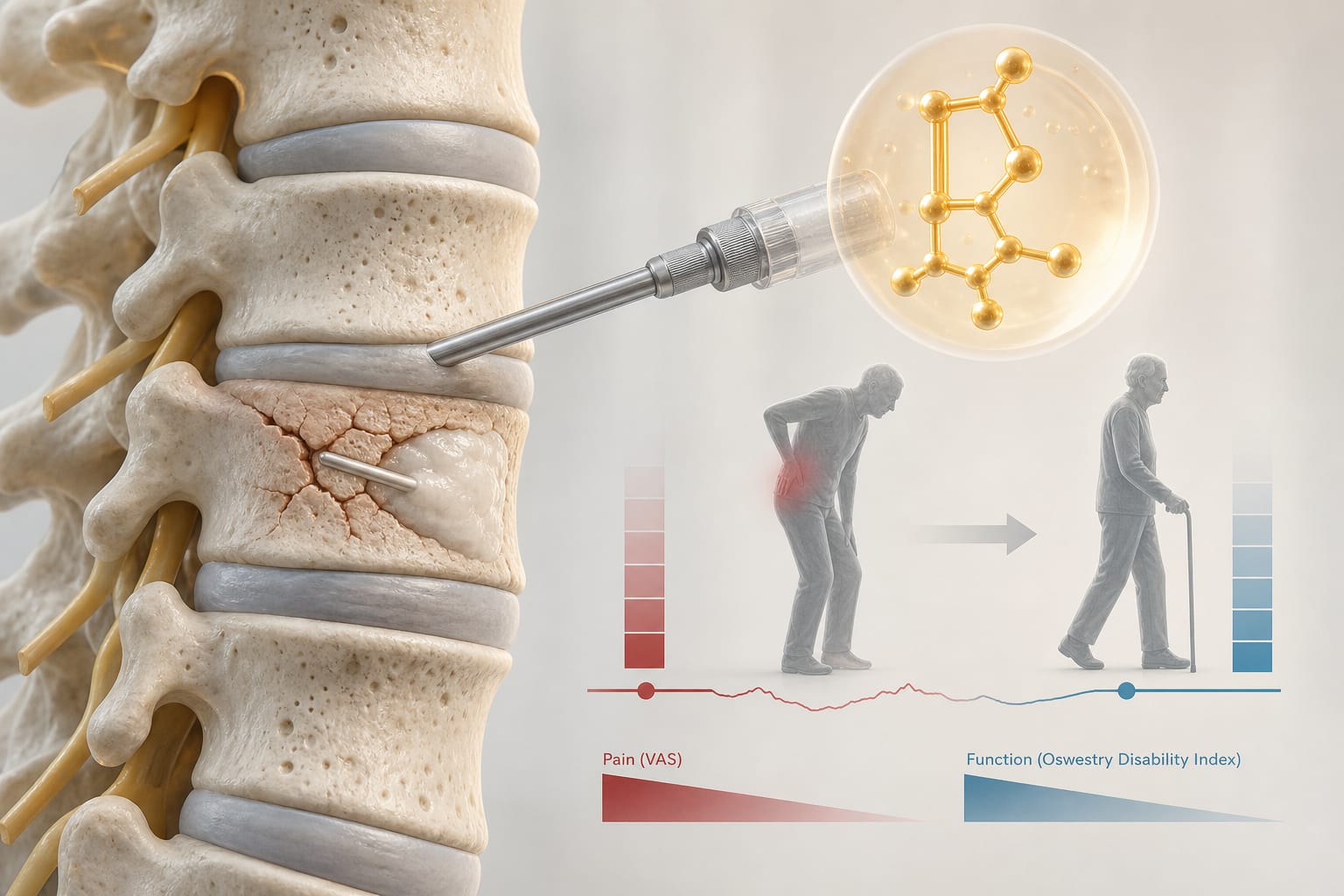
Lower preoperative vitamin D levels are associated with worse postoperative pain relief and functional recovery.
Patients with severe vitamin D deficiency (<10 ng/mL) had the highest pain and disability scores postoperatively.
Significant improvements in pain and function were observed across all vitamin D groups over time.
Vitamin D levels significantly influence postoperative outcomes.
Guideline-Based Recommendations
Diagnosis
Management
Consider vitamin D supplementation (e.g., 800-1000 IU/day) as part of perioperative management for patients undergoing PVP.
Monitoring & Follow-up
Risks
Patient & Prescribing Data
Elderly patients diagnosed with single-level OVCFs.
Vitamin D status is a modifiable risk factor that may optimize postoperative recovery.
Clinical Best Practices
Perform routine vitamin D status assessment in elderly patients prior to PVP.
Implement strategies to correct vitamin D deficiency before surgical intervention.
Recommend follow-up vitamin D level checks postoperatively.