Non-canonical and induced neoantigens as emerging sources of cancer-specific immunotherapy targets
Clinical Scorecard: Emerging Sources of Cancer-Specific Immunotherapy Targets: Non-Canonical and Induced Neoantigens
At a Glance
| Category | Detail |
|---|
| Condition | Cancer |
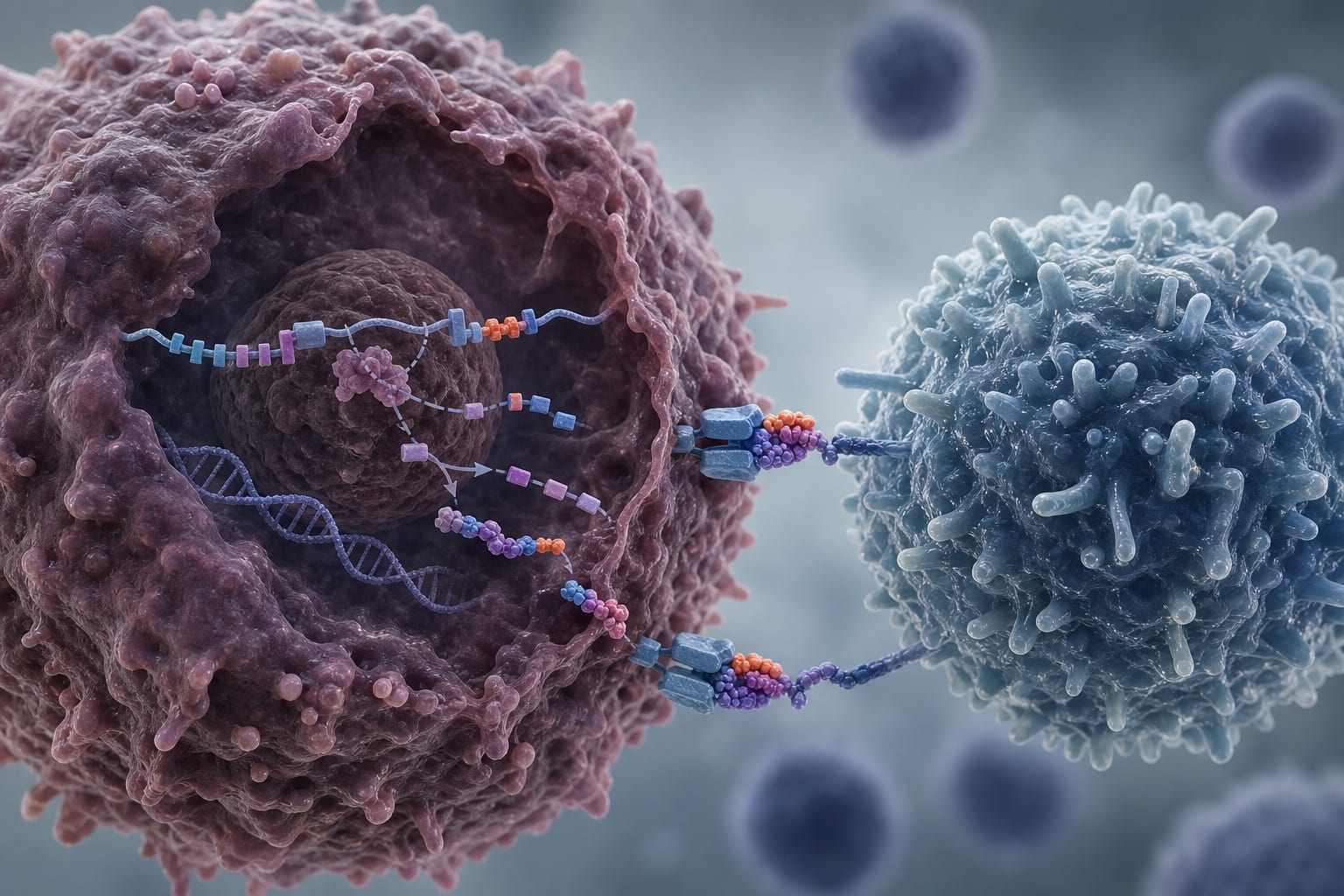
| Key Mechanisms | Non-canonical and therapy-induced neoantigens derived from alternative splicing, RNA editing, transposable elements, and aberrant translation. |
| Target Population | Patients with tumors, particularly those with low mutational burden. |
| Care Setting | Oncology |
Key Highlights
- Immunotherapy has transformed cancer treatment but has limited efficacy in low mutational burden tumors.
- Non-canonical and induced neoantigens could expand the repertoire of targetable tumor-specific antigens.
- Therapy-induced antigen generation presents an underexplored opportunity to enhance immunotherapy efficacy.
- Splicing dysregulation and chemotherapy-induced splicing alterations impact neoepitope formation.
- Current neoepitope identification methods focus on immunogenic somatic mutations and mass spectrometry.
Guideline-Based Recommendations
Diagnosis
- Identify neoepitopes through immunogenic somatic mutations and mass spectrometry.
Management
- Integrate non-canonical and induced neoantigens into existing immunotherapy approaches.
Monitoring & Follow-up
- Evaluate the immunogenicity of neoepitopes in vivo.
Risks
- Consider potential side effects associated with immunotherapy, particularly in patients with low mutational burden.
Patient & Prescribing Data
Patients with various cancers, especially those with low mutational burden.
Therapies may include immune checkpoint blockade, cancer vaccines, TCR engineered T cell therapy, and CAR T cell therapy.
Clinical Best Practices
- Enhance antigen presentation in tumors to improve neoepitope detection.
- Utilize splicing modulation and RNA editing as strategies to induce neoepitope generation.
Related Resources & Content