Gut microbiota profiling for risk stratification of surgical intervention in preterm infants with necrotizing enterocolitis: a retrospective cohort study - Scorecard - MDSpire
Advertisement
Gut microbiota profiling for risk stratification of surgical intervention in preterm infants with necrotizing enterocolitis: a retrospective cohort study
Clinical Scorecard: Profiling Gut Microbiota to Assess Surgical Risk in Preterm Infants with Necrotizing Enterocolitis: A Retrospective Cohort Analysis
At a Glance
Category
Detail
Condition
Key Mechanisms
Gut microbiota dysbiosis associated with surgical intervention status.
Target Population
Care Setting
Key Highlights
56 preterm infants with NEC included in the study.
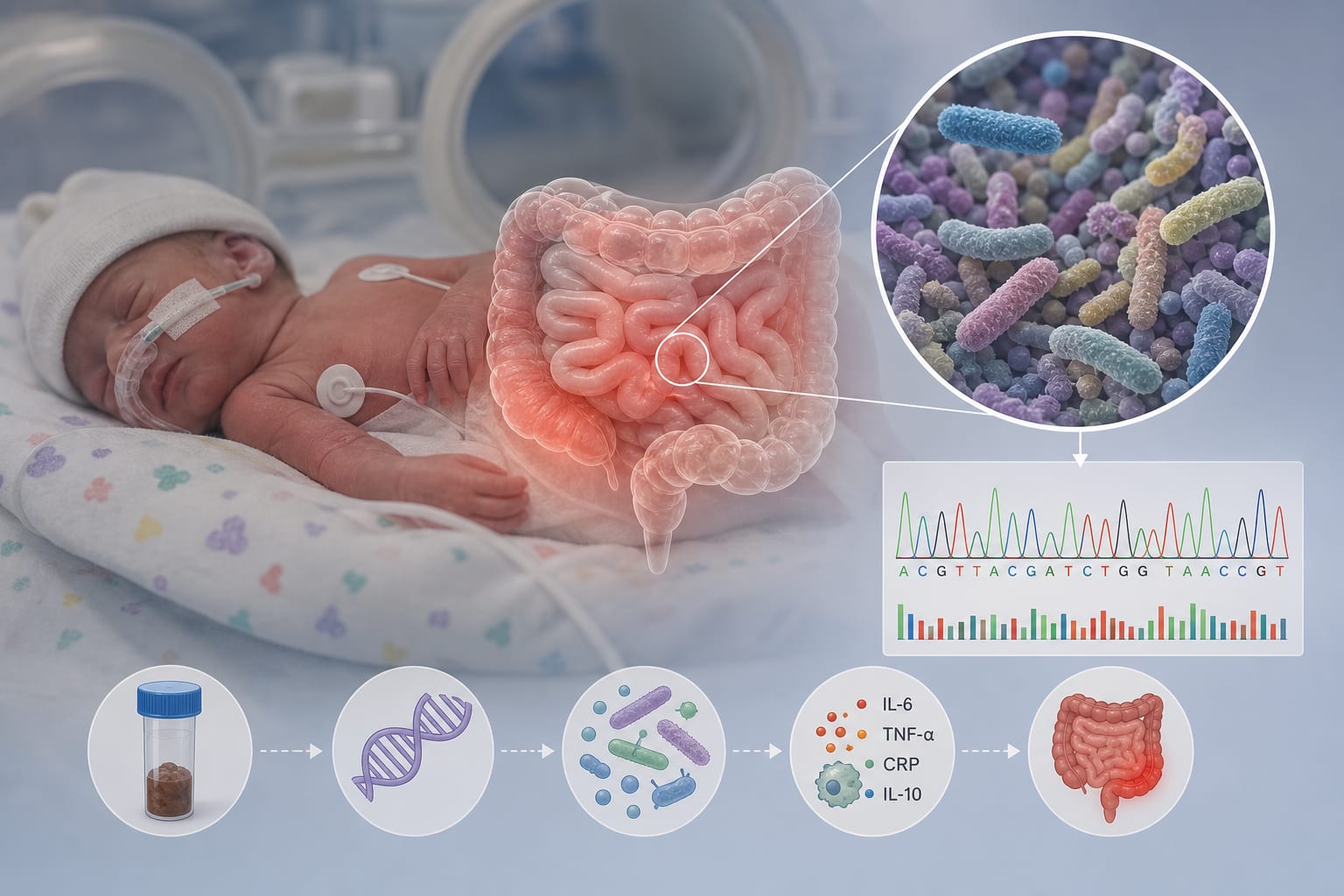
Surgical group showed higher levels of inflammatory markers (IL-6, IL-10, CRP, TNF-α).
Lower microbial diversity in surgical group indicated by reduced Chao and Shannon indices.
Bifidobacterium inversely associated with surgical intervention.
Combined microbiota-based model achieved AUC of 0.904 for surgical risk stratification.
Guideline-Based Recommendations
Diagnosis
Current assessment strategies rely on Bell staging, abdominal radiographic findings, and serum inflammatory markers.
Management
Further research needed to establish precise biomarkers for surgical risk assessment.
Monitoring & Follow-up
Monitor inflammatory markers and gut microbiota characteristics in preterm infants with NEC.
Risks
Delayed intervention can lead to intestinal perforation and sepsis.
Patient & Prescribing Data
Preterm infants with NEC.
Surgical intervention may be influenced by gut microbiota characteristics.
Clinical Best Practices
Consider gut microbiota profiling in assessing surgical risk for NEC.
Utilize a combined model of microbial indicators for better risk stratification.