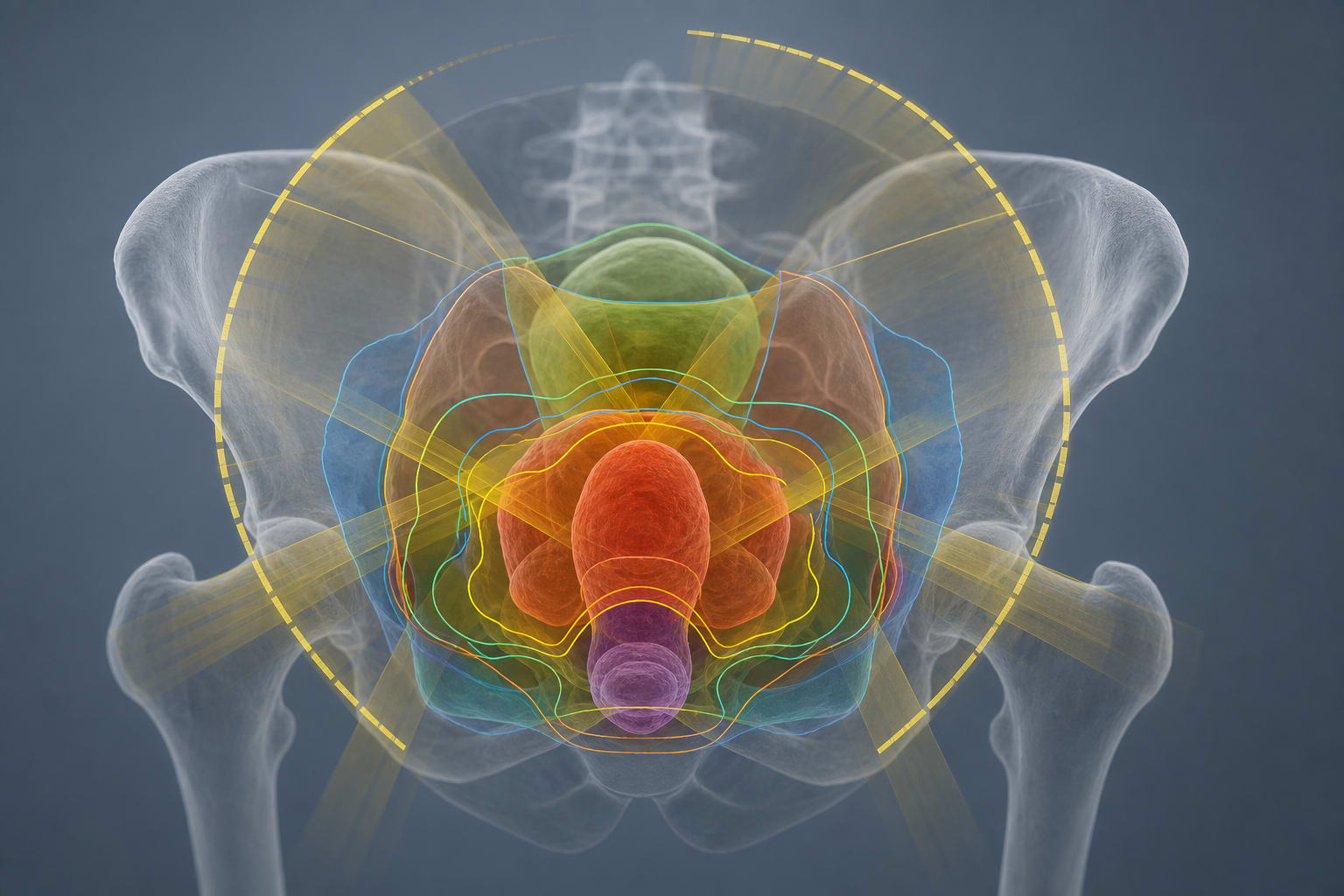
Polyethylene glycol-based hydrogel rectal spacers for prostate brachytherapy: a systematic review with a focus on technique
-
By
-
S. Vaggers
-
B. P. Rai
-
E. C. P. Chedgy
-
A. de la Taille
-
B. K. Somani
-
August 25, 2020
-
Clinical Scorecard: Systematic Review of Rectal Spacers Utilizing Polyethylene Glycol Hydrogel in Prostate Brachytherapy Techniques
At a Glance
| Category | Detail |
|---|
| Condition | Prostate cancer treated with prostate brachytherapy |
| Key Mechanisms | Polyethylene glycol (PEG) hydrogel spacer increases distance between prostate and rectum to reduce rectal radiation dose and gastrointestinal toxicity |
| Target Population | Patients with low, intermediate, and high-risk prostate cancer undergoing prostate brachytherapy |
| Care Setting | Radiation oncology and urology settings performing prostate brachytherapy |
Key Highlights
- PEG hydrogel spacers (SpaceOAR or DuraSeal) effectively increase prostate-rectum separation, reducing rectal radiation dose during brachytherapy.
- Use of PEG hydrogel spacers is associated with reduced acute and late gastrointestinal toxicity compared to no spacer.
- Spacer insertion is performed transperineally under ultrasound guidance, posterior to Denonvilliers' fascia and anterior to the rectal wall.
Guideline-Based Recommendations
Diagnosis
- Identify prostate cancer patients planned for brachytherapy who may benefit from rectal dose reduction.
Management
- Use PEG hydrogel spacers to increase prostate-rectum distance during prostate brachytherapy to reduce rectal radiation exposure.
- Administer antibiotic prophylaxis as per institutional protocols prior to spacer insertion.
- Perform spacer insertion immediately after brachytherapy procedure under ultrasound guidance in dorsal lithotomy position.
Monitoring & Follow-up
- Monitor for procedure-related complications and gastrointestinal toxicity using established grading systems (e.g., RTOG).
- Assess spacer resorption and rectal spacing duration post-procedure; PEG hydrogel typically resorbs over weeks to months.
Risks
- Potential procedure-related complications including infection, bleeding, or spacer insertion failure.
- No reduction in urethral radiation dose or genitourinary toxicity with PEG hydrogel spacers.
Patient & Prescribing Data
671 patients receiving prostate brachytherapy with PEG hydrogel spacer; 537 controls without spacer
PEG hydrogel spacers used in both salvage and definitive prostate brachytherapy; associated with improved rectal dosimetry and reduced GI toxicity.
Clinical Best Practices
- Use ultrasound guidance with sagittal view to position needle between mid gland and apex of prostate, posterior to Denonvilliers' fascia.
- Administer appropriate antibiotic prophylaxis and preoperative enema as per center protocols to reduce infection risk.
- Perform brachytherapy first, then insert PEG hydrogel spacer immediately after to maximize procedural efficiency.
- Use the 18-gauge needle provided in SpaceOAR kits or 16-18 gauge peripheral venous catheter for spacer injection.
- Employ floor-mounted stepper to stabilize ultrasound probe and free operator’s hands during spacer insertion.
References