Orosomucoid 2 (ORM2) in type 2 diabetes and coronary artery disease: a potential link between insulin resistance and vascular inflammation - Scorecard - MDSpire
Advertisement
Orosomucoid 2 (ORM2) in type 2 diabetes and coronary artery disease: a potential link between insulin resistance and vascular inflammation
Clinical Scorecard: The Role of Orosomucoid 2 (ORM2) in the Relationship Between Type 2 Diabetes and Coronary Artery Disease: Exploring the Connection Between Insulin Resistance and Vascular Inflammation
At a Glance
Category
Detail
Condition
Type 2 Diabetes Mellitus and Coronary Artery Disease
Key Mechanisms
Inflammation, metabolic dysregulation, and vascular dysfunction mediated by ORM2.
Target Population
Individuals with Type 2 Diabetes and Coronary Artery Disease.
Care Setting
Cardiometabolic disease management.
Key Highlights
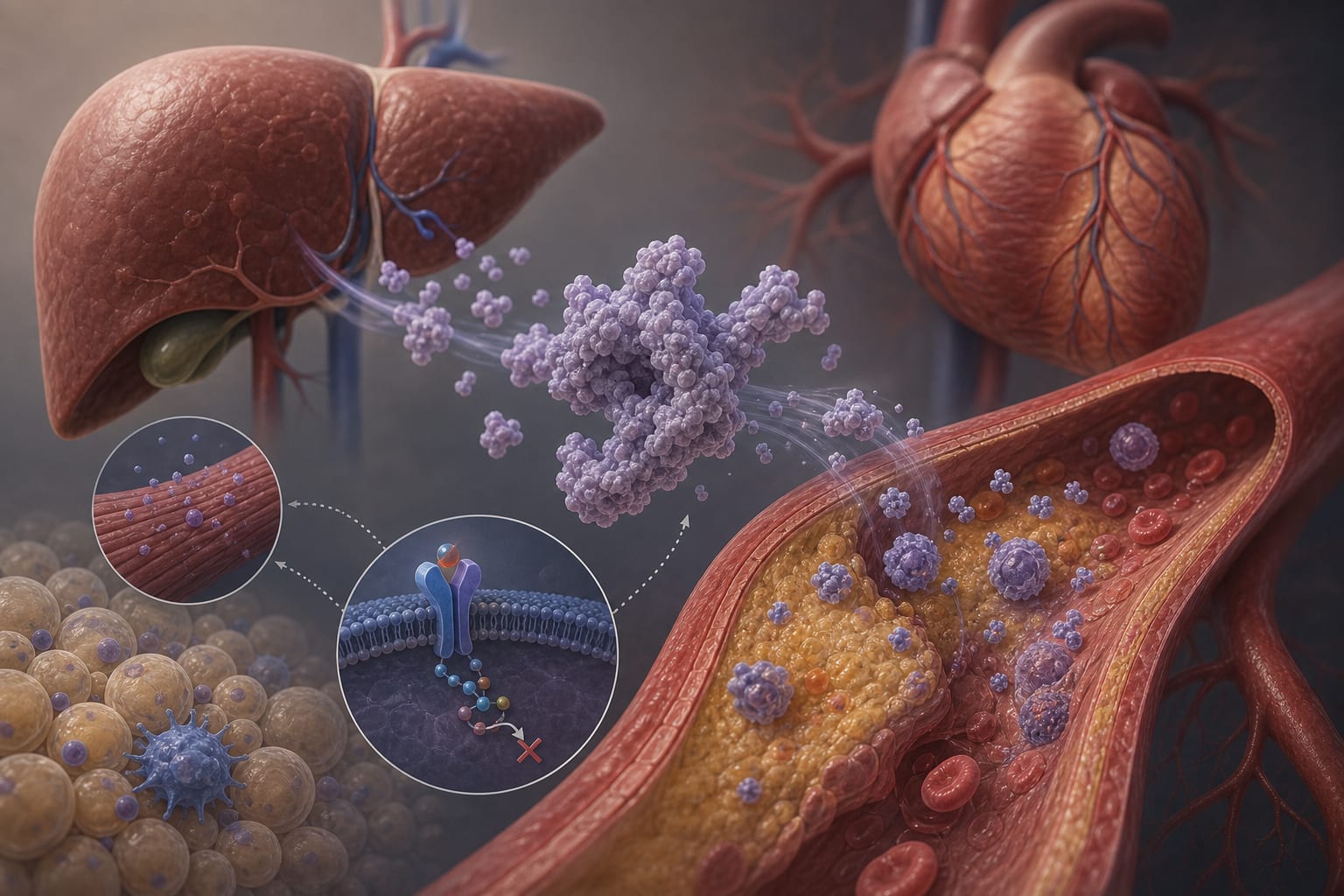
ORM2 is linked to hepatic lipid metabolism and insulin sensitivity.
Reduced ORM2 expression is observed in obesity and insulin-resistant states.
Circulating ORM2 levels correlate with diabetic nephropathy and myocardial infarction risk.
ORM2 modulates immune responses and vascular inflammation.
Recombinant ORM2 shows potential in ameliorating atherosclerosis.
Guideline-Based Recommendations
Diagnosis
Assess ORM2 levels as a potential biomarker for metabolic dysfunction.
Management
Consider ORM2-targeted therapies in the context of T2DM and CAD.
Monitoring & Follow-up
Monitor ORM2 levels in patients with T2DM for cardiovascular risk assessment.
Risks
Increased risk of myocardial infarction and mortality in T2DM patients.
Patient & Prescribing Data
Patients with Type 2 Diabetes and associated cardiovascular risks.
Recombinant ORM2 may provide therapeutic benefits without adverse metabolic effects.
Clinical Best Practices
Integrate ORM2 assessment in the evaluation of patients with cardiometabolic disorders.
Focus on managing inflammation and metabolic dysregulation in T2DM and CAD.
"AI could help reduce the burden on ophthalmology services by triaging large numbers of patients with diabetes and allowing specialists to focus on those who most urgently need care."