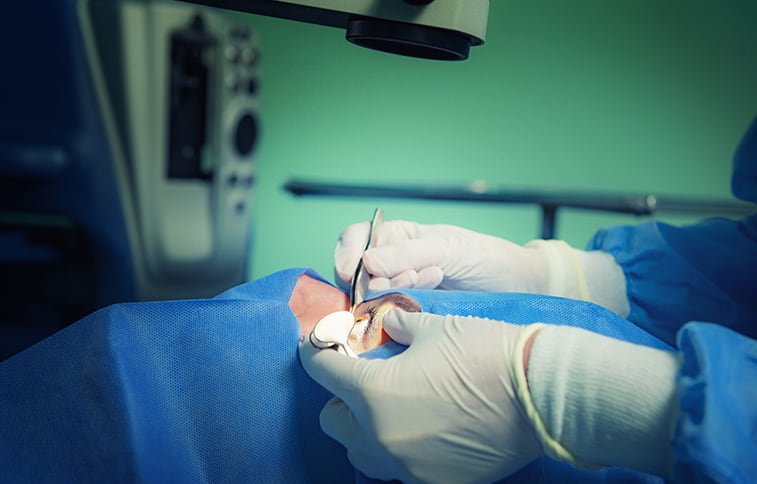
AI Supports Glaucoma Surgical Planning
Predictive models identify high-risk patients and support earlier treatment decisions.
-
By
-
Kathryn Wighton
-
April 16, 2026
-
Clinical Scorecard: AI Supports Glaucoma Surgical Planning
At a Glance
| Category | Detail |
|---|
| Condition | Glaucoma |
| Key Mechanisms | Artificial intelligence models using multimodal imaging and clinical data to diagnose, predict progression, and support surgical decision-making |
| Target Population | Patients with glaucoma undergoing diagnostic evaluation and surgical planning |
| Care Setting | Ophthalmology clinical settings integrating AI decision support systems |
Key Highlights
- AI diagnostic models achieved high accuracy with pooled AUC of 0.93 across >64,000 images and >10,000 patients
- Multimodal AI models integrating fundus photography, OCT, and visual field data outperform single-modality systems
- AI predicts visual field deterioration up to 4 years in advance, aiding timely surgical intervention and risk stratification
Guideline-Based Recommendations
Diagnosis
- Utilize AI models, especially multimodal deep-learning systems, to enhance glaucoma diagnostic accuracy
- Incorporate structural imaging segmentation of optic nerve head and lamina cribrosa for presurgical assessment
Management
- Apply AI-based progression and risk prediction models to identify fast progressors and guide surgical versus medical therapy decisions
- Integrate AI decision support tools into clinical workflows to optimize referral pathways and surgical triaging
Monitoring & Follow-up
- Use AI to forecast visual field deterioration and monitor disease progression longitudinally
- Leverage multimodal data including electronic health records for ongoing risk stratification
Risks
- Be aware of limitations including retrospective study designs, methodological heterogeneity, and limited external validation
- Consider variability in AI model reproducibility and incomplete access to underlying code and data sets
Patient & Prescribing Data
Glaucoma patients evaluated for disease progression and surgical candidacy
AI models can distinguish patients suitable for continued medical therapy versus those requiring surgical escalation based on risk stratification
Clinical Best Practices
- Employ multimodal AI approaches combining fundus photography, OCT, and visual field data for superior diagnostic performance
- Incorporate AI-driven structural imaging analysis to support presurgical planning
- Use AI predictions of progression to enable early identification of fast progressors and timely surgical intervention
- Integrate AI decision support systems into routine clinical workflows to enhance surgical planning and patient triage
Related Resources & Content