Clinical Scorecard: Approaches to the Care of Patients with Lower-Risk Myelodysplastic Syndromes
At a Glance
Category
Detail
Condition
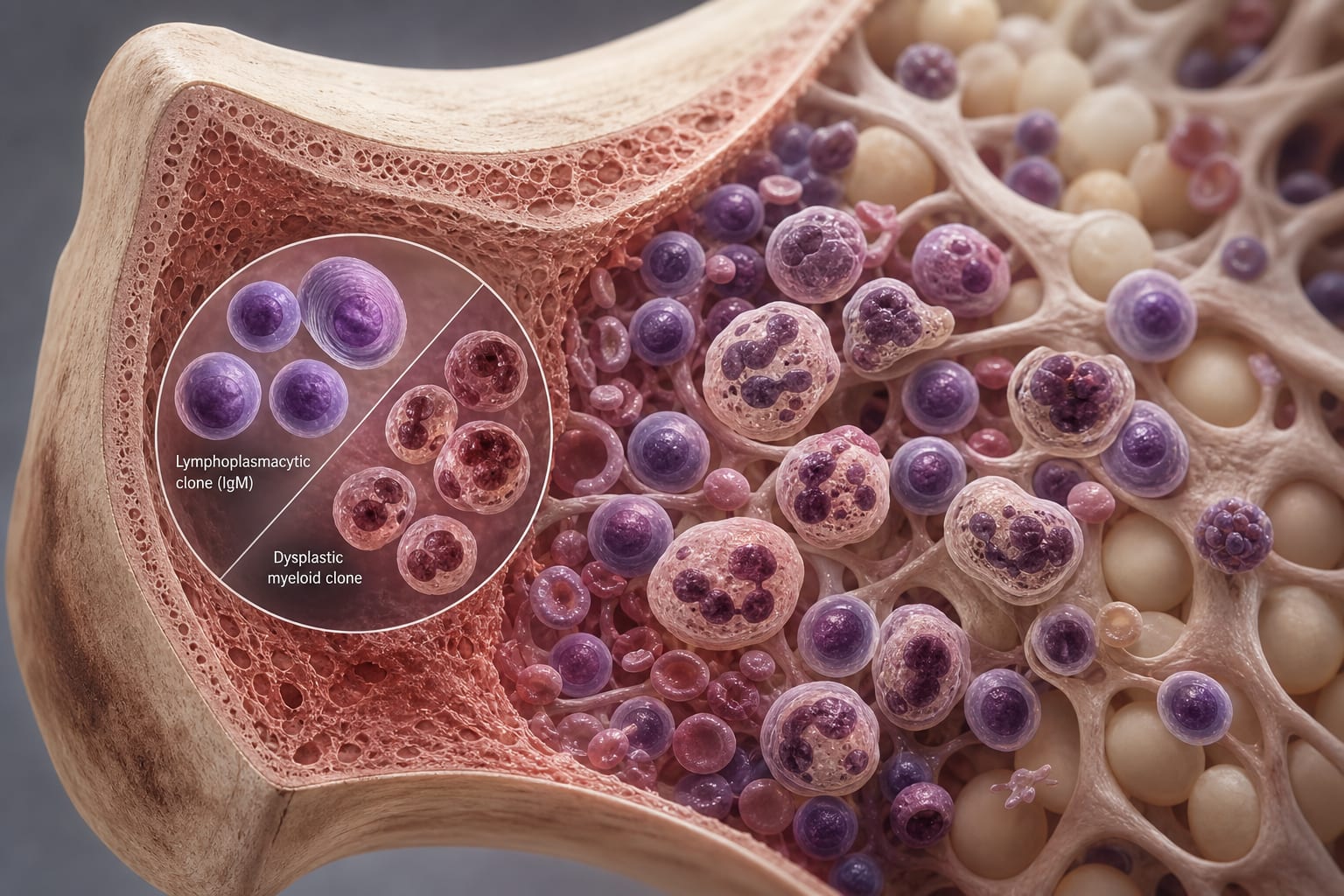
Lower-risk myelodysplastic syndromes (LR-MDS), a heterogeneous group of hematopoietic stem and progenitor cell disorders characterized by ineffective hematopoiesis, cytopenias, and risk of progression to AML
Key Mechanisms
Ineffective hematopoiesis, dysplasia, clonal evolution with somatic driver mutations, involvement of pathways such as TGF-β signaling and epigenetic alterations
Target Population
Primarily elderly patients (median age >70 years) diagnosed with lower-risk MDS
Care Setting
Hematology/oncology clinics with access to specialized diagnostic and molecular testing
Key Highlights
Diagnosis requires integrated assessment including peripheral blood smear, bone marrow cytology/histology, cytogenetics, flow cytometry, and molecular testing
Recent classifications (WHO 5th edition and ICC) incorporate molecular and immunophenotypic criteria to improve diagnostic precision
Management includes monitoring anemia symptoms, cytopenia complications, and incorporating patient-reported outcomes to guide therapy
Guideline-Based Recommendations
Diagnosis
Perform detailed medical history including exposure to genotoxic agents and family history for germline predisposition
Use quantitative and qualitative peripheral blood and bone marrow assessments, cytogenetics (including full karyotype), flow cytometry immunophenotyping, and mutational analysis
Apply updated classification systems (WHO 5th edition, ICC) and consider molecular markers such as SF3B1 mutation for disease subclassification
Management
Assess and manage anemia symptoms, fatigue, bleeding, infections, and inflammation
Use structured assessments of treatment response, toxicities, and patient-reported outcomes in clinical practice
Monitoring & Follow-up
Monitor disease progression and response using cytogenetics including FISH when conventional cytogenetics fails
Regularly assess blood counts and clinical symptoms related to cytopenias
Evaluate for clonal evolution and distinguish MDS-related cytopenias from other causes such as nutritional deficiencies or autoimmune disorders
Risks
Risk of progression to acute myeloid leukemia (AML)
Complications from cytopenias including infections, bleeding, and transfusion-related issues
Potential misdiagnosis due to overlapping features with other clonal marrow disorders and secondary cytopenias
Patient & Prescribing Data
Patients diagnosed with lower-risk myelodysplastic syndromes, predominantly elderly
Therapies targeting molecular pathways and epigenetic alterations are emerging; treatment should be individualized based on molecular and clinical risk stratification
Clinical Best Practices
Integrate comprehensive molecular and immunophenotypic testing into initial diagnostic workup
Use updated classification systems to refine diagnosis and prognostication
Incorporate patient-reported outcomes and structured toxicity assessments to optimize management
Distinguish MDS-related cytopenias from other causes to avoid misdiagnosis and inappropriate treatment
Regularly monitor disease status with cytogenetics and clinical parameters to guide therapy adjustments