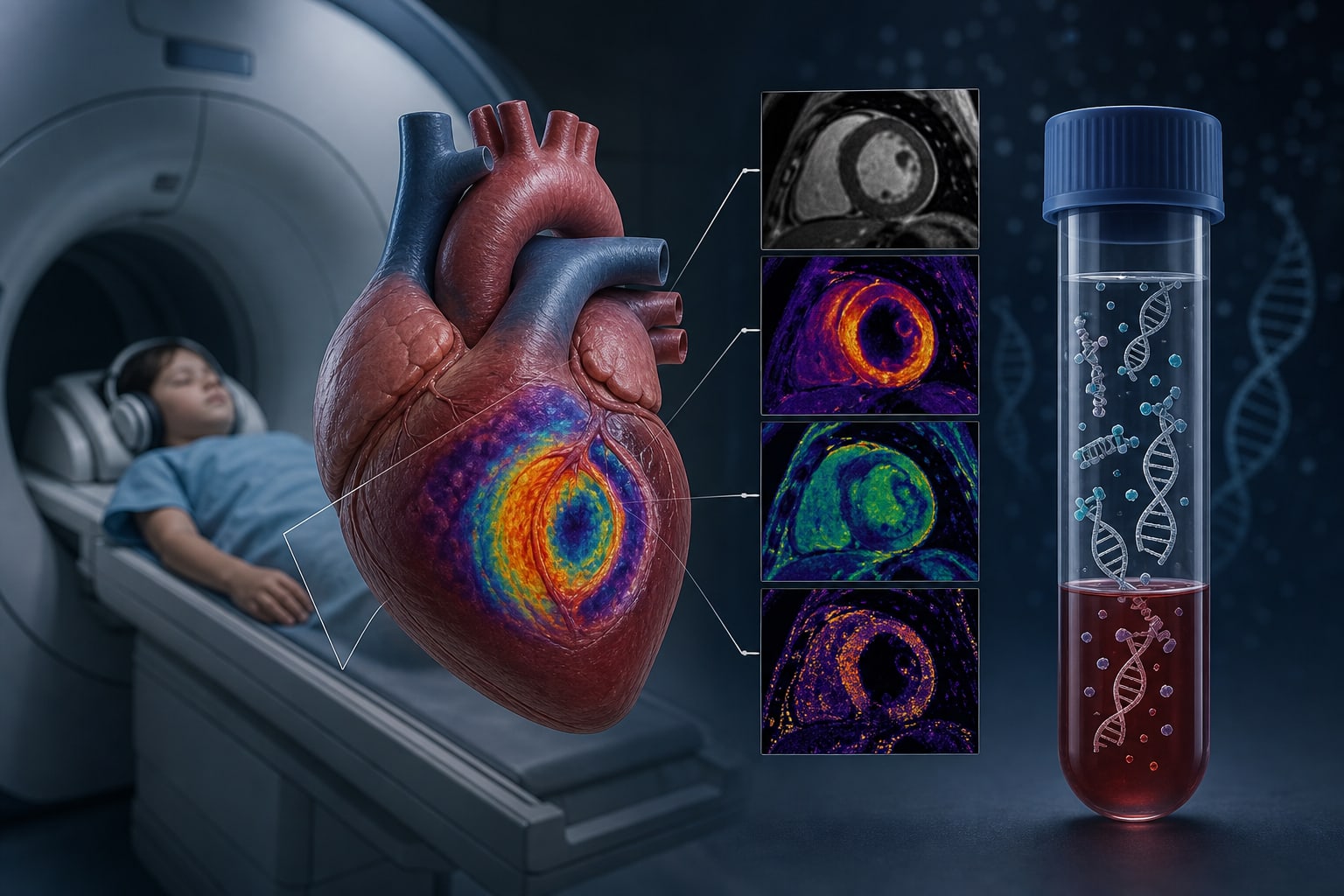
Altered Cardiac MRI Mapping Metrics in Pediatric Heart Transplant Recipients with Increased Levels of Donor-Derived Cell-Free DNA
-
By
-
Kae Watanabe
-
Defne A. Magnetta
-
Christina Laternser
-
Alona Birjiniuk
-
Joshua D. Robinson
-
Cynthia K. Rigsby
-
Nazia Husain
-
July 9, 2026
Clinical Scorecard: Altered Cardiac MRI Mapping Metrics in Pediatric Heart Transplant Recipients with Increased Levels of Donor-Derived Cell-Free DNA
At a Glance
| Category | Detail |
|---|
| Condition | Pediatric Heart Transplantation |
| Key Mechanisms | Utilization of donor-derived cell-free DNA (ddcfDNA) and multiparametric cardiac magnetic resonance imaging (CMR) for rejection surveillance. |
| Target Population | Pediatric heart transplant recipients aged 18 years or younger. |
| Care Setting | Single center retrospective study evaluating non-invasive surveillance methods. |
Key Highlights
- High ddcfDNA levels correlate with increased history of cardiac allograft vasculopathy (CAV) and moderate/severe rejection.
- CMR is performed biennially as an alternative to invasive endomyocardial biopsy (EMB) in select patients.
- DdcfDNA testing is routinely conducted every 3-4 months to enhance rejection surveillance.
Guideline-Based Recommendations
Diagnosis
- Rejection defined by ISHLT scoring of ≥ 2R Acute Cellular Rejection (ACR) or any antibody mediated rejection (AMR).
Management
- Consider CMR as a non-invasive alternative for rejection surveillance in pediatric heart transplant recipients.
Monitoring & Follow-up
- Routine ddcfDNA testing at every clinic visit to monitor for rejection.
Risks
- Increased risk of rejection associated with elevated ddcfDNA levels.
Patient & Prescribing Data
Pediatric heart transplant patients with varying levels of ddcfDNA.
High ddcfDNA levels indicate a need for closer monitoring and potential intervention.
Clinical Best Practices
- Utilize CMR for comprehensive myocardial assessment in pediatric heart transplant recipients.
- Incorporate ddcfDNA testing into routine surveillance protocols.
Related Resources & Content