Prediction model for early neurological deterioration in large artery atherosclerotic stroke
-
By
-
Lele Feng
-
Chuanzhuo Zhang
-
Jiayu Zhou
-
Xinyi Zhang
-
Jingyi Guo
-
Benping Zhang
-
July 9, 2026
-
Clinical Scorecard: Predictive Framework for Early Neurological Decline in Acute Ischemic Stroke from Large Artery Atherosclerosis
At a Glance
| Category | Detail |
|---|
| Condition | Acute Ischemic Stroke due to Large Artery Atherosclerosis |
| Key Mechanisms | Infarct expansion, collateral circulation failure, reperfusion injury |
| Target Population | Patients with acute ischemic stroke aged ≥ 18 years diagnosed with large-artery atherosclerosis |
| Care Setting | Neurology department of a hospital |
Key Highlights
- END occurred in 27.1% of the training cohort and 26.9% of the validation cohort.
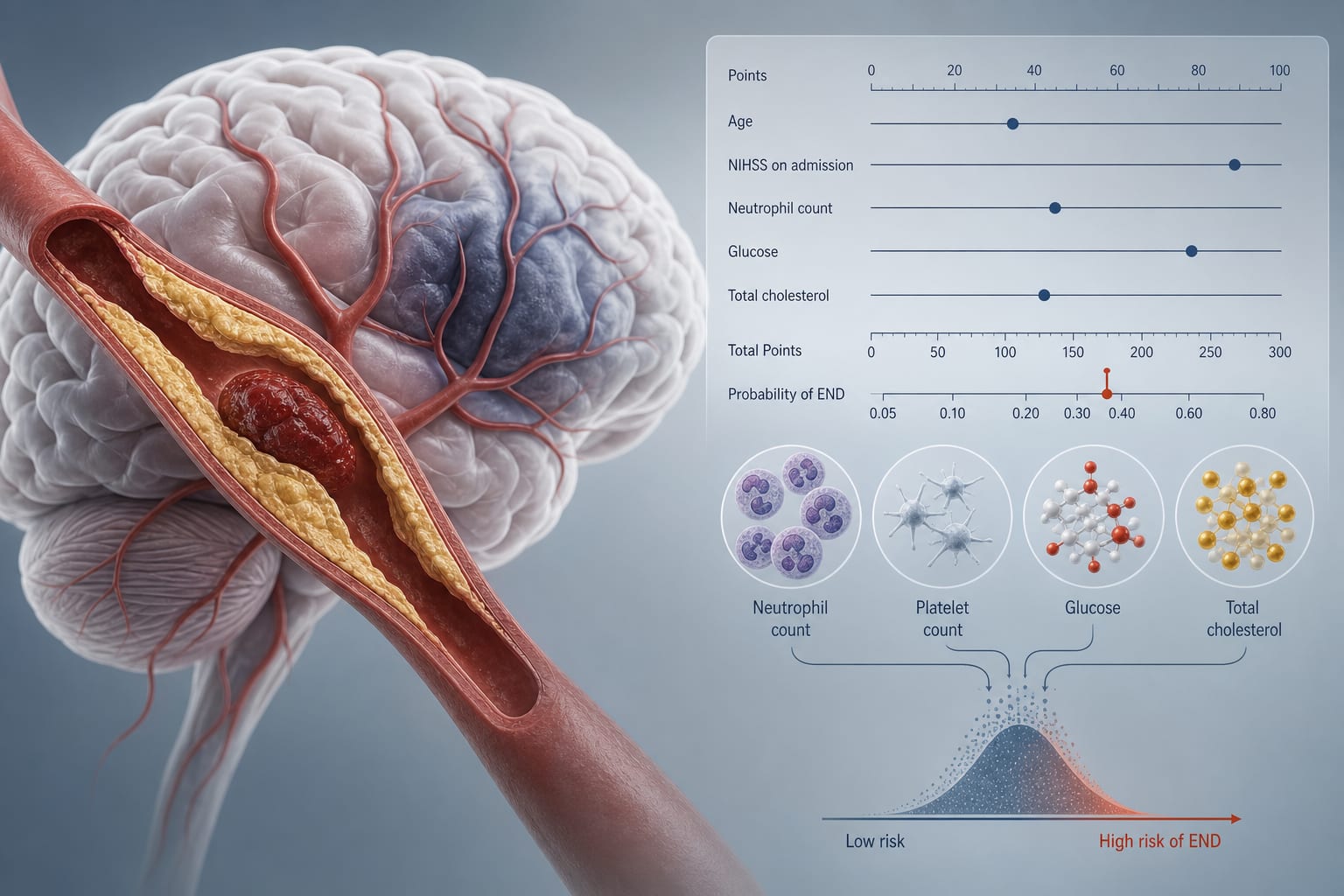
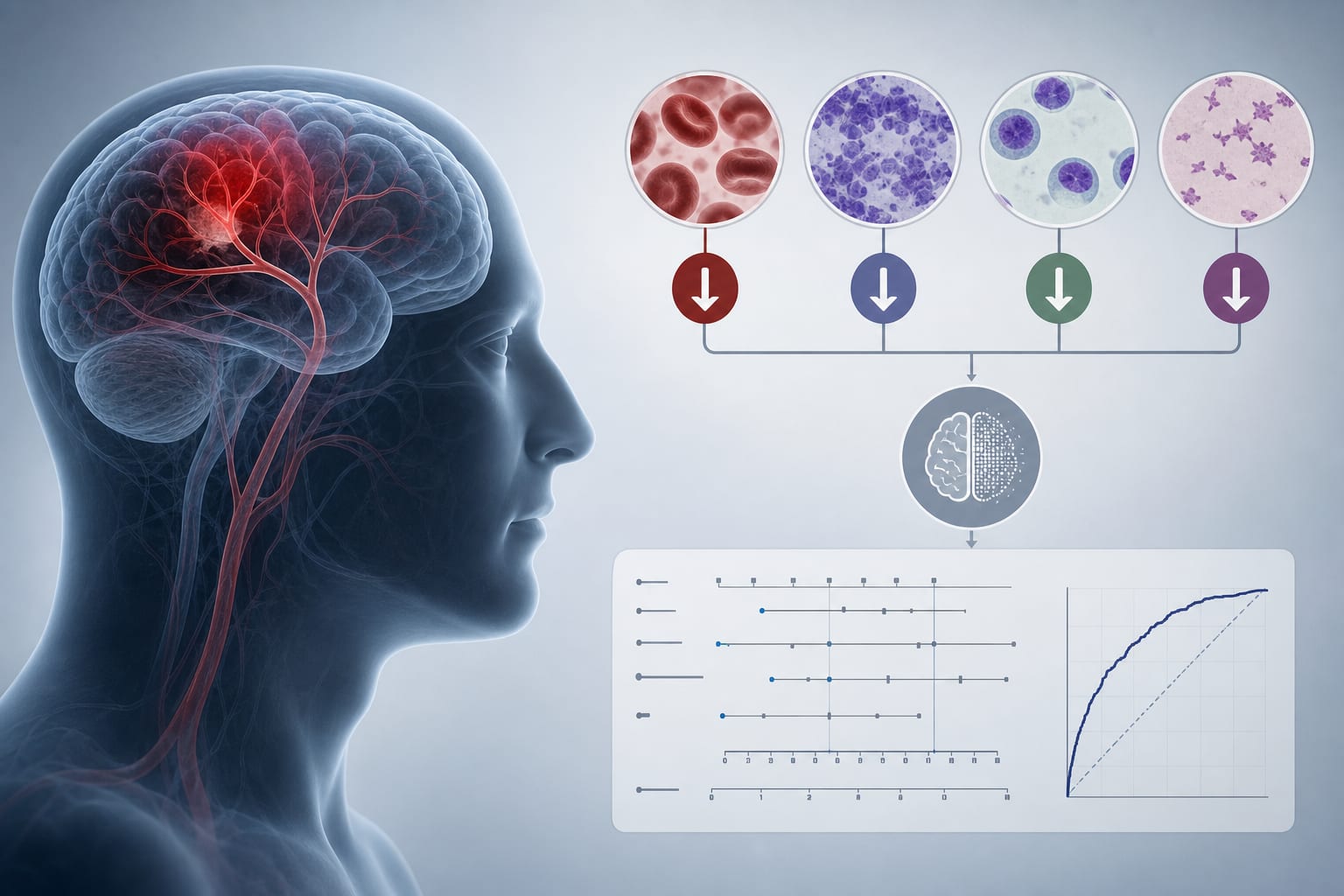
- Six independent predictors identified: neutrophil count, platelet count, lymphocyte count, fasting plasma glucose, total cholesterol, homocysteine, and D-dimer.
- Training cohort AUC was 0.791 with 72.7% sensitivity and 78.5% specificity.
- The model may facilitate early identification of high-risk patients.
- Fasting plasma glucose showed a trend toward association (p = 0.084).
Guideline-Based Recommendations
Diagnosis
- Use NIHSS to assess neurological status and identify END.
Management
- Consider the identified predictors for early intervention strategies.
Monitoring & Follow-up
- Monitor patients for changes in NIHSS scores within 7 days of stroke onset.
Risks
- Patients with END may experience unfavorable outcomes.
Patient & Prescribing Data
Patients with acute ischemic stroke due to large artery atherosclerosis.
The model provides a framework for individualized treatment decisions based on risk factors.
Clinical Best Practices
- Incorporate laboratory indicators with clinical parameters for END prediction.
- Utilize the predictive model as a screening tool in clinical practice.
Related Resources & Content