The trinity of T cell engagement: navigating the molecular and clinical landscape of CAR-T, TILs, and TCEs in the war against cancer - Scorecard - MDSpire
Advertisement
The trinity of T cell engagement: navigating the molecular and clinical landscape of CAR-T, TILs, and TCEs in the war against cancer
Clinical Scorecard: Exploring the Triad of T Cell Activation: Understanding CAR-T, TILs, and TCEs in the Fight Against Cancer
At a Glance
Category
Detail
Condition
Cancer
Key Mechanisms
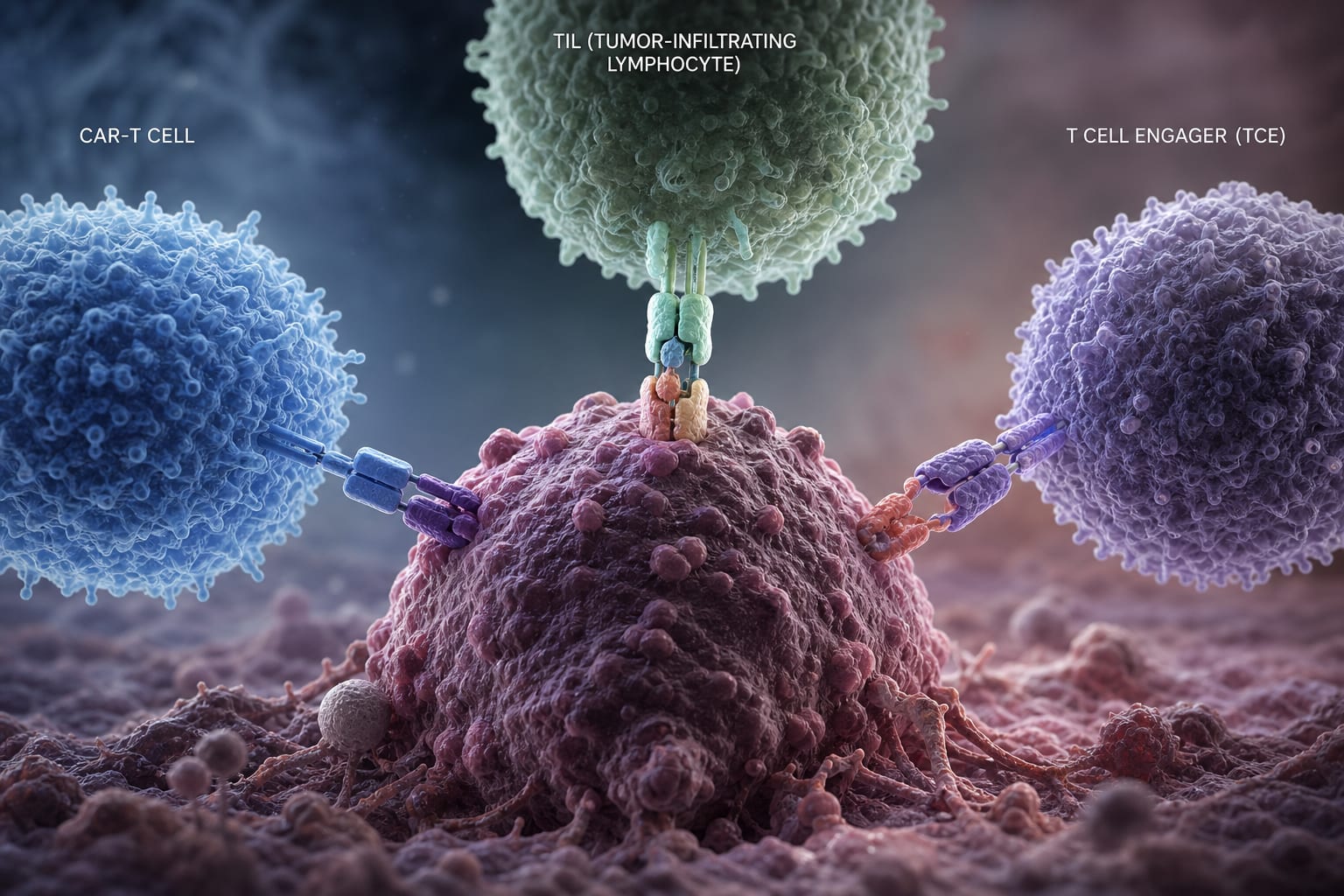
CAR-T therapy utilizes engineered T cells to target tumor antigens; TIL therapy expands T cells that have infiltrated tumors; TCEs act as pharmacologic bridges to redirect T cells.
Target Population
Patients with hematologic malignancies and solid tumors.
Care Setting
Oncology clinics and specialized treatment centers.
Key Highlights
CAR-T therapy has shown high efficacy in hematologic malignancies with an ORR of 83% in large B-cell lymphoma.
TIL therapy offers a polyclonal approach for solid tumors but faces manufacturing challenges.
TCEs provide off-the-shelf treatment options but have issues with persistence and toxicity.
Guideline-Based Recommendations
Diagnosis
Evaluate tumor type and patient history to determine suitability for T cell therapies.
Management
Consider CAR-T for eligible hematologic malignancies; assess TIL therapy for solid tumors.
Monitoring & Follow-up
Regularly monitor for treatment response and adverse effects post-therapy.
Risks
Be aware of potential on-target/off-tumor toxicity and T cell exhaustion.
Patient & Prescribing Data
Patients with refractory or relapsed hematologic cancers and certain solid tumors.
CAR-T therapy has demonstrated long-term survival benefits in specific patient populations.
Clinical Best Practices
Integrate advanced genetic engineering and metabolic reprogramming in treatment plans.
Utilize combinatorial strategies to enhance efficacy against solid tumors.