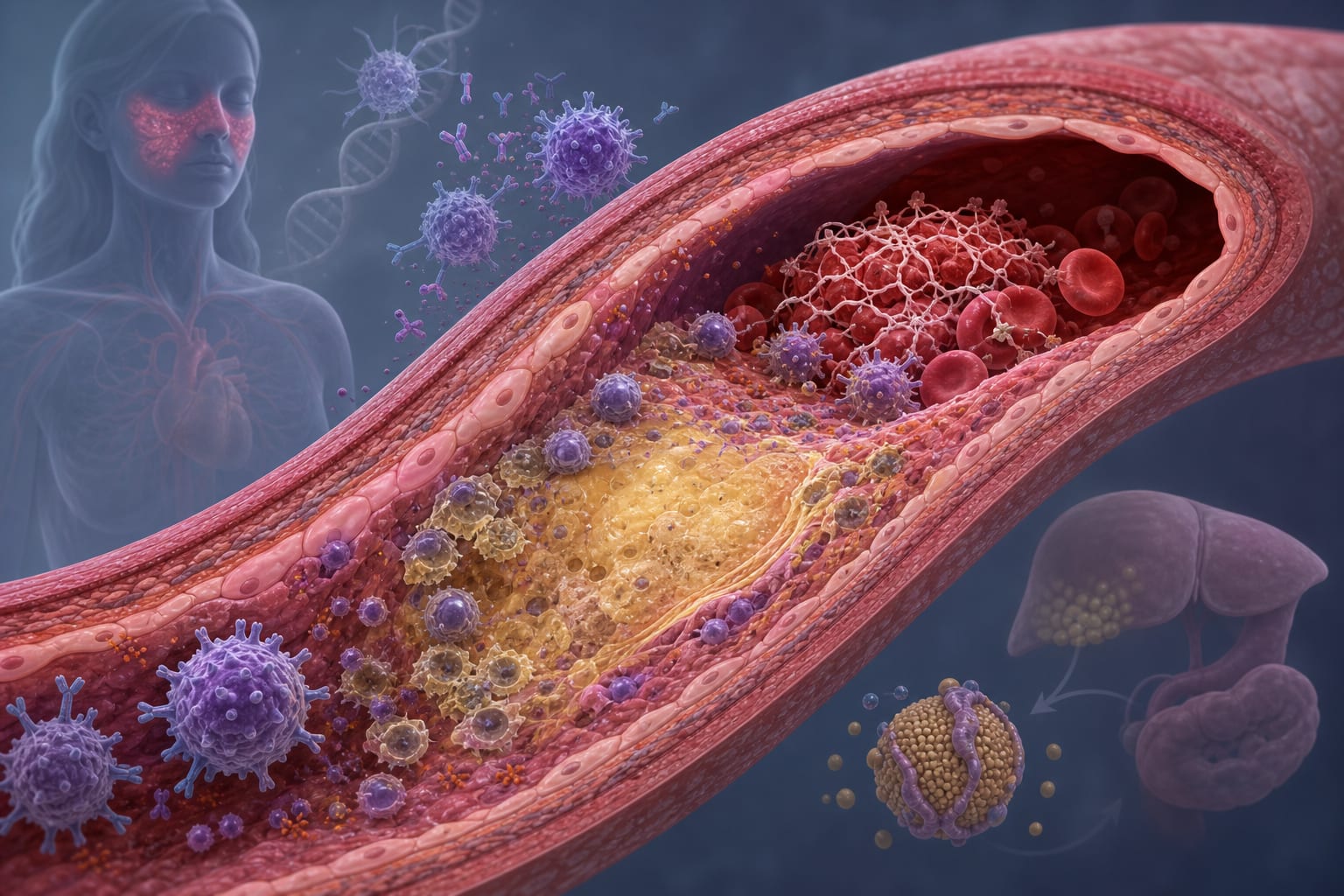
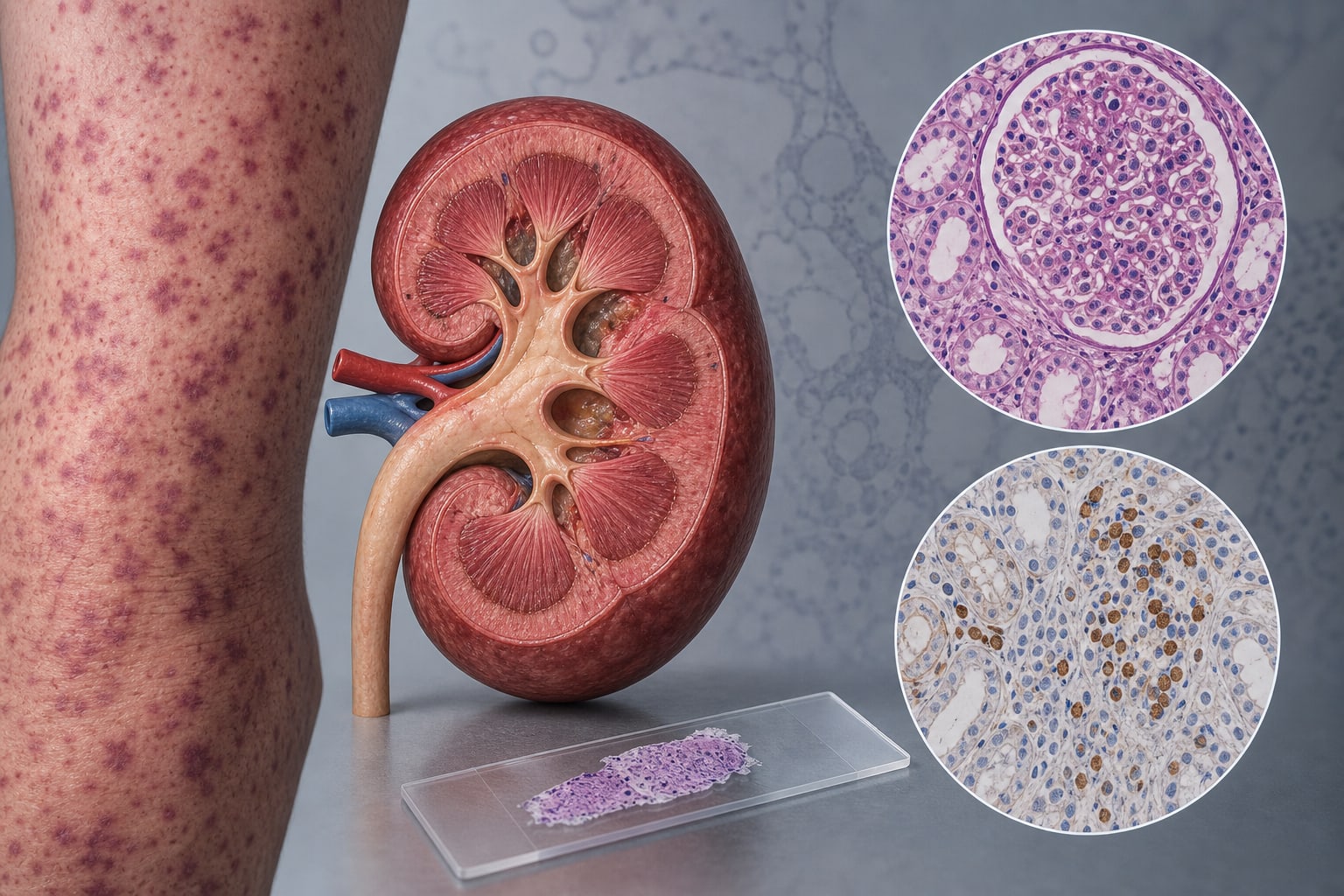
Accelerated Atherosclerosis Induced by Systemic Lupus Erythematosus: Insights into the Immune-Metabolic-Vascular Interplay and Treatment Considerations
By
Meiwei Jiang
FengQi Zhang
MinZhe Ren
ZhiYu Li
ZhiJun Xie
Jing Sun
June 10, 2026
Clinical Scorecard: Accelerated Atherosclerosis Induced by Systemic Lupus Erythematosus: Insights into the Immune-Metabolic-Vascular Interplay and Treatment Considerations
At a Glance
Category Detail
Condition Systemic Lupus Erythematosus (SLE) and Atherosclerosis Key Mechanisms Persistent immune activation, immunometabolic dysregulation, endothelial dysfunction, lipoprotein impairment, maladaptive myeloid activation, immunothrombosis. Target Population Patients with systemic lupus erythematosus, particularly young women of childbearing age. Care Setting Clinical and research settings focusing on cardiovascular disease and systemic lupus erythematosus.
Key Highlights
SLE patients have a markedly increased risk of premature atherosclerosis and ASCVD. Traditional Framingham factors do not fully explain the excess cardiovascular risk in SLE. Immunometabolic dysregulation plays a critical role in SLE-associated vascular injury. Type I interferon is linked to endothelial injury and defective vascular repair. Future treatment strategies may need to integrate metabolic resetting and immune-specific blockade. Guideline-Based Recommendations
Diagnosis
Assess for subclinical endothelial dysfunction and atherosclerotic plaque burden in SLE patients. Management
Consider upstream metabolic resetting and immune-specific blockade in treatment strategies. Monitoring & Follow-up
Monitor for cardiovascular events and vascular health in SLE patients. Risks
Chronic systemic inflammation and standard anti-inflammatory therapies may worsen metabolic risk. Patient & Prescribing Data
Patients with systemic lupus erythematosus, particularly those at risk for cardiovascular disease.
Current evidence suggests the need for integrated approaches beyond lipid lowering or broad immunosuppression.
Clinical Best Practices
Recognize the role of immune and metabolic interactions in SLE-related atherosclerosis. Utilize a comprehensive assessment of cardiovascular risk factors in SLE patients. Related Resources & Content